Image Resources Our extensive research library contains thousands of summaries of journal articles, reports and news stories that can be searched by keyword and category RESOURCES CATEGORY Books Briefing paper Event recording Featured articles Featured report Game Journal articles News and resources Reports Think piece Video Working paper Workshop summary Year 2026 2025 2024 2023 2022 2021 2020 2019 2018 2017 2016 2015 2014 2013 2012 2011 2010 2009 2008 2007 2002 2001 Image News and resources COVID-19 reminds us that our food system might kill us This blog post from University of Oslo’s Centre for Development and the Environment argues that the spread of zoonotic diseases cannot be halted simply by closing wet markets (often portrayed in the Western media as the source of viruses). Rather, it argues, deeper changes in the food system are required, since zoonotic diseases have also been linked to deforestation and industrial meat production. Read Image News and resources Second wave of locusts emerges in east Africa According to this article in Quartz Africa, a new wave of desert locust swarms is forming in East Africa (including Kenya, Ethiopia and Somalia). Wet conditions mean that the locusts are likely to continue to breed. It is feared that many farmers could lose their newly planted crops. Efforts to control the swarms through aerial spraying have been slowed by the coronavirus crisis. Read Image Books Uncertain harvest: The future of food on a warming planet This book examines how the food system can adapt to be able to produce enough food in a changing climate. The authors present global policy options and list key foods that could help, including algae, caribou and kale. Read Image Reports How biocredits can protect biodiversity and reduce poverty This report from the International Institute for Environment and Development explores the potential to use “biocredits” to protect biodiversity. Biocredits are an economic instrument that allows the creation and trade of “biodiversity units”. Biocredits would be bought by people or institutions that want to invest in protecting biodiversity, and the money from their initial sale would fund conservation activities that increase biodiversity above a baseline level. The report distinguishes between biocredits and biodiversity offsets, which are used to compensate for habitats that have been destroyed, e.g. because of construction projects. Read Image Reports The boundaries of plant breeding This report from UK group Beyond GM (directed by FCRN member Pat Thomas) presents the results of a world café held in September 2019. The world café brought together people representing a wide variety of practices, beliefs and views on the subject of genome editing in plant breeding, and the conversation covered values, worldviews, ethics, regulation, citizen engagement and more. Read Image Reports Low-hanging fruit for COVID-19 stimulus & decarbonisation This report from US thinktank The Breakthrough Institute, co-authored by FCRN member Dan Blaustein-Rejto, outlines over $500 billion in potential federal spending that could lower emissions, be included in upcoming post-COVID stimulus investments and has already been vetted and earned bipartisan support in Congress. The brief proposes an agricultural research funding increase, research facility maintenance, and biomethane tax credits in addition to many proposals regarding energy innovation and infrastructure. Read Image Reports A sustainable food system for the European Union This report by Science Advice for Policy by European Academies sets out evidence on effective policies for sustainably transforming the European food system in an inclusive, just and timely way. It concludes that the complexity of food systems means that transformations rely on coordinated action between many actors, including different levels of governance. Read Image Journal articles Evaluation of climate friendly farming outreach This paper by FCRN member Dominic Moran evaluates Farming for a Better Climate, a participatory extension programme (PEP) in Scotland that assists farmers in adopting climate friendly farming practices. PEPs are a type of advisory service where farmers, researchers and rural experts can swap information. The authors aimed to fill a research gap, since no other evaluations of PEPs for climate friendly farming existed at the time the paper was written. Read Image Journal articles Potential impacts of changing US dietary advice This paper by FCRN member Diego Rose estimates that 16% of adults in the United States might be receptive to changing their diet if national dietary guidance were to include information about environmental sustainability. It also estimates the impacts of a range of different dietary changes for those people on greenhouse gas emissions, dietary quality and dietary costs. Read VIEW MORE
Image News and resources COVID-19 reminds us that our food system might kill us This blog post from University of Oslo’s Centre for Development and the Environment argues that the spread of zoonotic diseases cannot be halted simply by closing wet markets (often portrayed in the Western media as the source of viruses). Rather, it argues, deeper changes in the food system are required, since zoonotic diseases have also been linked to deforestation and industrial meat production. Read
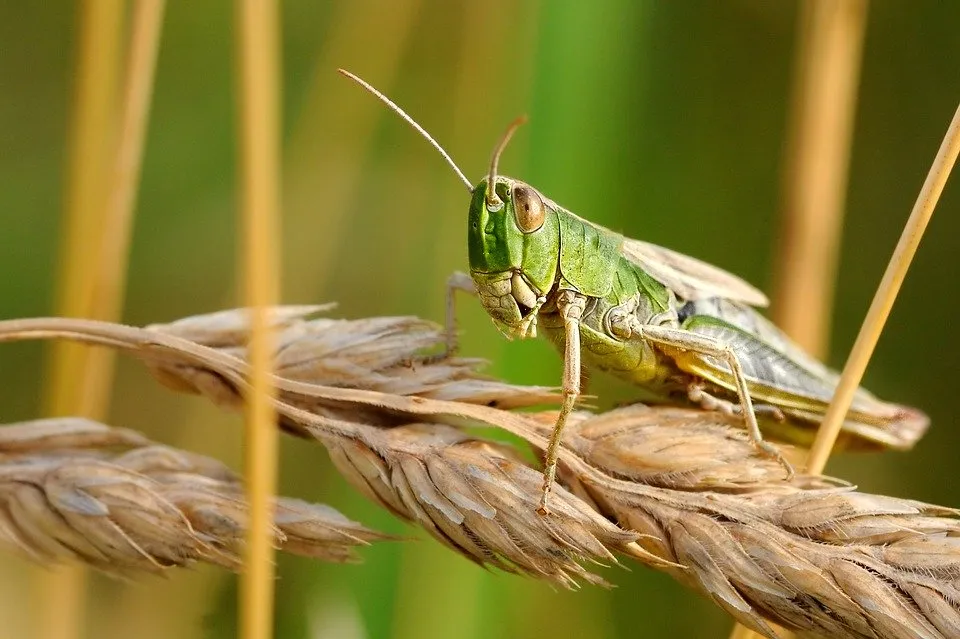
Image News and resources Second wave of locusts emerges in east Africa According to this article in Quartz Africa, a new wave of desert locust swarms is forming in East Africa (including Kenya, Ethiopia and Somalia). Wet conditions mean that the locusts are likely to continue to breed. It is feared that many farmers could lose their newly planted crops. Efforts to control the swarms through aerial spraying have been slowed by the coronavirus crisis. Read
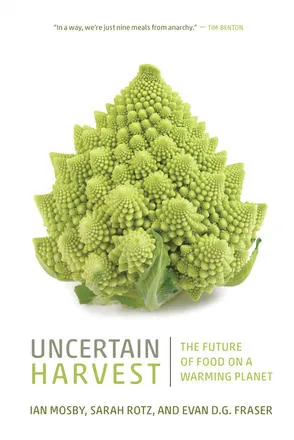
Image Books Uncertain harvest: The future of food on a warming planet This book examines how the food system can adapt to be able to produce enough food in a changing climate. The authors present global policy options and list key foods that could help, including algae, caribou and kale. Read
Image Reports How biocredits can protect biodiversity and reduce poverty This report from the International Institute for Environment and Development explores the potential to use “biocredits” to protect biodiversity. Biocredits are an economic instrument that allows the creation and trade of “biodiversity units”. Biocredits would be bought by people or institutions that want to invest in protecting biodiversity, and the money from their initial sale would fund conservation activities that increase biodiversity above a baseline level. The report distinguishes between biocredits and biodiversity offsets, which are used to compensate for habitats that have been destroyed, e.g. because of construction projects. Read
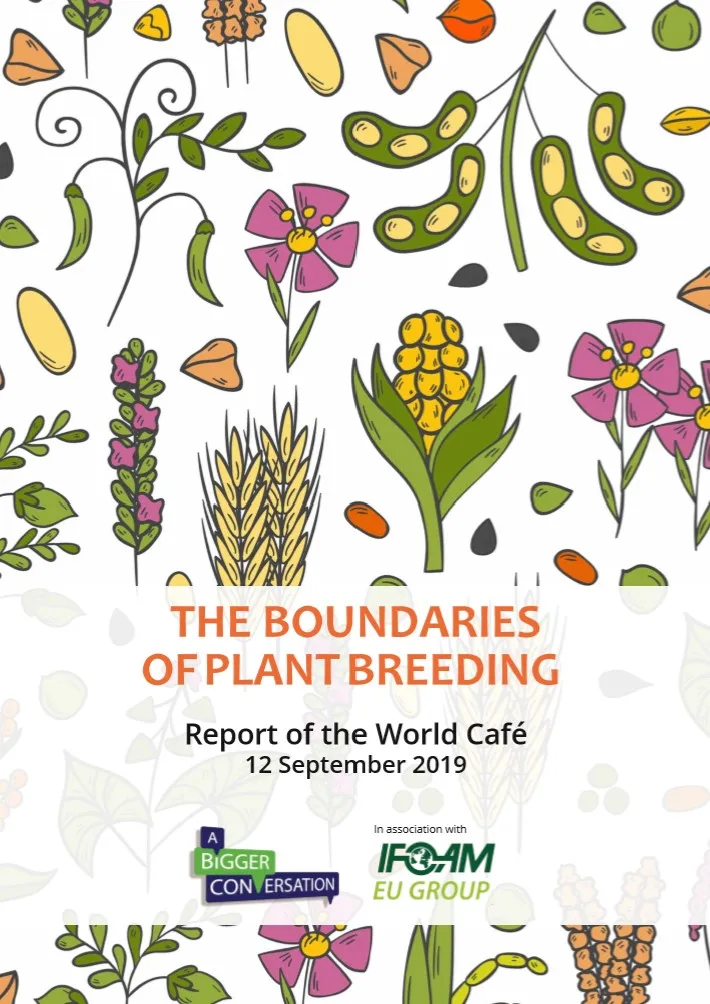
Image Reports The boundaries of plant breeding This report from UK group Beyond GM (directed by FCRN member Pat Thomas) presents the results of a world café held in September 2019. The world café brought together people representing a wide variety of practices, beliefs and views on the subject of genome editing in plant breeding, and the conversation covered values, worldviews, ethics, regulation, citizen engagement and more. Read
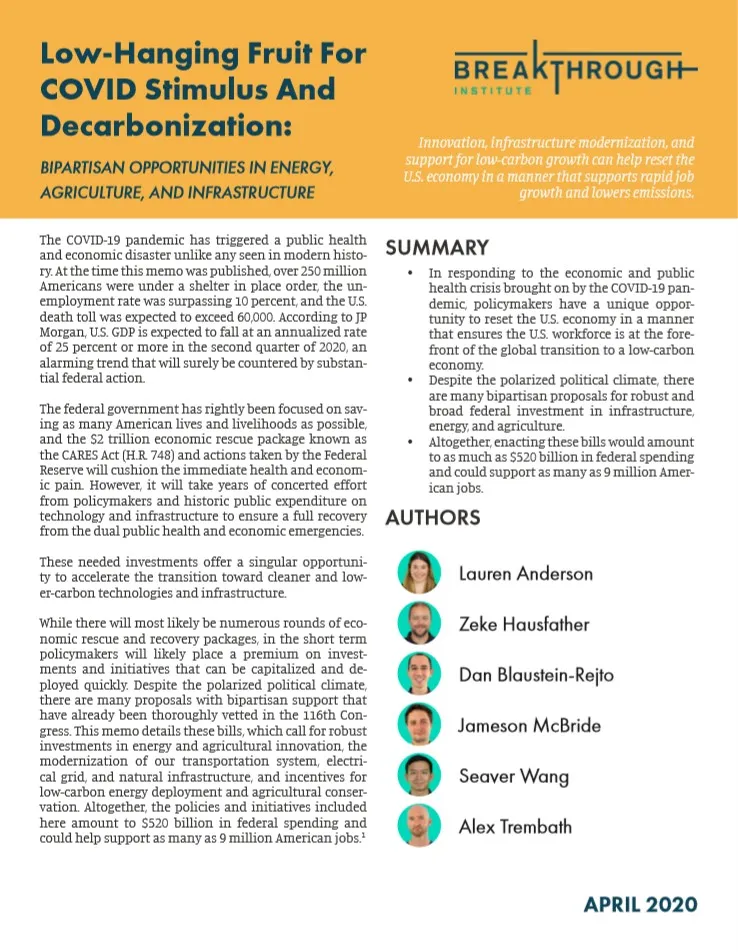
Image Reports Low-hanging fruit for COVID-19 stimulus & decarbonisation This report from US thinktank The Breakthrough Institute, co-authored by FCRN member Dan Blaustein-Rejto, outlines over $500 billion in potential federal spending that could lower emissions, be included in upcoming post-COVID stimulus investments and has already been vetted and earned bipartisan support in Congress. The brief proposes an agricultural research funding increase, research facility maintenance, and biomethane tax credits in addition to many proposals regarding energy innovation and infrastructure. Read
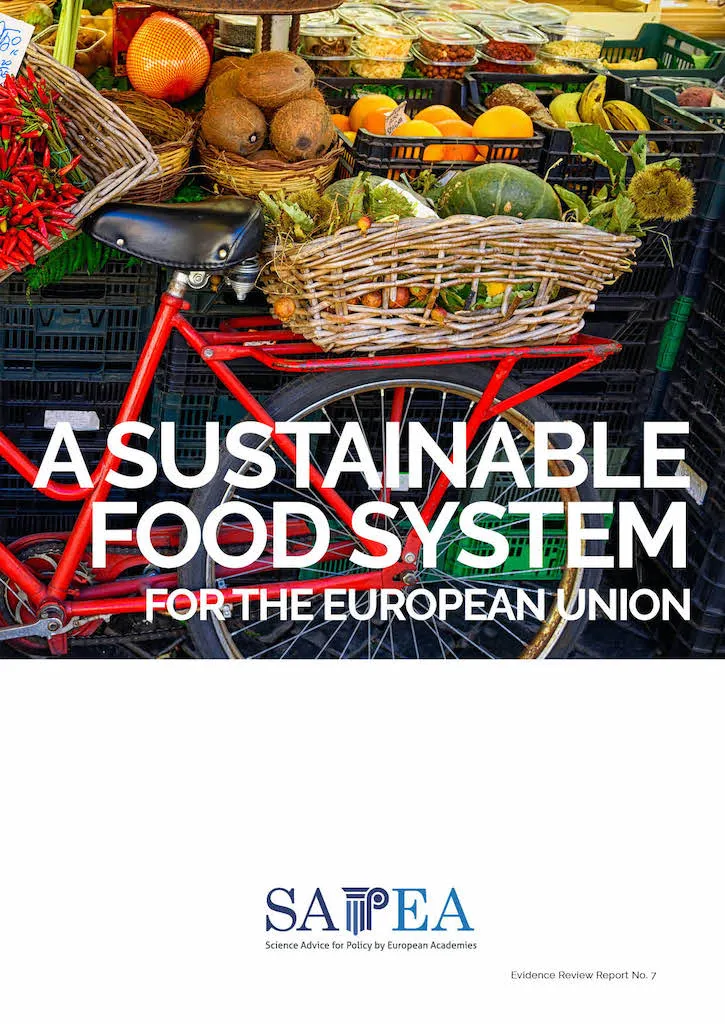
Image Reports A sustainable food system for the European Union This report by Science Advice for Policy by European Academies sets out evidence on effective policies for sustainably transforming the European food system in an inclusive, just and timely way. It concludes that the complexity of food systems means that transformations rely on coordinated action between many actors, including different levels of governance. Read
Image Journal articles Evaluation of climate friendly farming outreach This paper by FCRN member Dominic Moran evaluates Farming for a Better Climate, a participatory extension programme (PEP) in Scotland that assists farmers in adopting climate friendly farming practices. PEPs are a type of advisory service where farmers, researchers and rural experts can swap information. The authors aimed to fill a research gap, since no other evaluations of PEPs for climate friendly farming existed at the time the paper was written. Read
Image Journal articles Potential impacts of changing US dietary advice This paper by FCRN member Diego Rose estimates that 16% of adults in the United States might be receptive to changing their diet if national dietary guidance were to include information about environmental sustainability. It also estimates the impacts of a range of different dietary changes for those people on greenhouse gas emissions, dietary quality and dietary costs. Read