Image Resources Our extensive research library contains thousands of summaries of journal articles, reports and news stories that can be searched by keyword and category RESOURCES CATEGORY Books Briefing paper Event recording Featured articles Featured report Game Journal articles News and resources Reports Think piece Video Working paper Workshop summary Year 2026 2025 2024 2023 2022 2021 2020 2019 2018 2017 2016 2015 2014 2013 2012 2011 2010 2009 2008 2007 2002 2001 Image Resource Open letter from civil society on the Global Alliance for Climate-Smart Agriculture In this open letter a large number of civil society organisations present a critique of the use of ‘Climate Smart Agriculture’, a concept that is gaining increasing attention among governments, NGOs, academics, corporations and in international policy. They state that they have concerns around the aims of the 'Global Alliance on Climate Smart Agriculture' to establish policies to enable farming to deal with the impacts of climate change. Read Image Resource Seafood businesses launch sustainable labelling and sourcing codes The Sustainable Seafood Coalition (SSC) has launched a new 'labelling code', intended to ensure that consumers are sure about what environmental claims on fish and seafood mean. A new 'sourcing code' accompanies the labelling and ensures that the coalition members source their fish and seafood products responsibly. Read Image Resource Oxfam briefing paper on public–private partnerships in African agriculture This report from Oxfam discusses large-scale partnerships between governments in Africa and donors and multinational companies. “Moral Hazard? ‘Mega’ public–private partnerships in African agriculture” is as the name suggests critical of these partnerships (PPP) and questions whether these partnerships lead to poverty eradication and improved rural livelihoods. The report argues that this way of mobilizing funds for the agricultural sector is often unproven and risky. Read Image Resource Annual report Bioversity International - work on Sustainable diets The annual report 2013 from Bioversity international contains a special discussion on “Improved nutrition through sustainable food choices”. The sustainable diets research by Bioversity focuses on food and food systems, taking into account food diversity and how it can be produced and acquired across all seasons and under different economic circumstances. Read Image Resource New climate and economy report from the Global Commission on the Economy and Climate A major new report released by a commission of global leaders finds that governments and businesses can improve economic growth and reduce their carbon emissions together. Rapid technological innovation and new investment in infrastructure are making it possible today to tackle climate change at the same time as improving economic performance. Read Image Resource Number-crunching could lead to unethical choices, says new study A recent study published in Organizational Behavior and Human Decision Processes explores the perils of conducting economic research in a vacuum. The researchers found that after completing a lesson in calculative economics participants were significantly more likely to behave in selfish ways and ‘engage in unethical behaviors to better themselves’. However, those participants who instead completed a history lesson (in this case specifically on the industrial revolution) were less likely to behave selfishly after. Read Image Resource Genetically modified seed sector This paper in the journal Food Security analyses the genetically modified (GM) seed industry. The paper states that since many scientists, policymakers and citizens are calling for sustainable intensification of global agriculture (providing high yields and incomes without adverse environmental impacts) it is crucial to discuss the important role of the seed sector in such plans. The paper “Taking Stock of the Genetically Modified Seed Sector Worldwide: Market, Stakeholders, and Prices” assembles comprehensive data on the contemporary GM seed industry and its importance within the seed sector as a whole. Read Image Resource Can we say what diet is best for health? This paper provides a schema for categorizing all diets as either: low carbohydrate; fat, low glycemic; Mediterranean; mixed, balanced; Paleolithic; or vegan. The researchers emphasize that the aim of the research is not to recommend one particular diet over another, but rather to highlight how disease prevention and increased public health is best realised. Read Image Resource Greenhouse gas levels rising at fastest rate since 1984 Concentrations of carbon dioxide last year grew at the fastest rate since 1984, says a BBC news article. Reporting on data released by the World Meteorological Organisation, the article describes how this increase in concentration is due not only to increased greenhouse gas emissions, but also to a reduced carbon uptake by the biosphere. This reduction could be temporary, or it could be an indication that the biosphere has reached its absorption limit. The article points out that seas, trees, and living things, which play an important role by absorbing over half of the total greenhouse gas emissions, are also breaking records; the oceans soak up about 4kg of CO2 per person every day, a rate unparalleled over the last 300 million years and resulting in unprecedented salination of the oceans. Read VIEW MORE
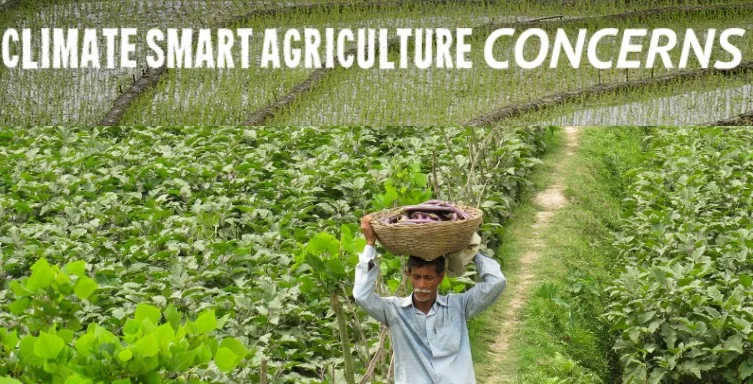
Image Resource Open letter from civil society on the Global Alliance for Climate-Smart Agriculture In this open letter a large number of civil society organisations present a critique of the use of ‘Climate Smart Agriculture’, a concept that is gaining increasing attention among governments, NGOs, academics, corporations and in international policy. They state that they have concerns around the aims of the 'Global Alliance on Climate Smart Agriculture' to establish policies to enable farming to deal with the impacts of climate change. Read
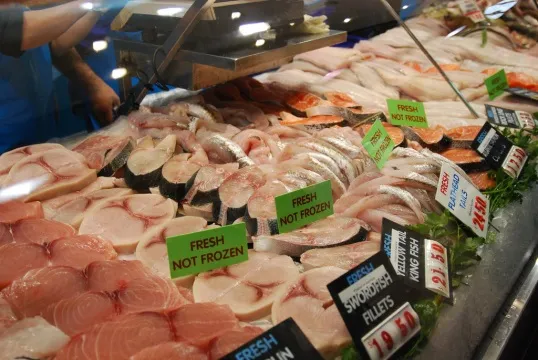
Image Resource Seafood businesses launch sustainable labelling and sourcing codes The Sustainable Seafood Coalition (SSC) has launched a new 'labelling code', intended to ensure that consumers are sure about what environmental claims on fish and seafood mean. A new 'sourcing code' accompanies the labelling and ensures that the coalition members source their fish and seafood products responsibly. Read
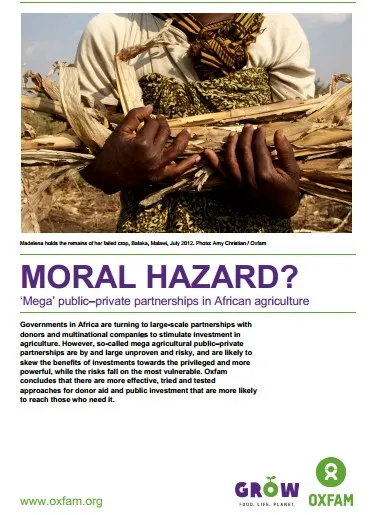
Image Resource Oxfam briefing paper on public–private partnerships in African agriculture This report from Oxfam discusses large-scale partnerships between governments in Africa and donors and multinational companies. “Moral Hazard? ‘Mega’ public–private partnerships in African agriculture” is as the name suggests critical of these partnerships (PPP) and questions whether these partnerships lead to poverty eradication and improved rural livelihoods. The report argues that this way of mobilizing funds for the agricultural sector is often unproven and risky. Read
Image Resource Annual report Bioversity International - work on Sustainable diets The annual report 2013 from Bioversity international contains a special discussion on “Improved nutrition through sustainable food choices”. The sustainable diets research by Bioversity focuses on food and food systems, taking into account food diversity and how it can be produced and acquired across all seasons and under different economic circumstances. Read
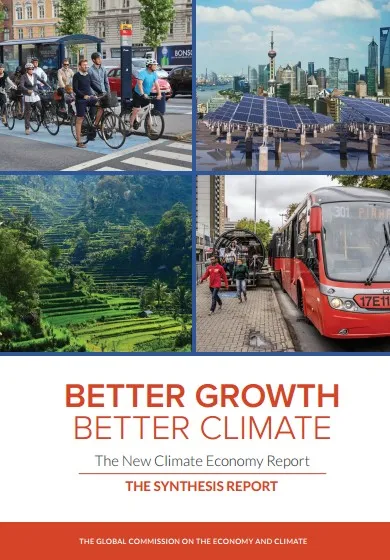
Image Resource New climate and economy report from the Global Commission on the Economy and Climate A major new report released by a commission of global leaders finds that governments and businesses can improve economic growth and reduce their carbon emissions together. Rapid technological innovation and new investment in infrastructure are making it possible today to tackle climate change at the same time as improving economic performance. Read
Image Resource Number-crunching could lead to unethical choices, says new study A recent study published in Organizational Behavior and Human Decision Processes explores the perils of conducting economic research in a vacuum. The researchers found that after completing a lesson in calculative economics participants were significantly more likely to behave in selfish ways and ‘engage in unethical behaviors to better themselves’. However, those participants who instead completed a history lesson (in this case specifically on the industrial revolution) were less likely to behave selfishly after. Read
Image Resource Genetically modified seed sector This paper in the journal Food Security analyses the genetically modified (GM) seed industry. The paper states that since many scientists, policymakers and citizens are calling for sustainable intensification of global agriculture (providing high yields and incomes without adverse environmental impacts) it is crucial to discuss the important role of the seed sector in such plans. The paper “Taking Stock of the Genetically Modified Seed Sector Worldwide: Market, Stakeholders, and Prices” assembles comprehensive data on the contemporary GM seed industry and its importance within the seed sector as a whole. Read
Image Resource Can we say what diet is best for health? This paper provides a schema for categorizing all diets as either: low carbohydrate; fat, low glycemic; Mediterranean; mixed, balanced; Paleolithic; or vegan. The researchers emphasize that the aim of the research is not to recommend one particular diet over another, but rather to highlight how disease prevention and increased public health is best realised. Read
Image Resource Greenhouse gas levels rising at fastest rate since 1984 Concentrations of carbon dioxide last year grew at the fastest rate since 1984, says a BBC news article. Reporting on data released by the World Meteorological Organisation, the article describes how this increase in concentration is due not only to increased greenhouse gas emissions, but also to a reduced carbon uptake by the biosphere. This reduction could be temporary, or it could be an indication that the biosphere has reached its absorption limit. The article points out that seas, trees, and living things, which play an important role by absorbing over half of the total greenhouse gas emissions, are also breaking records; the oceans soak up about 4kg of CO2 per person every day, a rate unparalleled over the last 300 million years and resulting in unprecedented salination of the oceans. Read