Image Resources Our extensive research library contains thousands of summaries of journal articles, reports and news stories that can be searched by keyword and category RESOURCES CATEGORY Books Briefing paper Event recording Featured articles Featured report Game Journal articles News and resources Reports Think piece Video Working paper Workshop summary Year 2026 2025 2024 2023 2022 2021 2020 2019 2018 2017 2016 2015 2014 2013 2012 2011 2010 2009 2008 2007 2002 2001 Image Resource FORCE-FED: Does the food system constrict healthy choices for typical British families? This report by The Food Foundation describes typical British family diets, their healthiness and environmental footprint, and in particular the social and economic drivers that influence typical food choices. Read Image Resource Nitrogen on the Table This report quantifies the losses of reactive nitrogen from EU agriculture and food systems by food type, and assesses the impact of alternative diets (especially reduced meat) on the environment (through nitrogen emissions, greenhouse gas emissions and land use) and human health. Reactive nitrogen losses associated with agriculture refer mainly to the release of ammonia and nitrous oxide into the air, and nitrates into the ground. Nitrous oxide is a powerful greenhouse gas, and nitrate excesses in soil can lead to water pollution. Read Image Resource New evidence on how humans’ combined environmental impact has tipped the planet into a new geological era – the “Anthropocene” This paper presents evidence that humans are undoubtedly altering many geological processes on Earth—and that we have been for some time. According to the international group of geoscientists the evidence is overwhelming that the impact of human activity on Earth has pushed us into a new geological era, a human-dominated time period, termed the “Anthropocene.” Read Image Resource Call for conservation: abandoned pasture This commentary published in Science Letters, discusses new data recently released by FAO’s statistical division, and makes the case that the current large-scale reversion in pasture area is opening up a potential conservation opportunity. Author and FCRN member Joseph Poore argues that as grazing of land has become more intensive globally, we are seeing ruminant outputs increasing while large agricultural areas are being abandoned, and he argues that this offers a new opportunity for land-sparing conservation. Read Image Resource Increasing beef production could lower greenhouse gas emissions in Brazil if decoupled from deforestation This very useful paper focuses on Brazilian beef production in the Cerrado grasslands region of Brazil makes an important contribution to the on-going debate about the merits of different livestock production systems, and of different consumption patterns. Read Image Resource Paper: Impacts of Feeding Less Food-Competing Feedstuffs to Livestock on Global Food System Sustainability In this paper, researchers from universities in Switzerland, Italy, Austria, the UK and Germany investigate the potential for feeding livestock on less food-competitive feedstuffs (FCF – that is, animal feed derived from fewer human edible food sources) to reduce the negative environmental impacts of livestock farming. Read Image Resource Article discussing the implementation of a soda tax in Mexico This article in the UK newspaper, the Guardian, tells the story of how Mexico implemented its soda tax in 2014, the political debates that surrounded the decision and the lobbying efforts and reactions of the country’s powerful soda industry. Read Image Resource FAO warns: Obesity will be the next big challenge facing Africa The director of nutrition at the UN’s Food and Agriculture Organisation (FAO) Anna Lartey warns that while addressing problems with undernutrition has long been the main focus of African countries and aid organisations, the increasing challenges related to overweight and obesity are not being given sufficient attention. Read Image Resource Rainforest Alliance warns for severe effect of climate change on cocoa production – encourages focus on climate smart agriculture The certification organisation Rainforest Alliance states that scaled-up efforts to support climate-smart agriculture practices are desperately needed to support the millions of cocoa farmers that are suffering from the negative impacts of climate change. Read VIEW MORE
Image Resource FORCE-FED: Does the food system constrict healthy choices for typical British families? This report by The Food Foundation describes typical British family diets, their healthiness and environmental footprint, and in particular the social and economic drivers that influence typical food choices. Read
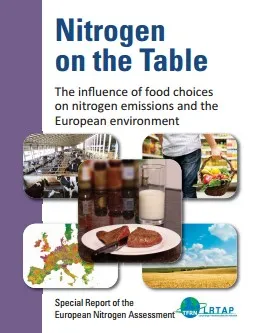
Image Resource Nitrogen on the Table This report quantifies the losses of reactive nitrogen from EU agriculture and food systems by food type, and assesses the impact of alternative diets (especially reduced meat) on the environment (through nitrogen emissions, greenhouse gas emissions and land use) and human health. Reactive nitrogen losses associated with agriculture refer mainly to the release of ammonia and nitrous oxide into the air, and nitrates into the ground. Nitrous oxide is a powerful greenhouse gas, and nitrate excesses in soil can lead to water pollution. Read
Image Resource New evidence on how humans’ combined environmental impact has tipped the planet into a new geological era – the “Anthropocene” This paper presents evidence that humans are undoubtedly altering many geological processes on Earth—and that we have been for some time. According to the international group of geoscientists the evidence is overwhelming that the impact of human activity on Earth has pushed us into a new geological era, a human-dominated time period, termed the “Anthropocene.” Read
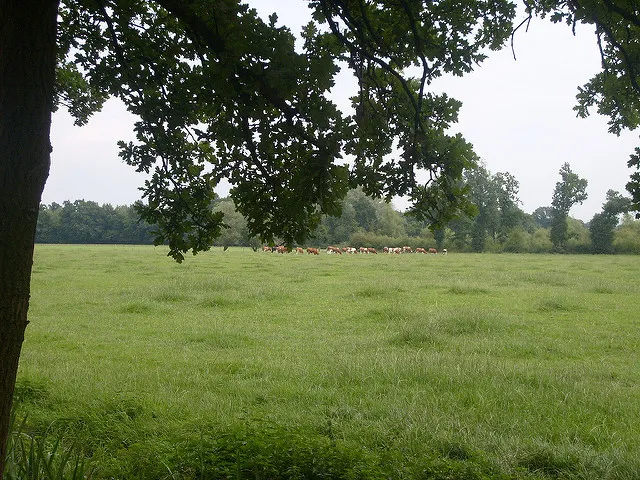
Image Resource Call for conservation: abandoned pasture This commentary published in Science Letters, discusses new data recently released by FAO’s statistical division, and makes the case that the current large-scale reversion in pasture area is opening up a potential conservation opportunity. Author and FCRN member Joseph Poore argues that as grazing of land has become more intensive globally, we are seeing ruminant outputs increasing while large agricultural areas are being abandoned, and he argues that this offers a new opportunity for land-sparing conservation. Read
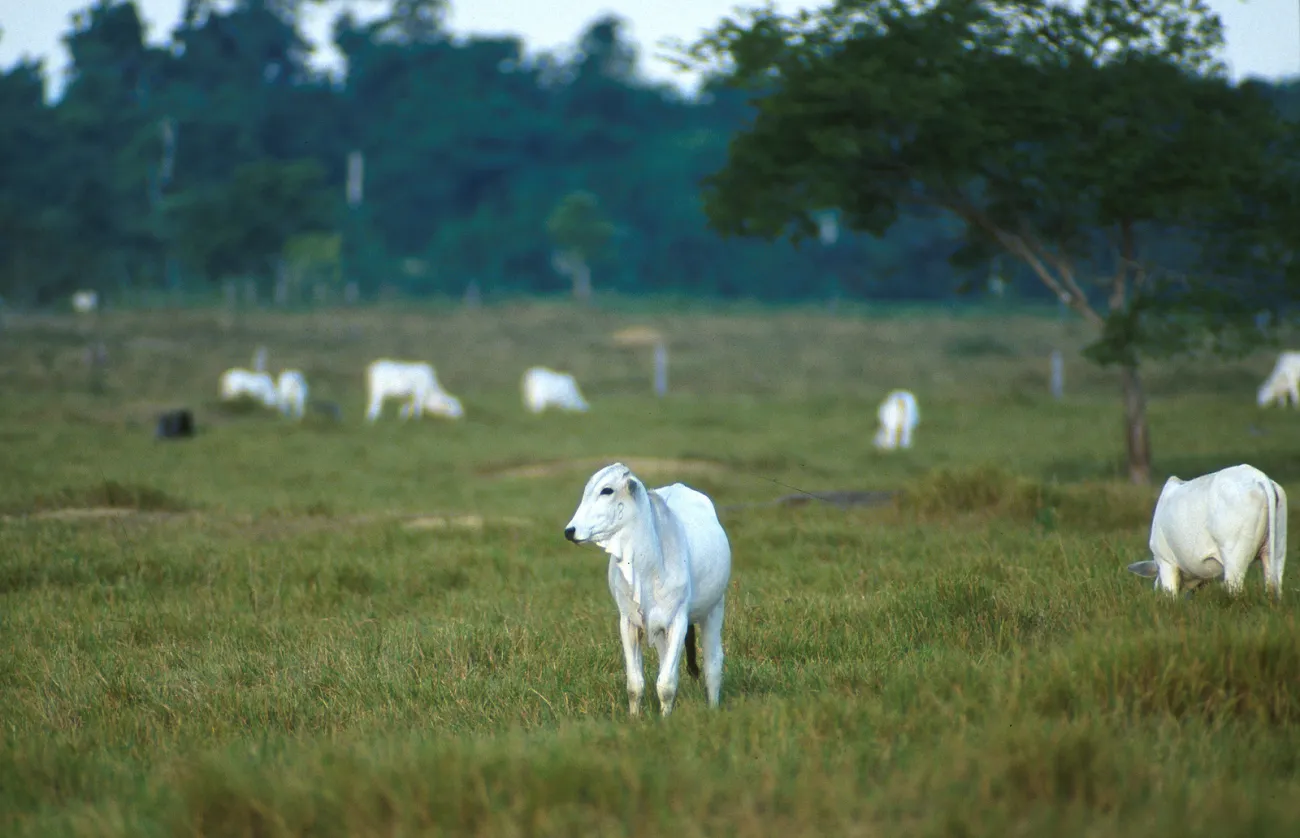
Image Resource Increasing beef production could lower greenhouse gas emissions in Brazil if decoupled from deforestation This very useful paper focuses on Brazilian beef production in the Cerrado grasslands region of Brazil makes an important contribution to the on-going debate about the merits of different livestock production systems, and of different consumption patterns. Read
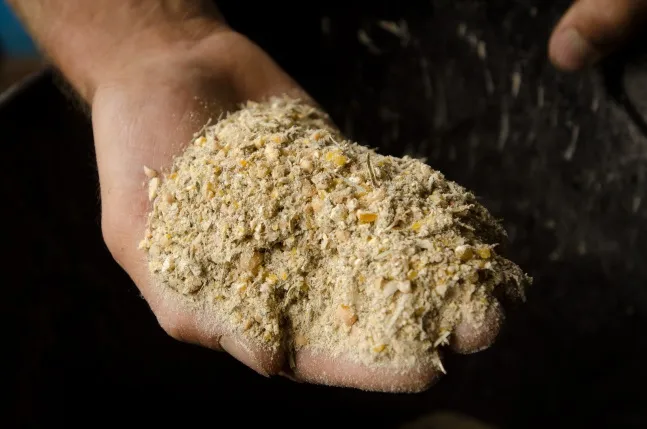
Image Resource Paper: Impacts of Feeding Less Food-Competing Feedstuffs to Livestock on Global Food System Sustainability In this paper, researchers from universities in Switzerland, Italy, Austria, the UK and Germany investigate the potential for feeding livestock on less food-competitive feedstuffs (FCF – that is, animal feed derived from fewer human edible food sources) to reduce the negative environmental impacts of livestock farming. Read
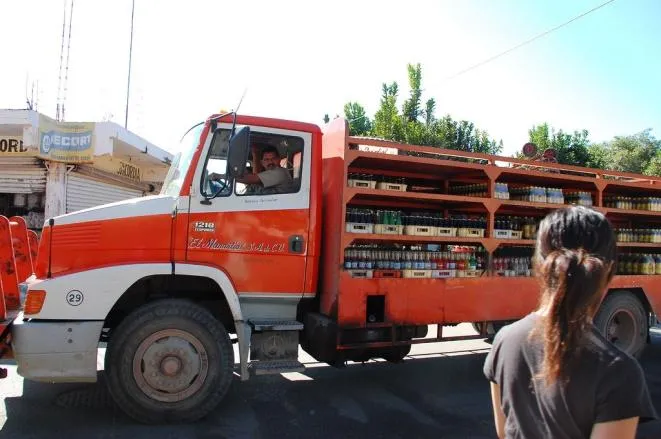
Image Resource Article discussing the implementation of a soda tax in Mexico This article in the UK newspaper, the Guardian, tells the story of how Mexico implemented its soda tax in 2014, the political debates that surrounded the decision and the lobbying efforts and reactions of the country’s powerful soda industry. Read
Image Resource FAO warns: Obesity will be the next big challenge facing Africa The director of nutrition at the UN’s Food and Agriculture Organisation (FAO) Anna Lartey warns that while addressing problems with undernutrition has long been the main focus of African countries and aid organisations, the increasing challenges related to overweight and obesity are not being given sufficient attention. Read
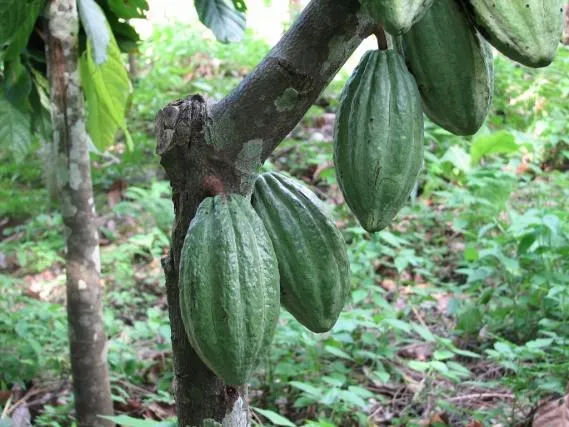
Image Resource Rainforest Alliance warns for severe effect of climate change on cocoa production – encourages focus on climate smart agriculture The certification organisation Rainforest Alliance states that scaled-up efforts to support climate-smart agriculture practices are desperately needed to support the millions of cocoa farmers that are suffering from the negative impacts of climate change. Read