Image Resources Our extensive research library contains thousands of summaries of journal articles, reports and news stories that can be searched by keyword and category RESOURCES CATEGORY Books Briefing paper Event recording Featured articles Featured report Game Journal articles News and resources Reports Think piece Video Working paper Workshop summary Year 2026 2025 2024 2023 2022 2021 2020 2019 2018 2017 2016 2015 2014 2013 2012 2011 2010 2009 2008 2007 2002 2001 Image Resource New report from Malabo Montpellier Panel’s on policies and practices to reduce malnutrition levels and promote healthier and more diverse diets in Africa The Malabo Montpellier Panel’s new report, Nourished: How Africa Can Build a Future Free from Hunger and Malnutrition, takes a systematic country study approach to identify where progress has been achieved to substantially improve a country’s nutritional status. Read Image Resource First edition of the Global Land Outlook published by the United Nations Convention to Combat Desertification The United Nations Convention to Combat Desertification (UNCCD) has published its first edition of the Global Land Outlook (GLO), addressing future challenges and opportunities for the management and restoration of land resources in the context of sustainable development. Read Image Resource Retail refrigeration: Making the transition to clean cold In October 2016, the Kigali Amendment to the Montreal Protocol was adopted by the world’s nations, mandating the phase-down of hydrofluorocarbons (HFCs) by cutting their production and consumption. This new report from the University of Birmingham, published at the one year anniversary of the Kigali Amendment, highlights the significant challenge facing the European retail industry as it transitions from damaging HFCs to natural refrigerants. Read Image Resource Estimated Effects of Future Atmospheric CO2 Concentrations on Protein Intake and the Risk of Protein Deficiency by Country and Region This study by US- and New Zealand-based researchers estimates the effect of elevated CO2 (eCO2) on the edible protein content of crop plants, and subsequently on protein intake and protein deficiency risk globally, by country. The basis for this study is that 76% of the world’s population derives most of their daily protein from plants, and that a meta-analysis by Myers, et al. (2014) revealed that plant nutrient content (of various types including protein, iron and zinc) changes under elevated CO2. Read Image Resource Report on nutrition and food systems commissioned by the Committee on World Food Security The High Level Panel of Experts for Food Security and Nutrition (HLPE) is the science-policy interface of the Committee on World Food Security (CFS), which is an inclusive and evidence-based international and intergovernmental platform for food security and nutrition. It has produced a report - Nutrition and Food Systems - to be presented at CFS 44 in October 2017. Read Image Resource Anthropogenic carbon dioxide emissions may increase the risk of global iron deficiency Certain cereal grains and other crop plants have been shown to have lower iron concentrations when grown under elevated CO2. This study by researchers from Massachusetts, USA, examined diets from 152 countries to investigate which groups of people might be most at risk of iron deficiency as a result of increasing CO2 emissions, on the basis of current dietary composition, the current global prevalence of iron deficiency, and projected CO2 emissions up to the year 2050. Read Image Resource Greedy or needy? Land use and climate impacts of food in 2050 under different livestock futures This new paper by FCRN member Elin Röös , the FCRN’s Tara Garnett and colleagues explores the following questions: What would be the implications, for land use and greenhouse gas emissions, if our global population moved away from eating beef and other ruminant meats and switched mostly to chicken? What if we all went vegan? What if all our meat demand were met by artificial meat? Or what if, in an attempt to avoid ‘feed-food’ competition, we limited our consumption of animal products to what we could obtain by rearing animals on grasslands and feeding them byproducts and food waste? Read Image Resource Kwantlen’s Institute for Sustainable Food Systems creates food policy database for British Columbia, Canada Kwantlen’s Institute for Sustainable Food Systems has created a food policy database for British Columbia, Canada with over 2000 entries, incorporating 40% of the municipalities in the province. Read Image Resource Emission savings due to menu engineering IntoFood is a Norwegian-based organisation which helps food companies to report on sustainability and create greener menu offerings, led by FCRN member Will Nicholson. They have completed a project with ISS, a large catering company, in which they generated new menu information including carbon footprint data for all of the 2000+ recipes in ISS’ menu management system. Read VIEW MORE
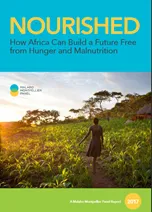
Image Resource New report from Malabo Montpellier Panel’s on policies and practices to reduce malnutrition levels and promote healthier and more diverse diets in Africa The Malabo Montpellier Panel’s new report, Nourished: How Africa Can Build a Future Free from Hunger and Malnutrition, takes a systematic country study approach to identify where progress has been achieved to substantially improve a country’s nutritional status. Read
Image Resource First edition of the Global Land Outlook published by the United Nations Convention to Combat Desertification The United Nations Convention to Combat Desertification (UNCCD) has published its first edition of the Global Land Outlook (GLO), addressing future challenges and opportunities for the management and restoration of land resources in the context of sustainable development. Read
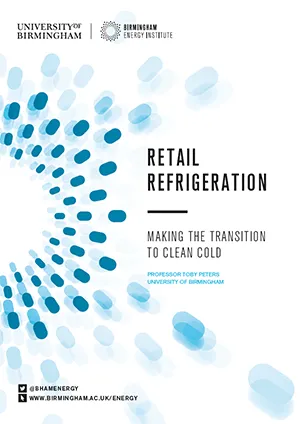
Image Resource Retail refrigeration: Making the transition to clean cold In October 2016, the Kigali Amendment to the Montreal Protocol was adopted by the world’s nations, mandating the phase-down of hydrofluorocarbons (HFCs) by cutting their production and consumption. This new report from the University of Birmingham, published at the one year anniversary of the Kigali Amendment, highlights the significant challenge facing the European retail industry as it transitions from damaging HFCs to natural refrigerants. Read
Image Resource Estimated Effects of Future Atmospheric CO2 Concentrations on Protein Intake and the Risk of Protein Deficiency by Country and Region This study by US- and New Zealand-based researchers estimates the effect of elevated CO2 (eCO2) on the edible protein content of crop plants, and subsequently on protein intake and protein deficiency risk globally, by country. The basis for this study is that 76% of the world’s population derives most of their daily protein from plants, and that a meta-analysis by Myers, et al. (2014) revealed that plant nutrient content (of various types including protein, iron and zinc) changes under elevated CO2. Read
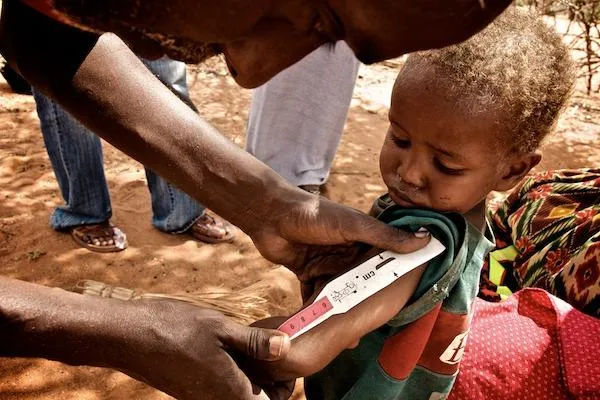
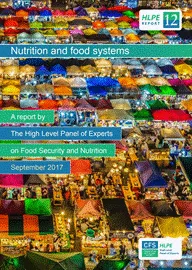
Image Resource Report on nutrition and food systems commissioned by the Committee on World Food Security The High Level Panel of Experts for Food Security and Nutrition (HLPE) is the science-policy interface of the Committee on World Food Security (CFS), which is an inclusive and evidence-based international and intergovernmental platform for food security and nutrition. It has produced a report - Nutrition and Food Systems - to be presented at CFS 44 in October 2017. Read
Image Resource Anthropogenic carbon dioxide emissions may increase the risk of global iron deficiency Certain cereal grains and other crop plants have been shown to have lower iron concentrations when grown under elevated CO2. This study by researchers from Massachusetts, USA, examined diets from 152 countries to investigate which groups of people might be most at risk of iron deficiency as a result of increasing CO2 emissions, on the basis of current dietary composition, the current global prevalence of iron deficiency, and projected CO2 emissions up to the year 2050. Read
Image Resource Greedy or needy? Land use and climate impacts of food in 2050 under different livestock futures This new paper by FCRN member Elin Röös , the FCRN’s Tara Garnett and colleagues explores the following questions: What would be the implications, for land use and greenhouse gas emissions, if our global population moved away from eating beef and other ruminant meats and switched mostly to chicken? What if we all went vegan? What if all our meat demand were met by artificial meat? Or what if, in an attempt to avoid ‘feed-food’ competition, we limited our consumption of animal products to what we could obtain by rearing animals on grasslands and feeding them byproducts and food waste? Read
Image Resource Kwantlen’s Institute for Sustainable Food Systems creates food policy database for British Columbia, Canada Kwantlen’s Institute for Sustainable Food Systems has created a food policy database for British Columbia, Canada with over 2000 entries, incorporating 40% of the municipalities in the province. Read
Image Resource Emission savings due to menu engineering IntoFood is a Norwegian-based organisation which helps food companies to report on sustainability and create greener menu offerings, led by FCRN member Will Nicholson. They have completed a project with ISS, a large catering company, in which they generated new menu information including carbon footprint data for all of the 2000+ recipes in ISS’ menu management system. Read