Image Resources Our extensive research library contains thousands of summaries of journal articles, reports and news stories that can be searched by keyword and category RESOURCES CATEGORY Books Briefing paper Event recording Featured articles Featured report Game Journal articles News and resources Reports Think piece Video Working paper Workshop summary Year 2026 2025 2024 2023 2022 2021 2020 2019 2018 2017 2016 2015 2014 2013 2012 2011 2010 2009 2008 2007 2002 2001 Image Reports Alternative protein as a COVID-19 stimulus option This report from US thinktank The Breakthrough Institute lays out the economic and environmental case for expanding federal support for alternative protein research and industry expansion. COVID-19 is not only impacting the meat processing industry - many alternative protein startups are also closed or threatened by declines in investment funding. The report estimates that the alternative protein industry could generate over 200,000 US jobs in the long-term, but only if the government provides support to the nascent industry to ensure it does not collapse because of COVID-19. Support might include small business innovation programmes, loan guarantees, and research and development programmes. Read Image Reports Global Nutrition Report 2020 The 2020 edition of the Global Nutrition Report uses the concept of nutrition equity to examine multiple forms of malnutrition, including undernutrition and obesity. The report stresses that poor diets and malnutrition are not simply the result of personal choices - rather, the problem is systemic, with the vast majority of people being unable to access or afford a healthy diet. It calls for coordinated action between stakeholders to build equitable, resilient and sustainable food and health systems. Read Image Journal articles Social cost-benefit analysis of food taxes in the Netherlands FCRN member Sander Biesbroek of Wageningen University & Research has co-authored this paper, which is the first modelling study to include and monetise social costs and benefits of a 15% or 30% meat tax or a 10% fruit and vegetables subsidy in the Netherlands. It finds that all three interventions could lead to a net benefit to society over a 30 year time frame. Read Image Journal articles Comment: The future of environmental food labelling This commentary piece draws on the experience of nutrition labelling to explore whether environmental sustainability labelling on food products can encourage more sustainable food choices and contribute towards building a healthy, sustainable food system. Read Image Featured articles Carbon footprint of Brazilian soy is highly variable FCRN member Erasmus zu Ermgassen has co-authored this paper, which calculates variations in the carbon footprint of soy products grown in different regions of Brazil. It finds that soy from certain areas associated with loss of natural vegetation has a carbon footprint per unit of product six times higher than the average carbon footprint of Brazilian soy. It also finds that soy products imported by the European Union are more likely to be from regions linked to deforestation than soy exported from Brazil to other places, such as China. Read Image News and resources Why are farms dumping food during COVID-19? This piece from nonprofit food media outlet The Counter explains why some farmers in the US have been dumping surplus food during the COVID-19 pandemic, at the same time that food banks are struggling to source enough food. Read Image News and resources Blog: A global food system is less vulnerable This blog post by Caroline Grunewald of US think tank The Breakthrough Institute argues that a global food system offers greater resilience against local production failures than a local food system, contrary to narratives that the COVID-19 pandemic illustrates the fragile nature of the global food system and that local food systems are more resilient. Read Image Books Long-term farming systems research This book discusses long-term experiments in agriculture, including their history, the insights they have produced, and the relationship of the experiments to agriculture’s environmental and social implications. Read Image Books Food waste to valuable resources This book presents recent developments, trends and challenges in turning food waste into products such as biofuel, enzymes, biopolymers and animal feed. Read VIEW MORE
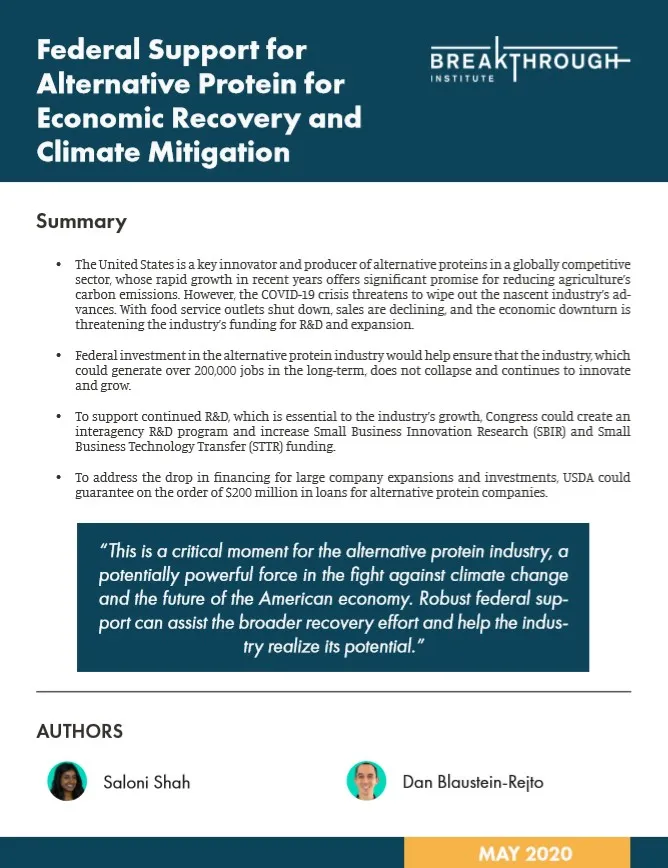
Image Reports Alternative protein as a COVID-19 stimulus option This report from US thinktank The Breakthrough Institute lays out the economic and environmental case for expanding federal support for alternative protein research and industry expansion. COVID-19 is not only impacting the meat processing industry - many alternative protein startups are also closed or threatened by declines in investment funding. The report estimates that the alternative protein industry could generate over 200,000 US jobs in the long-term, but only if the government provides support to the nascent industry to ensure it does not collapse because of COVID-19. Support might include small business innovation programmes, loan guarantees, and research and development programmes. Read
Image Reports Global Nutrition Report 2020 The 2020 edition of the Global Nutrition Report uses the concept of nutrition equity to examine multiple forms of malnutrition, including undernutrition and obesity. The report stresses that poor diets and malnutrition are not simply the result of personal choices - rather, the problem is systemic, with the vast majority of people being unable to access or afford a healthy diet. It calls for coordinated action between stakeholders to build equitable, resilient and sustainable food and health systems. Read
Image Journal articles Social cost-benefit analysis of food taxes in the Netherlands FCRN member Sander Biesbroek of Wageningen University & Research has co-authored this paper, which is the first modelling study to include and monetise social costs and benefits of a 15% or 30% meat tax or a 10% fruit and vegetables subsidy in the Netherlands. It finds that all three interventions could lead to a net benefit to society over a 30 year time frame. Read
Image Journal articles Comment: The future of environmental food labelling This commentary piece draws on the experience of nutrition labelling to explore whether environmental sustainability labelling on food products can encourage more sustainable food choices and contribute towards building a healthy, sustainable food system. Read
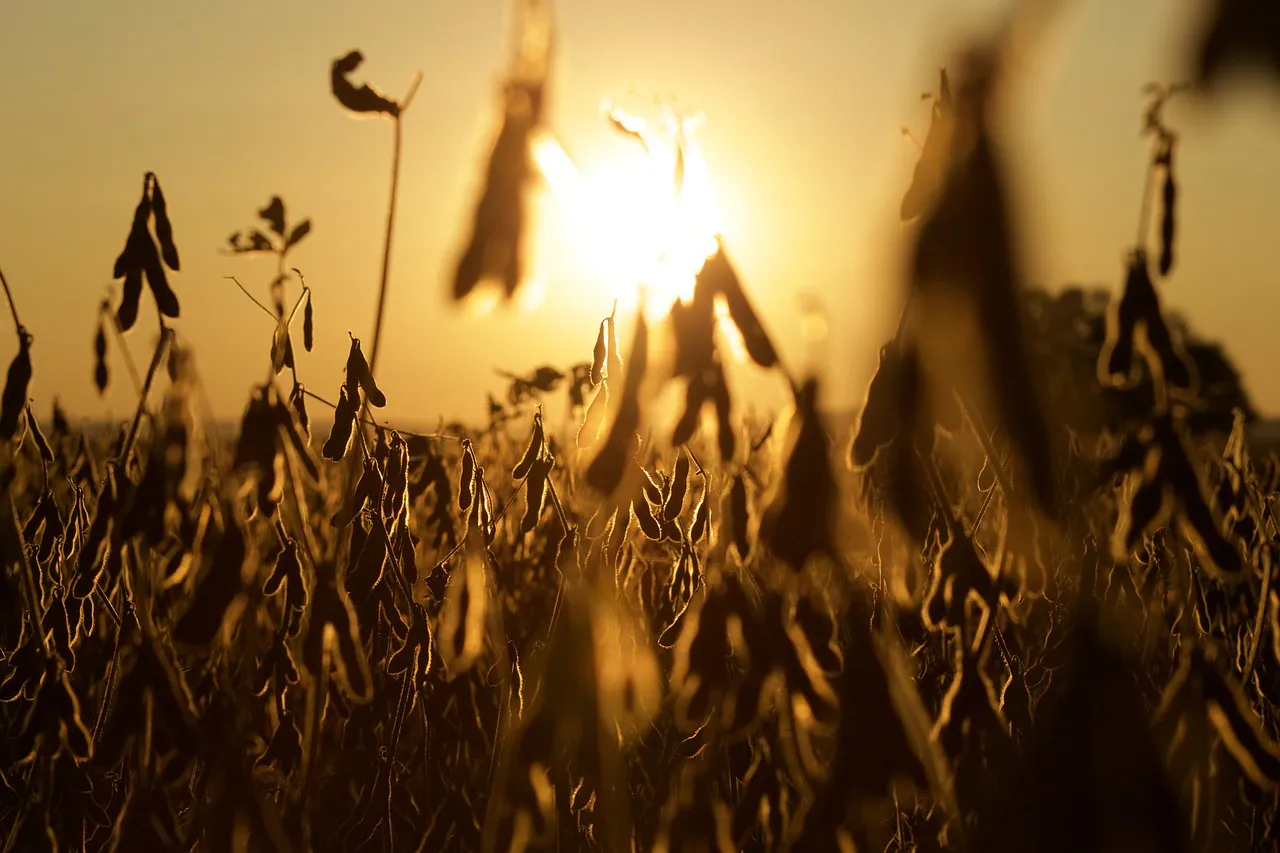
Image Featured articles Carbon footprint of Brazilian soy is highly variable FCRN member Erasmus zu Ermgassen has co-authored this paper, which calculates variations in the carbon footprint of soy products grown in different regions of Brazil. It finds that soy from certain areas associated with loss of natural vegetation has a carbon footprint per unit of product six times higher than the average carbon footprint of Brazilian soy. It also finds that soy products imported by the European Union are more likely to be from regions linked to deforestation than soy exported from Brazil to other places, such as China. Read
Image News and resources Why are farms dumping food during COVID-19? This piece from nonprofit food media outlet The Counter explains why some farmers in the US have been dumping surplus food during the COVID-19 pandemic, at the same time that food banks are struggling to source enough food. Read
Image News and resources Blog: A global food system is less vulnerable This blog post by Caroline Grunewald of US think tank The Breakthrough Institute argues that a global food system offers greater resilience against local production failures than a local food system, contrary to narratives that the COVID-19 pandemic illustrates the fragile nature of the global food system and that local food systems are more resilient. Read
Image Books Long-term farming systems research This book discusses long-term experiments in agriculture, including their history, the insights they have produced, and the relationship of the experiments to agriculture’s environmental and social implications. Read
Image Books Food waste to valuable resources This book presents recent developments, trends and challenges in turning food waste into products such as biofuel, enzymes, biopolymers and animal feed. Read