Close
Login Register
Search
  • About
    • What We Do
    • Who We Are
    • FAQs
  • Our Writing
    • Explainers
    • Essays
    • Letterbox
    • Reports & More
  • Podcasts
  • Our Events
  • Projects
    • Power In The Food Systems
    • Local-Global Scale Project
    • MEAT: The Four Futures Podcast
    • Fuel To Fork
    • Nature
    • Reckoning with Regeneration
    • SHIFT
    • Rethinking the Global Soy Dilemma
  • Resources
  • Opportunities
    • Jobs
    • Funding
    • Courses
    • Collaborations
    • Events
  • Newsletter
  • TABLE (EN)
Search
Back

Consumption and production trends

Image
Resource
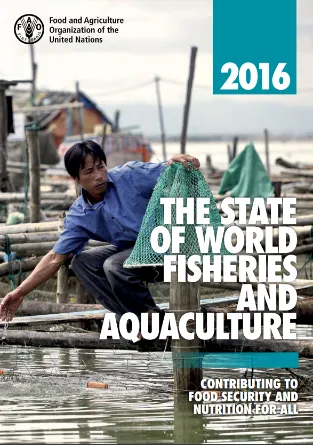
Global fish consumption per capita hits record high according to new FAO report
This is the 2016 edition of the FAO’s State of World Fisheries and Aquaculture.  The report estimates that fish now provide 6.7% of all protein consumed by humans globally, passing the 20kg per capita and year mark for the first time.
Read
Image
(Photo: Graeme Law, creative commons licence, Flickr)
Resource
Changes in four societal drivers and their potential to reduce Swedish nutrient inputs in to the sea
This report discusses how less protein in food and fewer phosphorus compounds added to food products could reduce the eutrophication of the sea. Below is a summary of the research by two of the report’s authors, Anders Grimvall and Eva-Lotta Sundblad from the Swedish Institute for the Marine Environment.
Read
Image
Resource
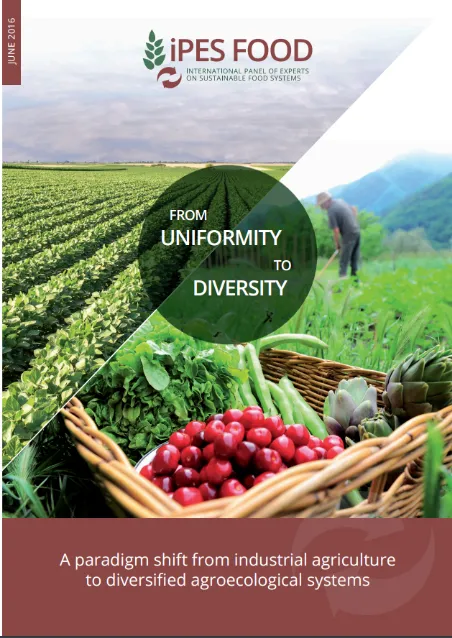
IPES report “From uniformity to diversity: a paradigm shift from industrial agriculture to diversified agroecological systems”
The iPES food panel (International Panel of Experts on Sustainable Food Systems), has published a report reviewing the latest evidence on benefits and challenges with different production models, specifically looking at the industrial agriculture and agroecological farming systems. It argues that there are eight key reasons why industrial agriculture is locked in place despite its negative impacts; and it maps out a series of steps to break these cycles and shift towards expanding agroecological farming.
Read
Image
(Photo credit: Food Science and Nutrition journal)
Resource
Food surplus and its climate burdens
This article discusses the interplay of food requirements, food waste, food deficits, and associated GHG emissions. It estimates the agricultural GHG emissions associated with food waste, argues the importance of reducing food waste as a contribution to addressing GHG emissions and proposes a standardized method for estimating food waste for all countries.
Read
Image
Resource
Diet-related greenhouse gas emissions assessed by a food frequency questionnaire and validated using 7-day weighed food records
This paper analyses a questionnaire for measuring greenhouse gas emissions (GHGE) from diets – the food frequency questionnaire (FFQ) or Meal-Q.  The paper compares the Meal-Q questionnaire to a 7-day weighed food record and this is the first study validating diet-related GHGE from a FFQ.
Read
Image
Photo credit: (Bernard Spragg, NZ. Under creative commons licence, Flickr)
Resource
How can the EU climate targets be met? A combined analysis of technological and demand-side changes in food and agriculture
This paper finds that the EU’s climate targets for 2050 for methane and nitrous oxide can be met by a combination of technological improvements in agriculture (found to have a potential to cut emissions by nearly 50% in optimistic scenarios) and through a reduction in beef consumption. The study authors argue that these targets can be met even with a continued high consumption of pork and poultry.
Read
Image
Resource
Impact of climate change on food production could cause over 500,000 extra deaths in 2050
This study, published in The Lancet, concludes that climate change will have a dampening effect on progress being made to reduce the number of people who are hungry and malnourished. It concludes that climate change will reduce the number of avoided deaths by 529,000 – or, put another way – will be responsible for 529,000 additional and avoidable deaths by 2050.
Read
Image
Resource
Insect oil a new sustainable source of Omega 3
This ScienceDaily article describes how researchers at Wageningen University and Research Centre have shown that insect oils – currently extracted from insects alongside the desired edible proteins but discarded as a waste product – contain omega-3 fatty acids.
Read
Image
Resource
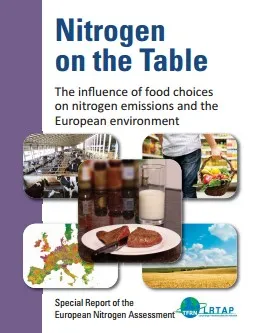
Nitrogen on the Table
This report quantifies the losses of reactive nitrogen from EU agriculture and food systems by food type, and assesses the impact of alternative diets (especially reduced meat) on the environment (through nitrogen emissions, greenhouse gas emissions and land use) and human health. Reactive nitrogen losses associated with agriculture refer mainly to the release of ammonia and nitrous oxide into the air, and nitrates into the ground. Nitrous oxide is a powerful greenhouse gas, and nitrate excesses in soil can lead to water pollution.
Read
  • VIEW MORE

Sign up for Fodder, our newsletter covering sustainable food news.

Sign up
  • Glossary
  • About
  • Our Writing
  • Podcasts
  • Resources

Social

YouTube Facebook Instagram

© Copyright 2025

A collaboration between: