Close
Login Register
Search
  • About
    • What We Do
    • Who We Are
    • FAQs
  • Our Writing
    • Explainers
    • Essays
    • Letterbox
    • Reports & More
  • Podcasts
  • Our Events
  • Projects
    • Power In The Food Systems
    • Local-Global Scale Project
    • MEAT: The Four Futures Podcast
    • Fuel To Fork
    • Nature
    • Reckoning with Regeneration
    • SHIFT
    • Rethinking the Global Soy Dilemma
  • Resources
  • Opportunities
    • Jobs
    • Funding
    • Courses
    • Collaborations
    • Events
  • Newsletter
  • TABLE (EN)
Search
Back

Agricultural biodiversity

Image
Resource
New report on economics by Compassion in World Farming
This report by Compassion in World Farming highlights the so-called “negative externalities” associated with livestock-based food production – that is, costs to human health and the environment that are borne by society as a whole and which are not accounted for by the cost of producing the food or the price of consuming it.
Read
Image
Resource
Wildlife-friendly farming strategies to promote biodiversity
In this paper, researchers from the Universities of Southampton and Reading compare how effective three different wildlife-friendly farming strategies are at supporting habitat diversity and species richness.
Read
Image
Resource
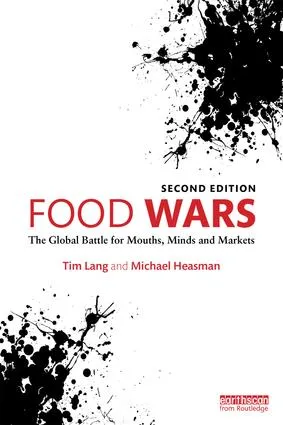
Food Wars - The Global Battle for Mouths, Minds and Markets, 2nd Edition, By Tim Lang and Michael Heasman
In the years since publication of the first edition of “Food Wars” much has happened in the world of food policy. This new edition brings these developments fully up to date within the original analytical framework of competing paradigms or worldviews shaping the direction and decision-making within food politics and policy.
Read
Image
Resource
World Bank blog-post: Greenhouse gas accounting: A step forward for climate-smart agriculture
In this blog-post Ademola Braimoh, Senior Natural Resources Management Specialist, at the World Bank, argues that quantifying greenhouse gas emissions from agricultural production is a necessary step for climate-smart agriculture (CSA). He writes that greenhouse gas accounting can provide the numbers and data that are important for solid decision making.
Read
Image
Resource
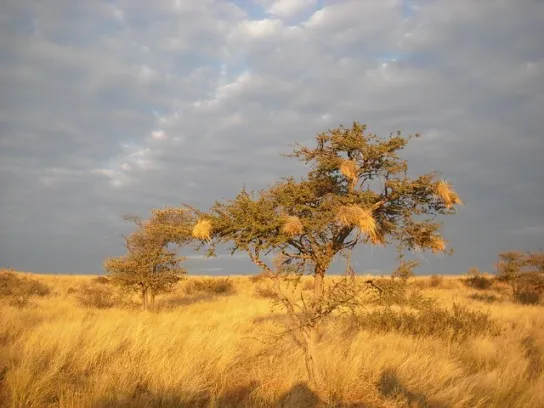
Can Africa provide enough low-carbon land to meet global food needs?
Some scientists have suggested that Africa's wet savannahs could be ideal for growing crops needed to meet the growing demand for food and bioenergy. In this paper however, researchers from Princeton University and the CGIAR Research Program on Climate Change, Agriculture and Food Security (CCAFS) warn that farmland conversion of these savannahs will come at a much higher cost than previously thought.
Read
Image
Resource
Online resource: an overview of research on ecological agriculture
An online overview of agroecology research is currently being conducted in the UK by the Ecological Land Cooperative. A mixed professional and volunteer research team was commissioned to: 1) review research on ecological agriculture in the United Kingdom; and 2) provide a database of existing research. The overview is freely accessible and it was developed to inform both on-going research work and those working in the field of agroecology.
Read
Image
Resource
The susDISH analysis method – Sustainability in the catering industry
The booklet The susDISH analysis method – Sustainability in the catering industry, taking account of both nutritional and environmental aspects in recipe planning is published by the Institute of Agricultural and Nutritional Sciences of the Halle-Wittenberg University.
Read
Image
Resource
The Sustainable Intensification of European Agriculture: A Review Sponsored by the RISE Foundation
This report builds on the dialogue built during a workshop held by RISE in 2014 regarding the measurement of farming environmental performance so as to further refine the definitions of sustainable intensification and the subsequent implications that such definitions pose on policy making to progress it. In doing so, the report explores three different case studies: The first case study focuses on soil performance and resilience. It shows how achieving sustainable intensification is highly dependent on having sound measurement of the underlying conditions.
Read
Image
Resource
Organic agriculture and biodiversity impacts
This study, entitled "Gains to species diversity in organically farmed fields are not propagated at the farm level, investigates whether organic farming contributes to biodiversity at the farm level."
Read
  • VIEW MORE

Sign up for Fodder, our newsletter covering sustainable food news.

Sign up
  • Glossary
  • About
  • Our Writing
  • Podcasts
  • Resources

Social

YouTube Facebook Instagram

© Copyright 2025

A collaboration between: