Close
Login Register
Search
  • About
    • What We Do
    • Who We Are
    • FAQs
  • Our Writing
    • Explainers
    • Essays
    • Letterbox
    • Reports & More
  • Podcasts
  • Our Events
  • Projects
    • Power In The Food Systems
    • Local-Global Scale Project
    • MEAT: The Four Futures Podcast
    • Fuel To Fork
    • Nature
    • Reckoning with Regeneration
    • SHIFT
    • Games at TABLE
    • Rethinking the Global Soy Dilemma
  • Resources
  • Opportunities
    • Jobs
    • Funding
    • Courses
    • Collaborations
    • Events
  • Newsletter
  • TABLE (EN)
Search
Back

TABLE

Image
Photo credit: Tanti Ruwani (flickr, creative commons)
Resource
Green rice: New rice variety has significant methane-reducing properties
A new genetic variety of rice has properties that ensure that the methane emissions that are normally released in production are substantially reduced. Biochemists in Sweden, China and the United States have worked together to create a new rice variety called SUSIBA2, which has now been dubbed the world’s first ‘climate-friendly rice’. 
Read
Image
Photo credit: US department of Agriculture (Flickr, creative commons)
Resource
Greenhouse Gas Taxes on Meat Products: A Legal Perspective
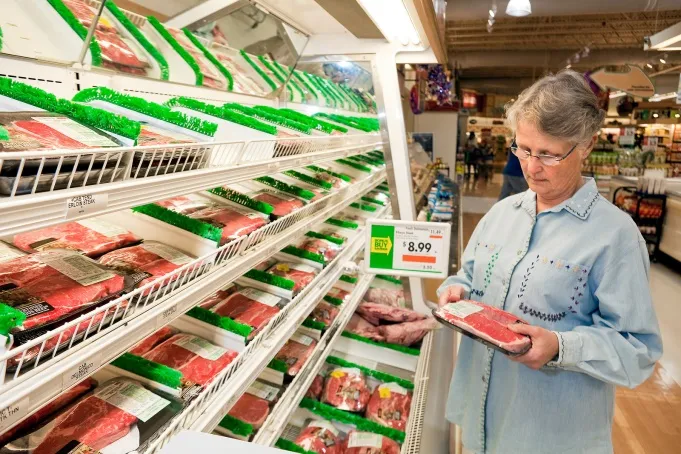
Meat consumption in the context of climate change can be regulated in various ways and this interesting (and very clearly written) article uses the example of a hypothetical EU tax on meat consumption. It addresses legal issues concerning three possible designs of a hypothetical EU tax on consumption of domestic and imported meat.
Read
Image
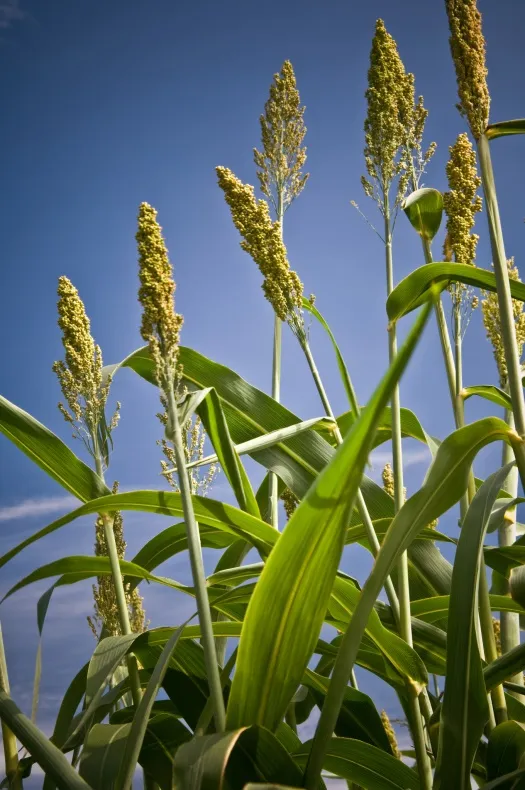
Sorghum (Photo credit:  U.S. department of Agriculture, Flickr, creative commons)
Resource
Emissions reduction: Scrutinize CO2 Removal Methods
In this Nature Comment, Phil Williamson of the Natural England Research Council and the University of East Anglia, argues that in order for the climate goals agreed at the COP21 in Paris last year to be achieved, a full assessment must be made of the methods for removing carbon dioxide (CO2) from the atmosphere.
Read
Image
Photo credit: U.S Department of Agriculture (Flickr, creative commons)
Resource
Integrated crop water management might sustainably halve the global food gap
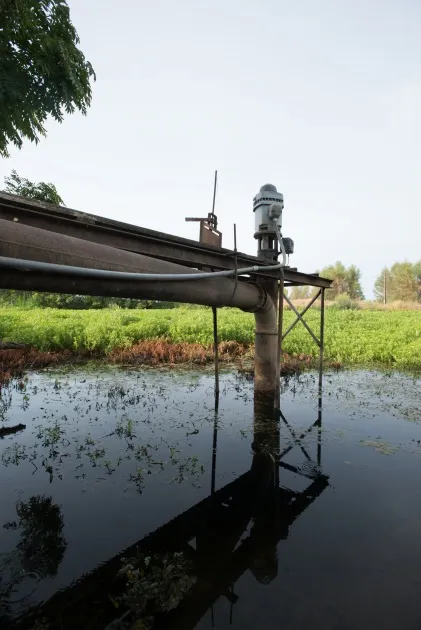
In this paper by researchers from Germany, Kenya, Australia and Sweden, a modeling approach is taken to ascertain the efficacy of applying improved water management techniques on a large scale to increase yields to help meet global demand for food.
Read
Image
Photo credit: USDA NRCS South Dakota (Flickr, Creative commons)
Resource
Loss of phosphorus from soils a threat to sustainable intensification of grasslands
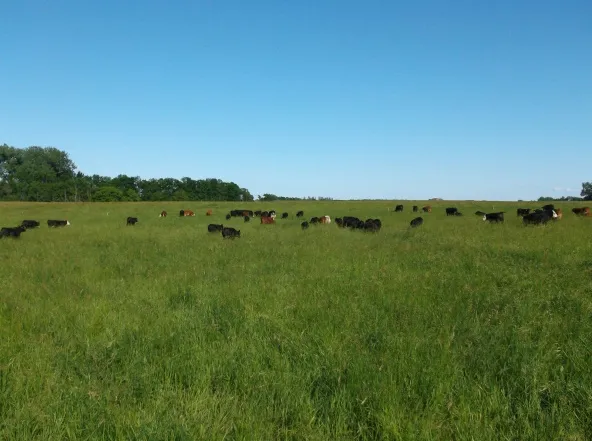
In this study, researchers from the Netherlands and Italy investigate the long-term (past and future) changes in phosphorus (P) budgets in grasslands used for grazing and in connection with croplands. The authors recognise a lack in the literature of studies characterising the P cycle in relation to grasslands and croplands, and - as grass-dependent livestock demand is increasing – they seek to address this lack of understanding.
Read
Image
Resource
Composition differences between organic and conventional meat and milk
Two recent systematic literature reviews conclude that both organic milk and meat contain around 50% more beneficial omega-3 fatty acids than conventionally produced products. The team led by Newcastle University, reviewed 196 papers on milk and 67 papers on meat and found clear differences between organic and conventional milk and meat, especially in terms of fatty acid composition, and the concentrations of certain essential minerals and antioxidants.
Read
Image
Resource
Synthesis reports: organic agriculture positively affects a number of public benefits, but more detailed research needed to fully understand impacts on health
In a major report, ICROFS (International Centre for Research in Organic Food Systems) at Aarhus University, Denmark evaluates the health and environmental impacts of organic versus conventionally farmed foods.
Read
Image
Resource
Organic agriculture in the twenty-first century: a farming practice that can help feed the future if done right
A new paper argues that organic farming has significant potential to feed a growing world population as global temperatures increase.  The researchers examine the performance of organic farming in light of four key sustainability metrics: productivity, environmental impact, economic viability and social wellbeing.
Read
Image
Resource
How food procurement can make a climate difference
This blog post by Public Health England highlights the the UK food and agriculture industry’s contribution to global climate change and environmental degradation, and the steps the Government is taking or has taken in light of this.
Read
  • VIEW MORE

Sign up for Fodder, our monthly newsletter unpacking the future of food.

Tick below to opt-in to email communications.

You can change your mind at any time by clicking the unsubscribe link in the footer of any email you receive from us, or by contacting us at info@tabledebates.org.

We use Mailchimp as our marketing platform. By clicking below to subscribe, you acknowledge that your information will be transferred to Mailchimp for processing. Learn more about Mailchimp's privacy practices.
  • Glossary
  • About
  • Our Writing
  • Podcasts
  • Resources

Social

YouTube Facebook Instagram

© Copyright 2025

A collaboration between: