Close
Login Register
Search
  • About
    • What We Do
    • Who We Are
    • FAQs
  • Our Writing
    • Explainers
    • Essays
    • Letterbox
    • Reports & More
  • Podcasts
  • Our Events
  • Projects
    • Power In The Food Systems
    • Local-Global Scale Project
    • MEAT: The Four Futures Podcast
    • Fuel To Fork
    • Nature
    • Reckoning with Regeneration
    • SHIFT
    • Games at TABLE
    • Rethinking the Global Soy Dilemma
  • Resources
  • Opportunities
    • Jobs
    • Funding
    • Courses
    • Collaborations
    • Events
  • Newsletter
  • TABLE (EN)
Search
Back

TABLE

Image
Photo: Pejman Parvandi, Footprint, Flickr, Creative Commons License 2.0
Resource
Sixteen years of change in the global terrestrial human footprint and implications for biodiversity conservation
There is increasing evidence that human demands on natural systems are accelerating and could affect the stability and services provided by these systems. This paper aims to aid understanding of the temporal and spatial variability of human pressures on natural systems, which provides a foundation for environmental damage mitigation. Recent advances in remote sensing have allowed great development in mapping of human pressures, particularly in forested areas. Other pressures, such as roads and pasture lands, have by comparison been overlooked.
Read
Image
Photo: Masahiro Ihara , Flickr, Creative Commons License 2.0
Resource
The impact of high-end climate change on agricultural welfare
The agricultural sector is particularly vulnerable to climate change; a small increase of 1 degree Celsius can have significant negative impacts on crop yields, especially in the tropics. Global economic losses in production of three major crops (wheat, maize, and barley) attributed to climate change in the recent past are estimated at approximately US$5 billion per year.
Read
Image
Photo: Wessel, Meat, Flickr, Creative Commons License 2.0
Resource
Meeting future food demand with current agricultural resources
This study evaluates the attainability of sustainable targets for better integrating food security and environmental impacts. Many studies have looked at how much food production could increase given a plausible mitigation solution, for example if food waste was halved from 24% to 12% then an additional 1 billion people could be fed. These studies, however, lack a temporal component that this study attempts to include, which enables evaluation of whether these advances can keep pace with projected increases in human demand.
Read
Image
Credit: Eric Huybrechts, Campi, fields - Le Marche, Italy, Flickr, Creative Commons Licence 2.0
Resource
Soil carbon feedback in response to increased atmospheric carbon dioxide may be weaker than previously thought
This study compares real world observations of the age of carbon in soils, to soil carbon’s age as represented in earth system models that are used to make climate change projections. It then explores the implications of the results, by modelling expected future levels of carbon storage in global soils, occurring in response to increasing levels of atmospheric carbon dioxide. To illustrate the difference, modelled increases in soil carbon storage are contrasted both before and after updating earth systems models to reflect these real-world observations.
Read
Image
Resource
Sweden’s supermarkets campaign to reduce meat consumption
In Sweden two of the largest supermarkets in the country have launched campaigns aimed at creating increased consumer awareness around the environmental impact of meat, encouraging consumers to lower their intake of meat and promoting plant-based alternatives.
Read
Image
Resource
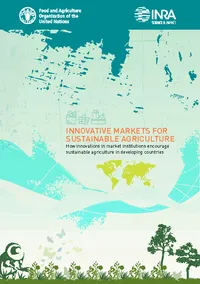
Innovative markets for sustainable agriculture: How innovations in market institutions encourage sustainable agriculture in developing countries
Between 2013 and 2015, the Food and Agriculture Organization of the United Nations (FAO) and the French National Institute for Agricultural Research (INRA) undertook a survey of innovative approaches that enable markets to act as incentives in the transition towards sustainable agriculture in developing countries.
Read
Image
Resource
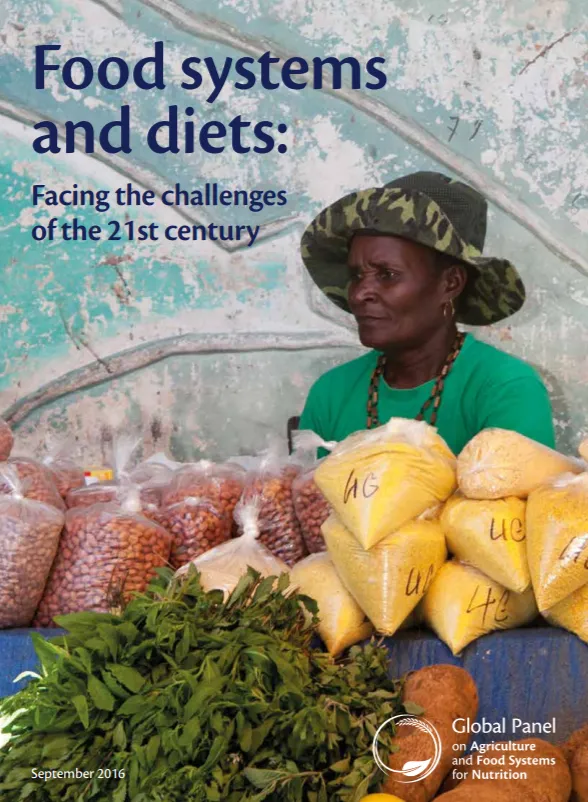
Global panel on Agriculture and Food Systems for Nutrition: Food systems and diets: Facing the challenges of the 21st century
This foresight report by the Global Panel on Agriculture and Food Systems for Nutrition (Glopan) outlines a vision for a food system that reduces malnutrition and promotes health. It is designed to help policy-makers make their food systems more supportive of high quality diets.
Read
Image
Photo: Jaume Escofet, Beef, FLickr, Creative Commons License 2.0
Resource
Danish ethics council report describes beef as a 'climate damaging food' and calls for beef tax
The Danish Council on Ethics is calling on the Danish government to regulate the consumption of what it calls ‘climate damaging foods’ by placing taxes on those products with the highest associated emissions.
Read
Image
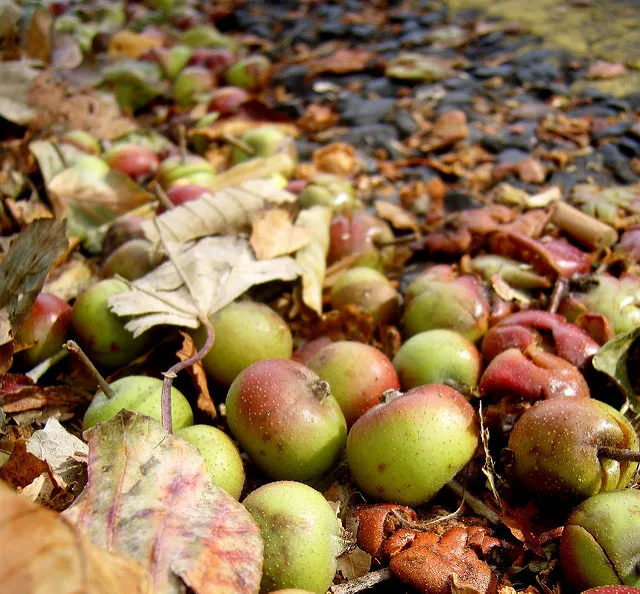
Credit: James Bowe, Apples by the road, Flickr, Creative Commons licence 2.0
Resource
Reducing agricultural loss and food waste: how will nature fare?
This editorial article focuses on an aspect of agricultural food loss and waste, not often considered: the effects that a reduction in food loss and waste at the production stage, might have on the species that have become reliant on food waste.
Read
  • VIEW MORE

Sign up for Fodder, our monthly newsletter unpacking the future of food.

Tick below to opt-in to email communications.

You can change your mind at any time by clicking the unsubscribe link in the footer of any email you receive from us, or by contacting us at info@tabledebates.org.

We use Mailchimp as our marketing platform. By clicking below to subscribe, you acknowledge that your information will be transferred to Mailchimp for processing. Learn more about Mailchimp's privacy practices.
  • Glossary
  • About
  • Our Writing
  • Podcasts
  • Resources

Social

YouTube Facebook Instagram

© Copyright 2025

A collaboration between: