Close
Login Register
Search
  • About
    • What We Do
    • Who We Are
    • FAQs
  • Our Writing
    • Explainers
    • Essays
    • Letterbox
    • Reports & More
  • Podcasts
  • Our Events
  • Projects
    • Power In The Food Systems
    • Local-Global Scale Project
    • MEAT: The Four Futures Podcast
    • Fuel To Fork
    • Nature
    • Reckoning with Regeneration
    • SHIFT
    • Games at TABLE
    • Rethinking the Global Soy Dilemma
  • Resources
  • Opportunities
    • Jobs
    • Funding
    • Courses
    • Collaborations
    • Events
  • Newsletter
  • TABLE (EN)
Search
Back

TABLE

Image
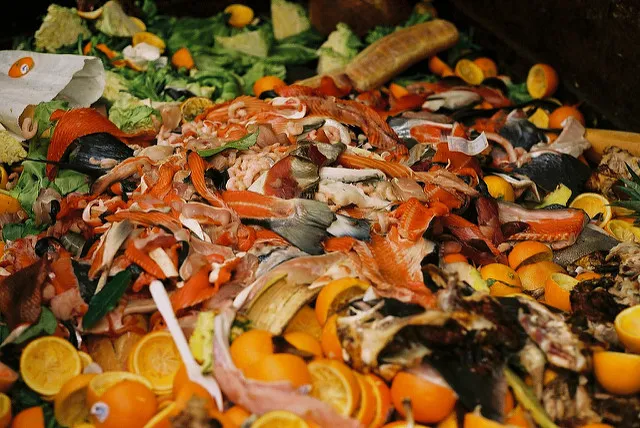
Photo: Taz, Food waste. Peering into a dumpster at the GI Market, Flickr, Creative Commons licence 2.0
Resource
A half-century of production-phase greenhouse gas emissions from food loss & waste in the global food supply chain
As the global population grows and food consumption patterns shift towards more resource intensive foods, food loss and waste (FLW) is becoming a topic of increasing importance due to its impact on future food availability and - via the greenhouse gas emissions embodied in its production - on climate change.
Read
Image
Photo: USFWS Mountain-Prairie, Wetlands in Croplands, Flickr, Creative Commons License 2.0
Resource
Modelling potential future trade-offs between biodiversity and cropland expansion to improve food security
In this modelling study, the authors examine potential trade-offs between sufficient food provisioning in the future and sustaining biodiversity. On the one hand they find that cropland expansion increases food security, particularly in areas which are currently struggling with access to safe and nutritious food.
Read
Image
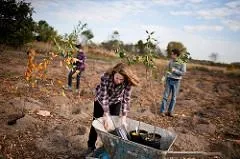
Photo: Tishman Environment and Design Center, Treeplanting, Flickr, Creative Commons License 2.0
Resource
Afforestation to mitigate climate change: impacts on food prices under consideration of albedo effects
Among climate mitigation options, afforestation offers its carbon sequestration potential at a moderate cost, and therefore might be used at a large scale in the future. As suitable land is limited though, competition of land for forest with crop and pastureland might drive food prices up.
Read
Image
Resource
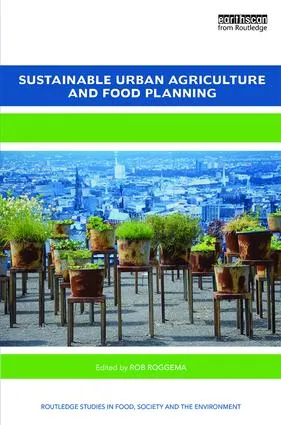
Sustainable Urban Agriculture and Food Planning
As urban populations rise rapidly and concerns about food security increase, interest in urban agriculture has been renewed in both developed and developing countries. This book focuses on the sustainable development of urban agriculture and its relationship to food planning in cities.
Read
Image
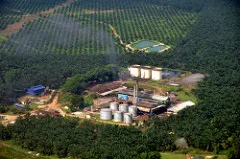
Photo: Marufish, palm oil mill, Flickr, Creative Commons licence 2.0
Resource
The Impacts of Oil Palm on Recent Deforestation and Biodiversity Loss
Strong demand for vegetable oil has led to a boom in the Indonesian and Malaysian palm oil industries since 1990. Typically planted in extremely large monoculture plantations, the crop has been implicated in biodiversity loss and human rights issues.
Read
Image
Photo: Jonathan Kos-Read, Meat, Flickr, Creative Commons License 2.0
Resource
Summary of consumption changes of meat and dairy products in China over 22 years
This short article runs through consumption data on meat and dairy products in China in urban and rural areas in 1990, 2002 and 2012. It uses data from the National Bureau of Statistics of China and the National Nutrition Survey.
Read
Image
Resource
Greenhouse gas emissions from pig and poultry production sectors in China from 1960 to 2010
Meat consumption is increasing, especially in the emerging economies. The Chinese government has an increasing interest in making steps towards sustainable livestock production, and the more GHG (greenhouse gas) “efficient” pork and poultry industries have seen substantial progress towards sustainability in the recent past.
Read
Image
Image: Woodleywonderworks, Flickr, Creative commons licence 2.0
Resource
Agricultural production and greenhouse gas emissions from world regions—The major trends over 40 years
Globally, agricultural production and land use change (of which some 90% is driven by agriculture) are responsible for approximately a quarter of global greenhouse gas emissions. 
Read
Image
Image: the research paper’s appendix
Resource
The negative footprint illusion: Perceptual bias in sustainable food consumption
Psychological research has shown that people often don’t make decisions on a rational basis, but rather do so heuristically - based on rules of thumb - that can systematically bias choices. This has important implications when it comes to promoting the sustainable consumption of food.
Read
  • VIEW MORE

Sign up for Fodder, our monthly newsletter unpacking the future of food.

Tick below to opt-in to email communications.

You can change your mind at any time by clicking the unsubscribe link in the footer of any email you receive from us, or by contacting us at info@tabledebates.org.

We use Mailchimp as our marketing platform. By clicking below to subscribe, you acknowledge that your information will be transferred to Mailchimp for processing. Learn more about Mailchimp's privacy practices.
  • Glossary
  • About
  • Our Writing
  • Podcasts
  • Resources

Social

YouTube Facebook Instagram

© Copyright 2025

A collaboration between: