Image Resources Our extensive research library contains thousands of summaries of journal articles, reports and news stories that can be searched by keyword and category RESOURCES CATEGORY Books Briefing paper Event recording Featured articles Featured report Game Journal articles News and resources Reports Think piece Video Working paper Workshop summary Year 2026 2025 2024 2023 2022 2021 2020 2019 2018 2017 2016 2015 2014 2013 2012 2011 2010 2009 2008 2007 2002 2001 Image Resource Lean, green, mean, obscene…? What is efficiency? And is it sustainable? We all know that the food system today is undermining the environment upon which future food production depends. But while we generally agree that we need do something to make food systems more sustainable, we do not necessarily agree about what, exactly, should be done. This paper explores these questions by considering how stakeholders think about efficiency in relation to animal production and consumption, both terrestrial and aquatic. It takes as its starting point three broadly discernible views. Read Image Resource 50 expert presentations on climate –smart agriculture published by FAO Over 50 expert presentations have been given on different aspects of climate change and agriculture in the MICCA Programme webinars during the past 3 years. Examples include recent webinars on conservation agriculture and climate-smart & gender-sensitive aquaculture. Read Image Resource Summary of Bonn Climate Talks Read Image Resource Product Sustainability Information: State of Play and Way Forward – report by UNEP’s Life Cycle Initiative Unsustainable patterns of consumption and production threaten global development and environmental well-being. Ensuring sustainable consumption and production should take a life cycle approach, and central to this is the development of product sustainability information (PSI). This publication provides four key recommendations in order to advance a coherent and context-relevant use of PSI that is useful for consumer decision-making: Read Image Resource The forgotten 10%: Climate mitigation in agricultural supply chains A new analysis by global non-profit CDP, formerly the Carbon Disclosure Project, looks at how some of the most recognizable household brands are managing climate change. Their report argues that many of the world’s biggest food, beverage and tobacco brands are missing their biggest opportunity to mitigate climate risks. Read Image Resource Emissions pledges ahead of UN climate summit are not ambitious enough to avoid dangerous climate change according to new policy paper Tracking intended nationally determined contributions (INDCs): what are the implications for greenhouse gas emissions in 2030? is the title of a policy paper produced by the Grantham Research Institute on Climate Change and the Environment and the ESRC Centre for Climate Change Economics and Policy at London School of Economics and Political Science. Parties to the UNFCCC agreed to set out their Intended Nationally Determined Contributions (INDCs) at the 20th Conference of the Parties (COP20) in Lima, Peru, in December 2014. The policy paper, which is intended to inform decision-makers in the public, private and third sectors, considers whether the INDCs submitted so far are consistent with the 2°C limit. Read Image Resource Meat and dairy production largest contributor to the expansion of global agricultural land A new paper published in Global Environmental Change analyses 50 years of data from FAO (from 1961 to 2011) to try to understand the drivers for global agricultural land use change. Pasture forms the largest component of agricultural land globally, but previous research on agricultural land use has focused disproportionately on the role of arable crops. Read Image Resource Nature commentary: Energy policy- Push renewables to spur carbon pricing In this comment piece in Nature, a group of researchers argue that putting a price on carbon dioxide and other greenhouse gases to curb emissions must form the centrepiece of any comprehensive climate-change policy. They point out that the current price of carbon remains much too low relative to the hidden environmental, health and societal costs of burning a tonne of coal or a barrel of oil. The global average price is below zero, once half a trillion dollars of fossil-fuel subsidies are factored in. Read Image Resource The importance of mixed crop & livestock farming systems in sub-Saharan Africa This article in Nature Climate Change argues that the global climate and agriculture research community needs to put increased emphasis on mixed crop-livestock farm systems and their interplay with climate adaptation and mitigation. Written by authors from CGIAR Research Program on Climate Change, Agriculture and Food Security (CCAFS) and the International Livestock Research Institute (ILRI), the piece outlines mixed farming systems' value to national development, climate adaptation and resilience building, farmers’ livelihoods and the globe’s food demand. Read VIEW MORE
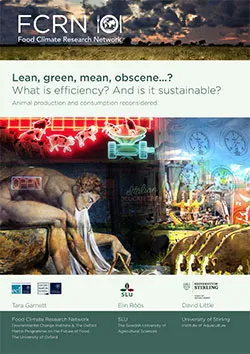
Image Resource Lean, green, mean, obscene…? What is efficiency? And is it sustainable? We all know that the food system today is undermining the environment upon which future food production depends. But while we generally agree that we need do something to make food systems more sustainable, we do not necessarily agree about what, exactly, should be done. This paper explores these questions by considering how stakeholders think about efficiency in relation to animal production and consumption, both terrestrial and aquatic. It takes as its starting point three broadly discernible views. Read
Image Resource 50 expert presentations on climate –smart agriculture published by FAO Over 50 expert presentations have been given on different aspects of climate change and agriculture in the MICCA Programme webinars during the past 3 years. Examples include recent webinars on conservation agriculture and climate-smart & gender-sensitive aquaculture. Read
Image Resource Product Sustainability Information: State of Play and Way Forward – report by UNEP’s Life Cycle Initiative Unsustainable patterns of consumption and production threaten global development and environmental well-being. Ensuring sustainable consumption and production should take a life cycle approach, and central to this is the development of product sustainability information (PSI). This publication provides four key recommendations in order to advance a coherent and context-relevant use of PSI that is useful for consumer decision-making: Read
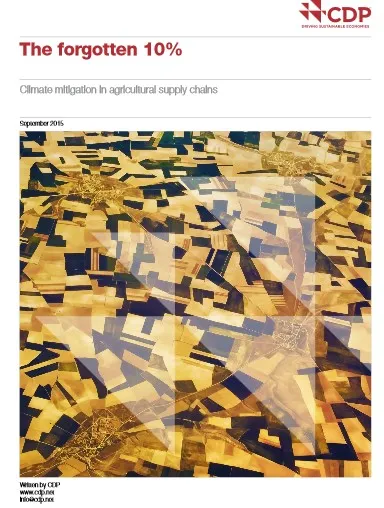
Image Resource The forgotten 10%: Climate mitigation in agricultural supply chains A new analysis by global non-profit CDP, formerly the Carbon Disclosure Project, looks at how some of the most recognizable household brands are managing climate change. Their report argues that many of the world’s biggest food, beverage and tobacco brands are missing their biggest opportunity to mitigate climate risks. Read
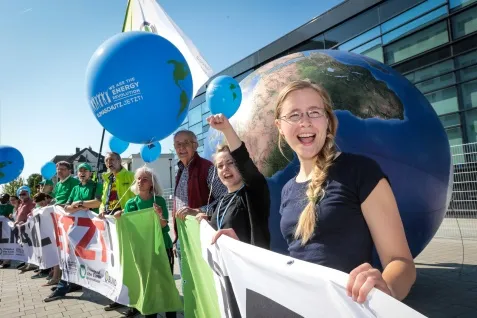
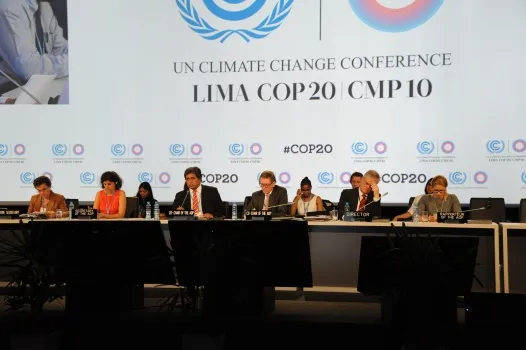
Image Resource Emissions pledges ahead of UN climate summit are not ambitious enough to avoid dangerous climate change according to new policy paper Tracking intended nationally determined contributions (INDCs): what are the implications for greenhouse gas emissions in 2030? is the title of a policy paper produced by the Grantham Research Institute on Climate Change and the Environment and the ESRC Centre for Climate Change Economics and Policy at London School of Economics and Political Science. Parties to the UNFCCC agreed to set out their Intended Nationally Determined Contributions (INDCs) at the 20th Conference of the Parties (COP20) in Lima, Peru, in December 2014. The policy paper, which is intended to inform decision-makers in the public, private and third sectors, considers whether the INDCs submitted so far are consistent with the 2°C limit. Read
Image Resource Meat and dairy production largest contributor to the expansion of global agricultural land A new paper published in Global Environmental Change analyses 50 years of data from FAO (from 1961 to 2011) to try to understand the drivers for global agricultural land use change. Pasture forms the largest component of agricultural land globally, but previous research on agricultural land use has focused disproportionately on the role of arable crops. Read
Image Resource Nature commentary: Energy policy- Push renewables to spur carbon pricing In this comment piece in Nature, a group of researchers argue that putting a price on carbon dioxide and other greenhouse gases to curb emissions must form the centrepiece of any comprehensive climate-change policy. They point out that the current price of carbon remains much too low relative to the hidden environmental, health and societal costs of burning a tonne of coal or a barrel of oil. The global average price is below zero, once half a trillion dollars of fossil-fuel subsidies are factored in. Read
Image Resource The importance of mixed crop & livestock farming systems in sub-Saharan Africa This article in Nature Climate Change argues that the global climate and agriculture research community needs to put increased emphasis on mixed crop-livestock farm systems and their interplay with climate adaptation and mitigation. Written by authors from CGIAR Research Program on Climate Change, Agriculture and Food Security (CCAFS) and the International Livestock Research Institute (ILRI), the piece outlines mixed farming systems' value to national development, climate adaptation and resilience building, farmers’ livelihoods and the globe’s food demand. Read