Image Resources Our extensive research library contains thousands of summaries of journal articles, reports and news stories that can be searched by keyword and category RESOURCES CATEGORY Books Briefing paper Event recording Featured articles Featured report Game Journal articles News and resources Reports Think piece Video Working paper Workshop summary Year 2026 2025 2024 2023 2022 2021 2020 2019 2018 2017 2016 2015 2014 2013 2012 2011 2010 2009 2008 2007 2002 2001 Image Resource Antibiotic resistance is also a food and climate issue In this blog David McCoy, director of Medact, argues that UK farmers and government should work hard to reduce on-farm antibiotic use. With evidence building that antimicrobial resistance in farm animals can be transferred across to humans, the issue is becoming increasingly urgent. Read Image Resource The effects of naming and shaming campaigns: the case of the Dutch factory farmed chicken One Dutch animal rights NGO and a growing public antipathy to the extremes of industrial animal farming have caused several major supermarkets in the Netherlands to stop selling meat from fast-growing chickens. Read Image Resource PhD Thesis: "Toward a dignified food security? Discourses of dignity, development, and culture in New York City and Bogotá" In this PhD thesis, Leah M. Ashe from Cardiff University School of Planning and Geography, examines how narratives of “food security” are constructed in New York city and Bogotá and how they are influenced by different development ideologies and discourses. Read Image Resource New EAT-Lancet commission launched to tackle the global food system’s role in malnutrition and global change On June 12th, prior to the annual EAT Forum in Stockholm, the establishment of the new EAT-Lancet Commission was announced jointly by the Director of the Stockholm Resilience Centre Johan Rockström, Chair of the EAT Foundation Gunhild Stordalen, and editor of The Lancet Richard Horton. Read Image Resource Climate Change and Agricultural Development: Improving Resilience through Climate Smart Agriculture, Agroecology and Conservation Two of the greatest current challenges are climate change (and variability) and food security. Feeding nine billion people by 2050 will require major efforts aimed at climate change adaptation and mitigation. Read Image Resource Meat consumption contributing to global obesity Energy intake has long been recognised as a factor in obesity, but more recently, interest has increased in whether some dietary patterns containing differing amounts of macronutrients and food groups, contribute more to body weight gain than do others. Read Image Resource Wicked Nutrition: The Controversial Greening of Official Dietary Guidance This paper provides a detailed case study of the history and controversy surrounding the proposed inclusion of sustainability information in the 2015 Dietary Guidelines for Americans, as recommended by the Dietary Guidelines Advisory Committee (DGAC) – a body composed of nutritionists, physicians, and public health experts, tasked with reviewing the evidence base for the guidelines every 5 years. Read Image Resource Eating plant protein is associated with lower mortality, animal protein with higher risk of cardiovascular disease This study, which analyses data from two long-term epidemiologic research studies in the US, found that specific food sources of protein in the diet affected health outcomes in differing ways. Taking into account a number of other dietary and lifestyle factors, the authors showed that animal protein intake was weakly associated with a higher risk for mortality. Read Image Resource Genome of banana fungus explored in bid to create more sustainable future for banana industry The DNA of Pseudocercospora fijiensis, the fungus that causes the black Sigatoka disease in bananas, has been sequenced and assembled in an attempt to find means of disease control. The black Sigatoka disease occurs across the tropics and is responsible for huge banana yield losses. In addition, it can cause the fruit to ripen prematurely, which stops exports of the crop. The Cavendish banana, the clonal type of bananas most consumers in the west eat is especially vulnerable to the black Sigatoka fungi. Read VIEW MORE
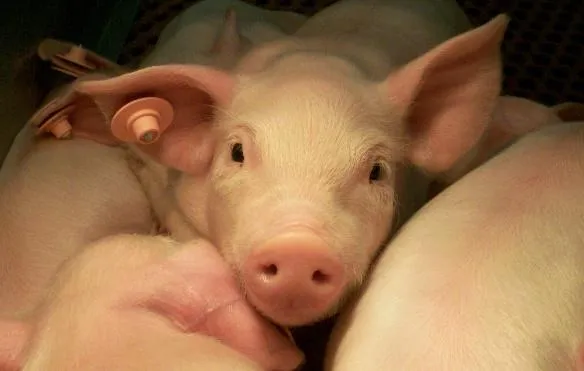
Image Resource Antibiotic resistance is also a food and climate issue In this blog David McCoy, director of Medact, argues that UK farmers and government should work hard to reduce on-farm antibiotic use. With evidence building that antimicrobial resistance in farm animals can be transferred across to humans, the issue is becoming increasingly urgent. Read
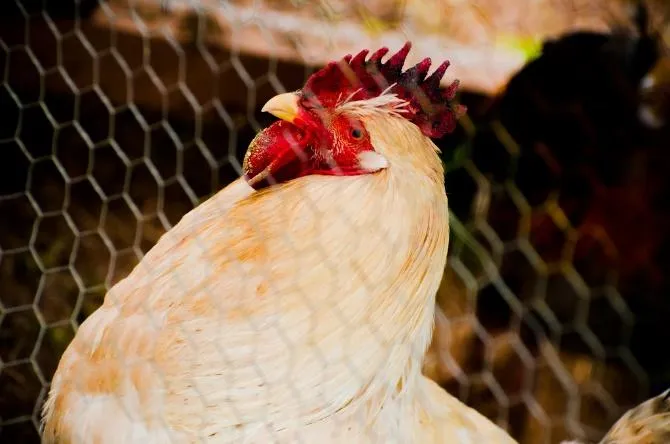
Image Resource The effects of naming and shaming campaigns: the case of the Dutch factory farmed chicken One Dutch animal rights NGO and a growing public antipathy to the extremes of industrial animal farming have caused several major supermarkets in the Netherlands to stop selling meat from fast-growing chickens. Read
Image Resource PhD Thesis: "Toward a dignified food security? Discourses of dignity, development, and culture in New York City and Bogotá" In this PhD thesis, Leah M. Ashe from Cardiff University School of Planning and Geography, examines how narratives of “food security” are constructed in New York city and Bogotá and how they are influenced by different development ideologies and discourses. Read
Image Resource New EAT-Lancet commission launched to tackle the global food system’s role in malnutrition and global change On June 12th, prior to the annual EAT Forum in Stockholm, the establishment of the new EAT-Lancet Commission was announced jointly by the Director of the Stockholm Resilience Centre Johan Rockström, Chair of the EAT Foundation Gunhild Stordalen, and editor of The Lancet Richard Horton. Read
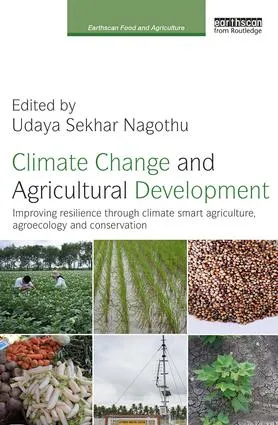
Image Resource Climate Change and Agricultural Development: Improving Resilience through Climate Smart Agriculture, Agroecology and Conservation Two of the greatest current challenges are climate change (and variability) and food security. Feeding nine billion people by 2050 will require major efforts aimed at climate change adaptation and mitigation. Read
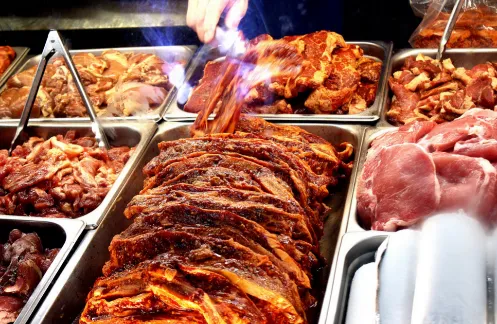
Image Resource Meat consumption contributing to global obesity Energy intake has long been recognised as a factor in obesity, but more recently, interest has increased in whether some dietary patterns containing differing amounts of macronutrients and food groups, contribute more to body weight gain than do others. Read
Image Resource Wicked Nutrition: The Controversial Greening of Official Dietary Guidance This paper provides a detailed case study of the history and controversy surrounding the proposed inclusion of sustainability information in the 2015 Dietary Guidelines for Americans, as recommended by the Dietary Guidelines Advisory Committee (DGAC) – a body composed of nutritionists, physicians, and public health experts, tasked with reviewing the evidence base for the guidelines every 5 years. Read
Image Resource Eating plant protein is associated with lower mortality, animal protein with higher risk of cardiovascular disease This study, which analyses data from two long-term epidemiologic research studies in the US, found that specific food sources of protein in the diet affected health outcomes in differing ways. Taking into account a number of other dietary and lifestyle factors, the authors showed that animal protein intake was weakly associated with a higher risk for mortality. Read
Image Resource Genome of banana fungus explored in bid to create more sustainable future for banana industry The DNA of Pseudocercospora fijiensis, the fungus that causes the black Sigatoka disease in bananas, has been sequenced and assembled in an attempt to find means of disease control. The black Sigatoka disease occurs across the tropics and is responsible for huge banana yield losses. In addition, it can cause the fruit to ripen prematurely, which stops exports of the crop. The Cavendish banana, the clonal type of bananas most consumers in the west eat is especially vulnerable to the black Sigatoka fungi. Read