Image Resources Our extensive research library contains thousands of summaries of journal articles, reports and news stories that can be searched by keyword and category RESOURCES CATEGORY Books Briefing paper Event recording Featured articles Featured report Game Journal articles News and resources Reports Think piece Video Working paper Workshop summary Year 2026 2025 2024 2023 2022 2021 2020 2019 2018 2017 2016 2015 2014 2013 2012 2011 2010 2009 2008 2007 2002 2001 Image Journal articles Green lights on fishing nets reduce bycatch of diving birds Attaching green light emitting diodes (LEDs) to gillnets (vertical fishing nets that catch fish behind the gills) reduces the number of guanay cormorants accidentally caught by 85% relative to control nets with no lights, reports a recent paper. A previous study of the same fishery has shown that illuminating nets can reduce bycatch of green turtles by 64% without reducing catch rates of the target species (the current paper did not specify catch rates of the target species). The authors hypothesise that it may be possible to tailor the wavelength of light to attract or repel specific species, according to a fishery’s needs. Read Image News and resources Brexit No Deal technical notices The UK government has released the first batch of its technical notices to advise businesses and individuals on how to prepare for the hypothetical scenario of the UK leaving the EU without a deal. The notices include some topics of relevance to the food system. Read Image News and resources CAPSELLA online tool for soil health test The EU-funded CAPSELLA project, which develops digital tools for agrobiodiversity, has released an online tool to guide users through the steps of taking a “spade test” to monitor soil quality. Users can also choose to upload their results to a public database. Read Image Books The fault lines of farm policy This book, by Jonathan Coppess, explores the history of agricultural policies in the United States. Read Image Books Nourished Planet - Sustainability in the global food system This book, written by the Barilla Center for Food & Nutrition and edited by Danielle Nierenberg of Food Tank, discusses how the global food system can produce sustainable, healthy food for everyone. Topics include soil degradation, water use, barriers to accessing food, corporate influence on dietary choices, and food waste. Read Image Reports Climate-friendly diets The New York-based Guarini Centre on Environmental, Energy and Land Use Law has released a report exploring the policies that US cities could use to reduce meat and dairy consumption. Three main categories of policy are proposed: informational (to raise public awareness of the health and climate implications of meat and dairy consumption), procurement policies for public institutions, and economic interventions to incentivise different purchasing patterns. Read Image Reports Free-market think tank endorses lab-grown meat The Adam Smith Institute, a UK-based free-market think tank, has published a briefing paper in which it argues in favour of lab-grown meat (also known as cultured meat). The authors say that the potentially lower land use of lab-grown meat, compared to conventional meat, could allow some farmland to be rewilded, managed in less intensive ways, or used to build more houses. Read Image Journal articles Food waste attitudes and behaviours in young US adults A survey of 18- to 24-year-old students in the US finds that very few study participants had high knowledge of the issue of food waste, and many participants estimated that they wasted less than the average American. Students often attributed blame for food waste to university dining halls, food service outlets or society in general, rather than to themselves as individuals. The paper grouped factors that both increased and reduced food waste production (depending on context) into several categories, including taste and appearance, reuse value, scheduling, personal values, portion sizes, cost, social norms, whether or not the food was prepared by the person who ate it, sharing of food, convenience, and food safety. Read Image Journal articles Halting farmland expansion protects carbon stocks A recent paper uses data from three countries (Ghana, Mexico and Poland) to determine whether more carbon can be kept in above-ground stocks by land sparing (increasing farms yields to minimise the conversion of natural habitats to farmland) or land sharing (increasing carbon stocks on farms, at the cost of converting more natural habitat to farmland because of lower yields). Land sparing maintained the highest above-ground carbon stocks in all cases studied. Read VIEW MORE
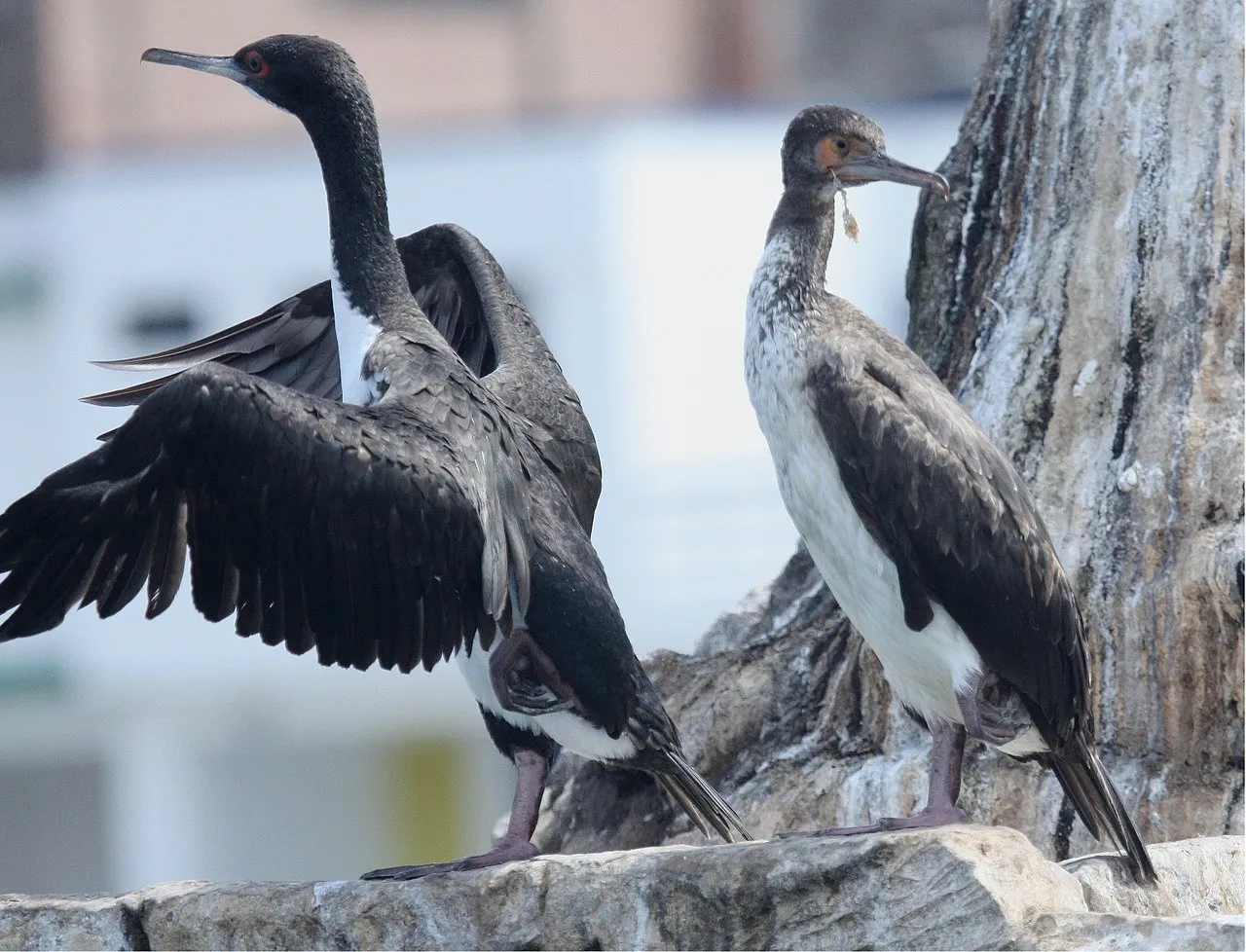
Image Journal articles Green lights on fishing nets reduce bycatch of diving birds Attaching green light emitting diodes (LEDs) to gillnets (vertical fishing nets that catch fish behind the gills) reduces the number of guanay cormorants accidentally caught by 85% relative to control nets with no lights, reports a recent paper. A previous study of the same fishery has shown that illuminating nets can reduce bycatch of green turtles by 64% without reducing catch rates of the target species (the current paper did not specify catch rates of the target species). The authors hypothesise that it may be possible to tailor the wavelength of light to attract or repel specific species, according to a fishery’s needs. Read
Image News and resources Brexit No Deal technical notices The UK government has released the first batch of its technical notices to advise businesses and individuals on how to prepare for the hypothetical scenario of the UK leaving the EU without a deal. The notices include some topics of relevance to the food system. Read
Image News and resources CAPSELLA online tool for soil health test The EU-funded CAPSELLA project, which develops digital tools for agrobiodiversity, has released an online tool to guide users through the steps of taking a “spade test” to monitor soil quality. Users can also choose to upload their results to a public database. Read
Image Books The fault lines of farm policy This book, by Jonathan Coppess, explores the history of agricultural policies in the United States. Read
Image Books Nourished Planet - Sustainability in the global food system This book, written by the Barilla Center for Food & Nutrition and edited by Danielle Nierenberg of Food Tank, discusses how the global food system can produce sustainable, healthy food for everyone. Topics include soil degradation, water use, barriers to accessing food, corporate influence on dietary choices, and food waste. Read
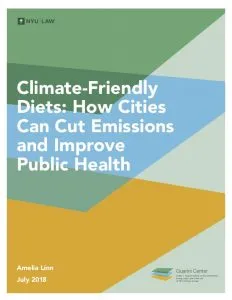
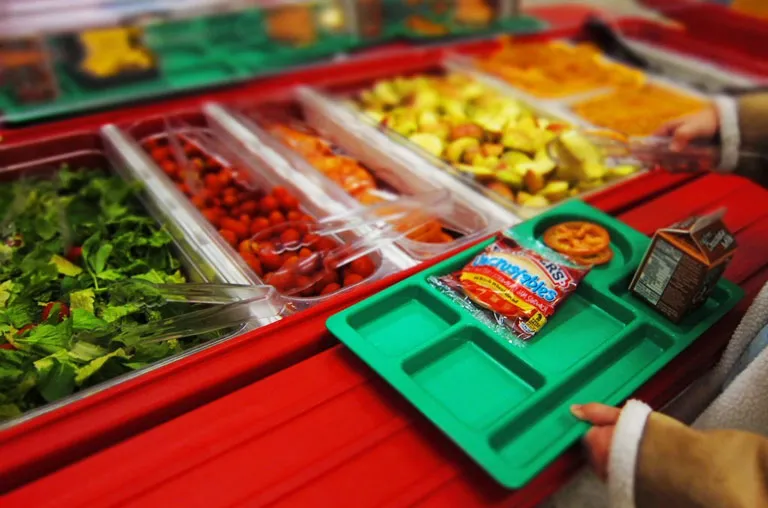
Image Reports Climate-friendly diets The New York-based Guarini Centre on Environmental, Energy and Land Use Law has released a report exploring the policies that US cities could use to reduce meat and dairy consumption. Three main categories of policy are proposed: informational (to raise public awareness of the health and climate implications of meat and dairy consumption), procurement policies for public institutions, and economic interventions to incentivise different purchasing patterns. Read
Image Reports Free-market think tank endorses lab-grown meat The Adam Smith Institute, a UK-based free-market think tank, has published a briefing paper in which it argues in favour of lab-grown meat (also known as cultured meat). The authors say that the potentially lower land use of lab-grown meat, compared to conventional meat, could allow some farmland to be rewilded, managed in less intensive ways, or used to build more houses. Read
Image Journal articles Food waste attitudes and behaviours in young US adults A survey of 18- to 24-year-old students in the US finds that very few study participants had high knowledge of the issue of food waste, and many participants estimated that they wasted less than the average American. Students often attributed blame for food waste to university dining halls, food service outlets or society in general, rather than to themselves as individuals. The paper grouped factors that both increased and reduced food waste production (depending on context) into several categories, including taste and appearance, reuse value, scheduling, personal values, portion sizes, cost, social norms, whether or not the food was prepared by the person who ate it, sharing of food, convenience, and food safety. Read
Image Journal articles Halting farmland expansion protects carbon stocks A recent paper uses data from three countries (Ghana, Mexico and Poland) to determine whether more carbon can be kept in above-ground stocks by land sparing (increasing farms yields to minimise the conversion of natural habitats to farmland) or land sharing (increasing carbon stocks on farms, at the cost of converting more natural habitat to farmland because of lower yields). Land sparing maintained the highest above-ground carbon stocks in all cases studied. Read