Image Resources Our extensive research library contains thousands of summaries of journal articles, reports and news stories that can be searched by keyword and category RESOURCES CATEGORYBooksBriefing paperEvent recordingFeatured articlesFeatured reportGameJournal articlesNews and resourcesReportsThink pieceVideoWorking paperWorkshop summary YEAR201220132014201520162017201820192020202120222023202420252026 Image Resource Dynamics and climate change mitigation potential of soil organic carbon sequestration This paper provides new predictions of the global climate change mitigation potential of soil organic carbon sequestration on agricultural land. It asks whether soil carbon sequestration really does have a major role to play in mitigating agricultural GHGs and concludes that, given the many technical constraints, and the time limited nature of sequestration, its contribution is in fact likely to be minor. However, as the authors point out, there are other non-CO2 benefits that arise from building soil carbon, that are not considered in this study. Read Image Resource Are the Dietary Guidelines for Meat, Fat, Fruit and Vegetable Consumption Appropriate for Environmental Sustainability? A Review of the Literature This paper provides a review of the current literature analysing environmental impacts of dietary recommendations. The review focuses on three aspects of dietary advice in particular: reducing the consumption of fat, reducing the consumption of meat-based protein and animal-based foods, and finally increasing the consumption of fruit and vegetables. It then reviews the environmental impact assessments and Life Cycle Analysis (LCA) that have been undertaken in foods that have relevance to these three dietary recommendations. Read Image Resource Dietary greenhouse gas emissions of meat-eaters, fish-eaters, vegetarians and vegans in the UK This study is one of the very few that examines the GHG impacts of a selection of real life ‘self selected’ diets as opposed to those that are modelled or hypothetical. It looks specifically at the dietary patterns (based on a standard 2,000 kcal diet) of UK vegetarians, semi-vegetarians and non-vegetarians. Approximately 55,500 subjects were chosen for the study, all part of the EPIC-Oxford cohort study. Read Image Resource Claims that China will limit carbon emissions give new momentum to climate talks A top China government advisor said at a recent Beijing conference that China, the world's biggest greenhouse gas emitter will limit its total emissions for the first time by the end of this decade. The Chair of China's Advisory Committee on Climate Change said that an absolute cap on emissions will be introduced sometime within the next five years. Although the advisor later stated that these were only his own opinions, commentators expressed a cautious optimism about the statement. Read Image Resource Mitigation in the agriculture and land use sectors in developing countries – special issue The CCAFS (CGIAR research program on Climate Change, Agriculture and Food Security) newsletter Agriculture-Climate Letters - A Science-Policy Bulletin, is a valuable resource for those interested in receiving further updates on the links between food and climate –with a particular focus on developing countries. In their latest issue Sonja Vermeulen, CCAFS head of research, highlights the special issue of Environmental Research Letters on mitigation in the agriculture and land use sectors in developing countries. See more information about the CCAFS newsletter and how to sign up here and read the full Environmental Letter series here. Read Image Resource Food Security, Food Prices and Climate Variability This book uses a decade of primary research to examine how weather and climate, as measured by variations in the growing season using satellite remote sensing, has affected agricultural production, food prices and access to food in food-insecure regions of the world. Read Image Resource The water footprint of agricultural products in European river basins This study published by the European Commission's Joint Research Centre in the journal Environmental Research Letters analyses the water footprint of agricultural production and consumption in Europe. It looks at the net virtual water import of 365 European river basins for the period between 1996-2005 based on two diet scenarios – a healthy diet based upon food-based dietary guidelines and a vegetarian diet. Read Image Resource USDA ERS discussing food waste and food loss In this feature on Food Choices & Health, the United States Department of Agriculture and Economic Research Service (ERS) discusses food loss and food waste and points out the distinction in meaning between the two. They describe food loss as includes moisture loss and cooking shrinkage; loss from mould, pests, or inadequate climate control; and food waste. Read Image Resource Addressing climate change in the tea sector The International Trade Center’s (ITC) Trade and Environment Unit has recently released a training manual aimed at addressing climate change in the tea sector. With climate change already having an impact on both the quality and quantity of tea the manual sets out to help tea farmers and factories lower their emissions and reduce energy costs. One of the reasons for the focus on factories is that exporters are increasingly subject to requirements set by buyers and retailers to measure and reduce carbon emissions. Read VIEW MORE
Image Resource Dynamics and climate change mitigation potential of soil organic carbon sequestration This paper provides new predictions of the global climate change mitigation potential of soil organic carbon sequestration on agricultural land. It asks whether soil carbon sequestration really does have a major role to play in mitigating agricultural GHGs and concludes that, given the many technical constraints, and the time limited nature of sequestration, its contribution is in fact likely to be minor. However, as the authors point out, there are other non-CO2 benefits that arise from building soil carbon, that are not considered in this study. Read
Image Resource Are the Dietary Guidelines for Meat, Fat, Fruit and Vegetable Consumption Appropriate for Environmental Sustainability? A Review of the Literature This paper provides a review of the current literature analysing environmental impacts of dietary recommendations. The review focuses on three aspects of dietary advice in particular: reducing the consumption of fat, reducing the consumption of meat-based protein and animal-based foods, and finally increasing the consumption of fruit and vegetables. It then reviews the environmental impact assessments and Life Cycle Analysis (LCA) that have been undertaken in foods that have relevance to these three dietary recommendations. Read
Image Resource Dietary greenhouse gas emissions of meat-eaters, fish-eaters, vegetarians and vegans in the UK This study is one of the very few that examines the GHG impacts of a selection of real life ‘self selected’ diets as opposed to those that are modelled or hypothetical. It looks specifically at the dietary patterns (based on a standard 2,000 kcal diet) of UK vegetarians, semi-vegetarians and non-vegetarians. Approximately 55,500 subjects were chosen for the study, all part of the EPIC-Oxford cohort study. Read
Image Resource Claims that China will limit carbon emissions give new momentum to climate talks A top China government advisor said at a recent Beijing conference that China, the world's biggest greenhouse gas emitter will limit its total emissions for the first time by the end of this decade. The Chair of China's Advisory Committee on Climate Change said that an absolute cap on emissions will be introduced sometime within the next five years. Although the advisor later stated that these were only his own opinions, commentators expressed a cautious optimism about the statement. Read
Image Resource Mitigation in the agriculture and land use sectors in developing countries – special issue The CCAFS (CGIAR research program on Climate Change, Agriculture and Food Security) newsletter Agriculture-Climate Letters - A Science-Policy Bulletin, is a valuable resource for those interested in receiving further updates on the links between food and climate –with a particular focus on developing countries. In their latest issue Sonja Vermeulen, CCAFS head of research, highlights the special issue of Environmental Research Letters on mitigation in the agriculture and land use sectors in developing countries. See more information about the CCAFS newsletter and how to sign up here and read the full Environmental Letter series here. Read
Image Resource Food Security, Food Prices and Climate Variability This book uses a decade of primary research to examine how weather and climate, as measured by variations in the growing season using satellite remote sensing, has affected agricultural production, food prices and access to food in food-insecure regions of the world. Read
Image Resource The water footprint of agricultural products in European river basins This study published by the European Commission's Joint Research Centre in the journal Environmental Research Letters analyses the water footprint of agricultural production and consumption in Europe. It looks at the net virtual water import of 365 European river basins for the period between 1996-2005 based on two diet scenarios – a healthy diet based upon food-based dietary guidelines and a vegetarian diet. Read
Image Resource USDA ERS discussing food waste and food loss In this feature on Food Choices & Health, the United States Department of Agriculture and Economic Research Service (ERS) discusses food loss and food waste and points out the distinction in meaning between the two. They describe food loss as includes moisture loss and cooking shrinkage; loss from mould, pests, or inadequate climate control; and food waste. Read
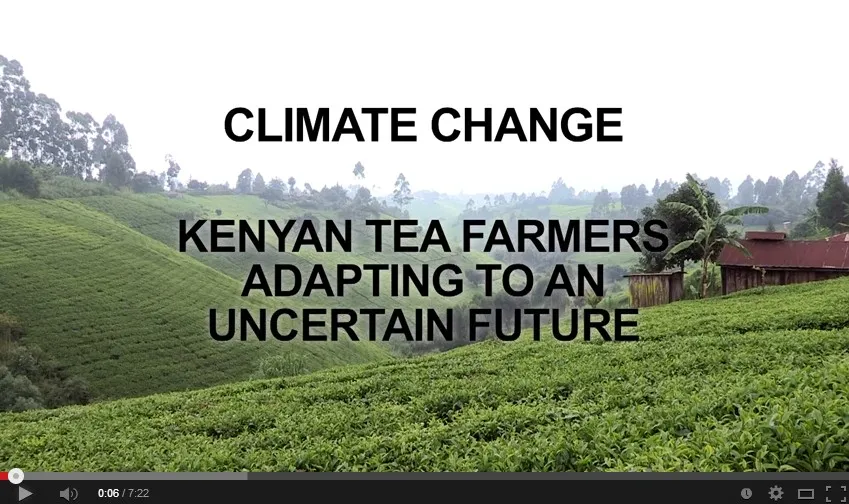
Image Resource Addressing climate change in the tea sector The International Trade Center’s (ITC) Trade and Environment Unit has recently released a training manual aimed at addressing climate change in the tea sector. With climate change already having an impact on both the quality and quantity of tea the manual sets out to help tea farmers and factories lower their emissions and reduce energy costs. One of the reasons for the focus on factories is that exporters are increasingly subject to requirements set by buyers and retailers to measure and reduce carbon emissions. Read