Close
Login Register
Search
  • About
    • What We Do
    • Who We Are
    • FAQs
  • Our Writing
    • Explainers
    • Essays
    • Letterbox
    • Reports & More
  • Podcasts
  • Our Events
  • Projects
    • Power In The Food Systems
    • Local-Global Scale Project
    • MEAT: The Four Futures Podcast
    • Fuel To Fork
    • Nature
    • Reckoning with Regeneration
    • SHIFT
    • Rethinking the Global Soy Dilemma
  • Resources
  • Opportunities
    • Jobs
    • Funding
    • Courses
    • Collaborations
    • Events
  • Newsletter
  • TABLE (EN)
Search
Back

Grazing and grassland

Image
Resource
Zero Carbon Australia: Land use agriculture and forestry discussion paper
This report by Zero Carbon Australia, outlines how research on greenhouse gas emissions from land use (agriculture and forestry) can be reduced to zero net emissions, coupled with economic opportunities and increased resilience in the face of climate change. The land use sector is the second largest source of emissions in Australia and is highly exposed to the impacts of climate change. 15% of total emissions in Australia are from the agriculture and forestry sectors, the largest component of which is land clearing for grazing.
Read
Image
Arctic Wolf, Flickr, Creative Commons licence 2.0
Resource
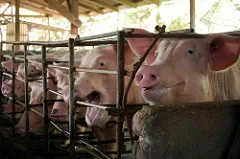
Climate change mitigation and productivity gains in livestock supply chains: insights from regional case studies
This paper presents the results of a modelling exercise that aimed to identify low emissions pathways for a growing global livestock sector. This article uses 6 case studies, modelled in the Global Livestock Environmental Assessment Model developed by FAO, to illustrate the climate change mitigation potential of livestock achievable through changes in feeding, breeding and husbandry as well as grazing management to increase soil carbon sequestration.
Read
Image
Photo: Joshua Rappeneker, Beef, Flickr, Creative Commons License 2.0
Resource
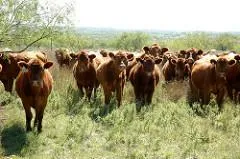
The debate continues: beef production intensification for decreased GHG emissions?
An academic debate on the controversial possibility of decreasing greenhouse gas emissions via increased beef production in the Brazilian Cerrado finds a new set of commentators, who have responded to an original paper by de Oliveira Silva et al. earlier in 2016 in the same journal, Nature Climate Change.
Read
Image
Photo: South African Tourism, Northern Cape, Flickr, Creative Commons License 2.0
Resource
Climate-smart soils
Recent assessments have strongly suggested that meeting the widely agreed target of limiting global warming to less than 2°C will require the deployment of substantial carbon sinks in addition to measures to curb greenhouse gas (GHG) emissions. This perspective article examines the latest research and thinking on the ability of agricultural soil management to reduce GHG emissions and promote soils as carbon sinks, and the practical feasibility of implementing available soil management practices
Read
Image
Photo: Flickr, Juan Salmoral, Creative Commons License 2.0
Resource
Holistic management – a critical review of Allan Savory’s grazing method
In a 2013 TED talk entitled ‘How to fight desertification and reverse climate change’ the Zimbabwean ecologist, Allan Savory, claimed that the ‘holistic management’ grazing management method that he has developed and promoted over 40 years, could stop global desertification and reduce atmospheric carbon dioxide to preindustrial levels, within a few decades.
Read
Image
Photo: KeWynn Lee, Before, Flickr, Creative Commons License 2.0
Resource
Re-framing the climate change debate in the livestock sector: mitigation and adaptation options
This review article provides a summary of the multiple environmental and societal costs and benefits of livestock production. Homing in on climate change, it reviews the range of GHG mitigation options that have been proposed both on the supply side (actions that potentially reduce emissions per unit of production, or absolute emissions, considering both changes in practice and in policy) and those on the demand side (e.g. reductions in meat consumption, waste reduction).
Read
Image
Photo: Holistic Management, Mob grazing, Flickr, Creative Commons License 2.0
Resource
Can ruminants reduce rather than increase agriculture’s carbon footprint in North America?
As methane produced by ruminants is a potent greenhouse gas (GHG), many researchers and organisations have pointed to the necessity of reducing ruminant stocks around the world. In this study, the authors argue that with the right crop and grazing management, ruminants might not only reduce overall GHG emissions, but could, in fact, facilitate increases in soil carbon, and reduce environmental damage related to current cropping practices.
Read
Image
Photo: Secret Pilgrim, Flickr, Creative Commons License 2.0
Resource
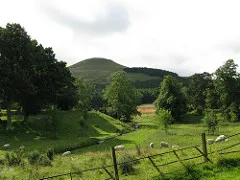
Carbon, farming and biodiversity among afforestation programs in Europe
These two studies discuss afforestation projects in relation to 1) land availability and sheep farming in Scotland, and 2) the biodiversity losses that may be associated with such projects.
Read
Image
Image: US Department of Agriculture Cropland Data Layer, Flickr
Resource
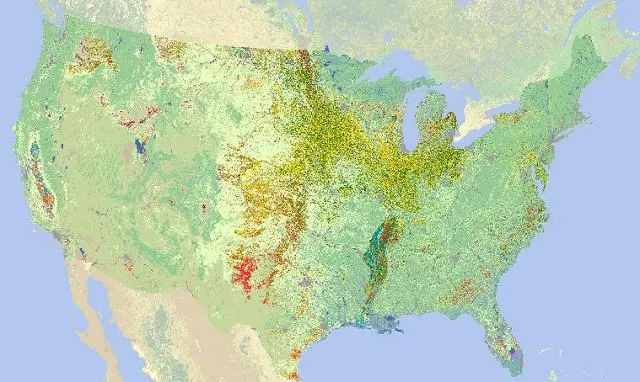
Which diet makes the best use of US agricultural land?
Future demand for food and for land is set to grow. A key question is therefore: how can we most productively use land for food, in order balance the multiple competing demands for the ecosystem services it provides? One way this has been investigated previously is by looking at crop yields and how to increase them. Another way, focussing instead on the consumption side, has looked at the metric of dietary land footprint.
Read
  • VIEW MORE

Sign up for Fodder, our newsletter covering sustainable food news.

Sign up
  • Glossary
  • About
  • Our Writing
  • Podcasts
  • Resources

Social

YouTube Facebook Instagram

© Copyright 2025

A collaboration between: