Close
Login Register
Search
  • About
    • What We Do
    • Who We Are
    • FAQs
  • Our Writing
    • Explainers
    • Essays
    • Letterbox
    • Reports & More
  • Podcasts
  • Our Events
  • Projects
    • Power In The Food Systems
    • Local-Global Scale Project
    • MEAT: The Four Futures Podcast
    • Fuel To Fork
    • Nature
    • Reckoning with Regeneration
    • SHIFT
    • Rethinking the Global Soy Dilemma
  • Resources
  • Opportunities
    • Jobs
    • Funding
    • Courses
    • Collaborations
    • Events
  • Newsletter
  • TABLE (EN)
Search
Back

Consumption and production trends

Image
Resource
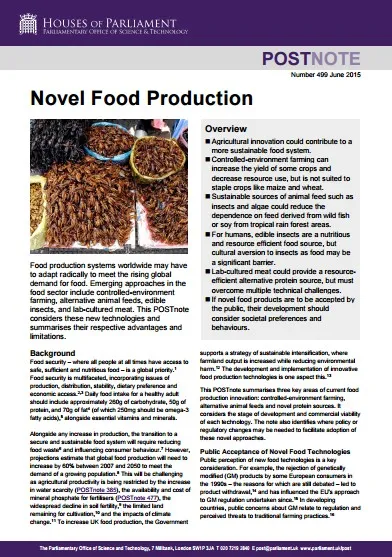
Report on Novel food production
Read
Image
Resource
4 out of 10 Swedish schools now have a meat-free day
The Swedish environment and sustainability magazine Miljöaktuellt has carried out a survey of municipalities in Sweden which show that 4 out of 10 schools have implemented either a meat-free day a week or undertaken other activities that reduce meat consumption to an equivalent degree.  This number of participating schools represents an increase of 35% from the previous year.
Read
Image
Resource
The principles of healthy and sustainable eating patterns
This report is produced as follow-on work to the Green Food Project, which focused on sustainable consumption and production. The Green Food Project report in July 2012 concluded that follow-on work was required to enable a broader and more sophisticated debate around the roles that diet and consumption play in the sustainability of the whole food system.
Read
Image
Resource
Japanese meat processing company builds meat plant waste system
A new green energy initiative has been launched by the Japanese meat processor NH Foods. Their Global Water Engineering (GWE) Cohral plant (in Australia)will extract green energy biogas from the waste water stream of production, replacing millions of dollars’ worth of natural gas currently consumed by the company factory.  It is reported that the effect of burning the methane will save the equivalent of 12,000 tonnes of CO2, equivalent to removing 2,700 cars from the road.
Read
Image
Resource
FCRN China Briefing papers
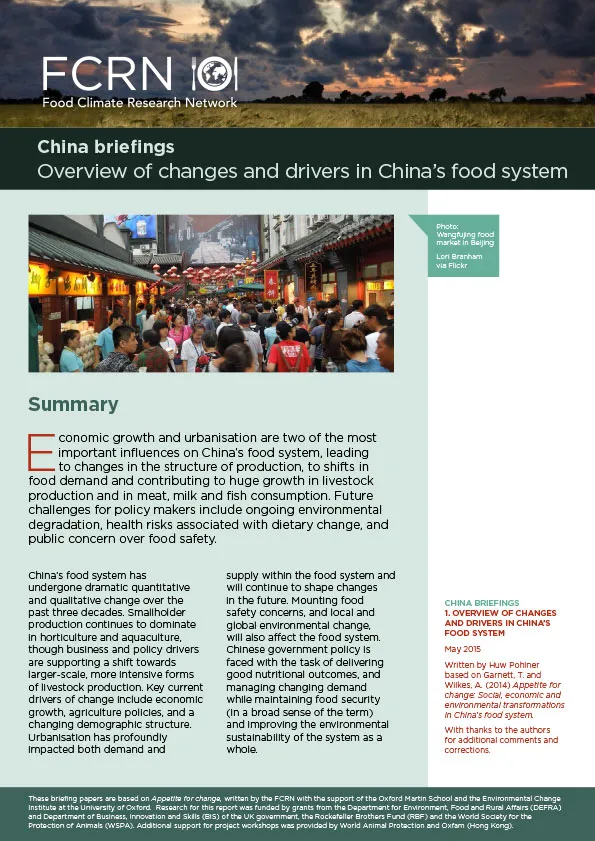
In 2014, the FCRN released a major report entitled Appetite for change: social, economic and environmental transformations in China’s food system. This provided a detailed and integrative analysis of the dramatic changes in China’s food system over the last 35 years, explored emerging environmental, health, economic and cultural trends and challenges, and identified policy and research implications.  
Read
Image
Resource
Frozen Food and Food Security in the UK
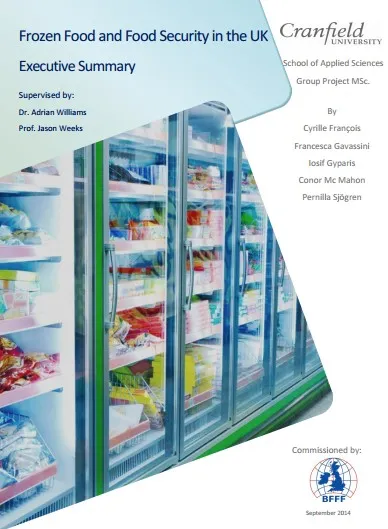
A new report from at Cranfield University suggests that increasing the production and consumption of frozen food in the UK can play a significant role in delivering the government’s 2020 and 2050 food security targets. The report, Frozen Food and Food Security in the UK, was produced by sustainability experts at Cranfield University on behalf of the British Frozen Food Federation (BFFF).
Read
Image
Resource
Brief for GSDR 2015: Sustainable Biomass in the Context of Climate Change and Rising Demand
This short briefing for the Global Sustainable Development report 2015 by two researchers at IASS, Potsdam, discusses scientific findings on the sustainability of biomass production and their implications for Sustainability, Development Policy and the SDGs in particular.
Read
Image
breeding. Source: Wikimedia commons
Publication
Breeding for productivity and breeding for welfare: what is the relationship?
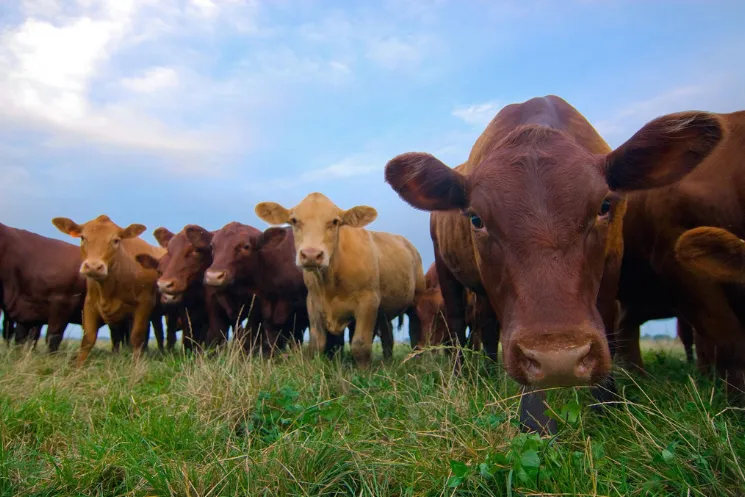
In this discussion paper, Tara Garnett and colleagues from SLU Sweden consider the productivity-welfare relationship in more detail. They argue that this is a critical issue to understand if we are to improve our knowledge of what more sustainable systems of livestock production and consumption look like.
Read
Image
Resource
Large global study concludes that unhealthy eating habits are outpacing healthy eating patterns in most world regions
This paper, entitled Dietary quality among men and women in 187 countries in 1990 and 2010: a systematic assessment argues that although worldwide, consumption of healthy foods such as fruit and vegetables has improved during the past two decades, it has been outpaced in most regions by the increased intake of unhealthy foods such as processed meat and sweetened drinks.
Read
  • VIEW MORE

Sign up for Fodder, our newsletter covering sustainable food news.

Sign up
  • Glossary
  • About
  • Our Writing
  • Podcasts
  • Resources

Social

YouTube Facebook Instagram

© Copyright 2025

A collaboration between: