Close
Login Register
Search
  • About
    • What We Do
    • Who We Are
    • FAQs
  • Our Writing
    • Explainers
    • Essays
    • Letterbox
    • Reports & More
  • Podcasts
  • Our Events
  • Projects
    • Power In The Food Systems
    • Local-Global Scale Project
    • MEAT: The Four Futures Podcast
    • Fuel To Fork
    • Nature
    • Reckoning with Regeneration
    • SHIFT
    • Rethinking the Global Soy Dilemma
  • Resources
  • Opportunities
    • Jobs
    • Funding
    • Courses
    • Collaborations
    • Events
  • Newsletter
  • TABLE (EN)
Search
Back

Consumption and production trends

Image
Resource
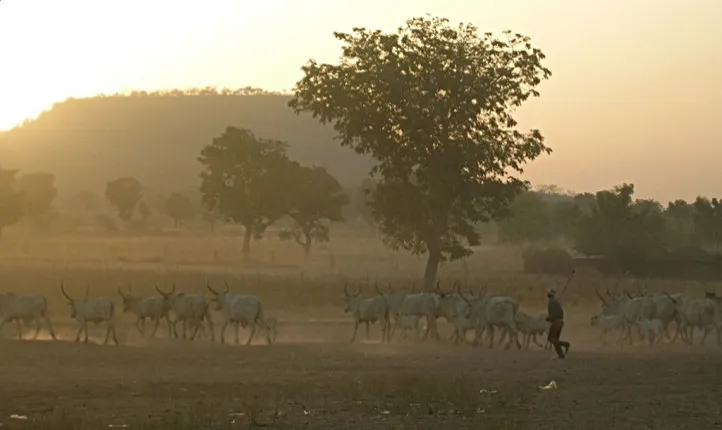
Opinion piece in The Economist by ILRI Director: “The Meat We Eat, the Lives We Lift - Livestock (like people) are different the world over”
In this article published in the Economist, Jimmy Smith, director of the International Livestock Research Institute (ILRI) argues that the livestock issue requires a differentiated approach.
Read
Image
Resource
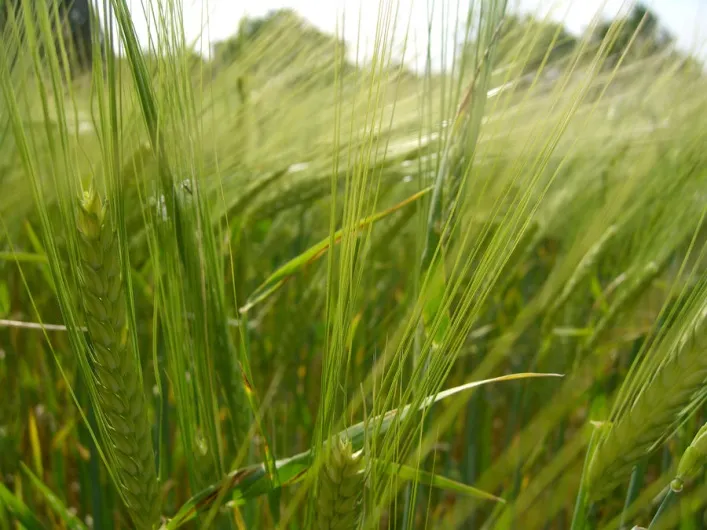
Global warming reduces wheat production markedly if no adaptation takes place
A new paper produced by a global group of agrosystem modellers, argues that if no action is taken to adapt, the future global wheat harvest is likely to be reduced by 6 % per each degree Celsius of local temperature increase. This would correspond to 42 million tonnes of yield reduction worldwide, which equals a quarter of current global wheat trade.
Read
Image
Resource
The Lancet – Obesity 2015 Series
This new series of papers from the Lancet summarises the latest available knowledge on obesity and what can be done to address the problem. The series introduction describes how today’s food environments exploits people’s biological, psychological, social, and economic vulnerabilities, making it easier for them to eat unhealthy foods. This in turn reinforces preferences and demands for foods of poor nutritional quality, furthering the unhealthy food environments. The authors call for regulatory actions from governments and increased efforts from industry and civil society to break these vicious cycles.
Read
Image
Resource
Senior nutrition can emulate the growth potential of infant formula
This article highlights one of the approaches the dairy industry is taking to create new markets for dairy consumption.
Read
Image
Resource
The potential to reduce greenhouse gas emissions in the UK through healthy and realistic dietary change
This study focuses on UK diets.  It finds that if in average diets conformed to WHO recommendations, associated GHG emissions would be reduced by 17%.  Further reductions of up to 40% can be achieve through dietary shifts that include a reduction in animal products and processed snacks, and more fruit and vegetables. Abstract and conclusions as follows:
Read
Image
Resource
Denmark launches ambitious organic food plan for national public institutions
The online magazine The Local in Denmark reports that The Ministry of Food, Agriculture and Fisheries in Denmark has launched a new strategy to double organic farming and serve more organic food in national public institutions. The government has set a goal of doubling the amount of organic farming by 2020 compared to 2007. The nation’s public institutions serve some 800,000 meals every single day.
Read
Image
Resource
Evaluation of the environmental impact of weekly food consumption in different socio-economic households in Australia using environmentally extended input–output analysis
This paper investigates the environmental impact of the diets of Australian households at different income quintiles. The paper looked at 2003 household consumption and argues that income affects the environmental impacts of household diet, with higher income corresponding to higher impacts. The higher the income bracket the more was spent on food and this translated through to a higher environmental impact (GHG CO2e, water, waste, energy) at higher incomes.
Read
Image
Resource
Global diets link environmental sustainability and human health –new study compares Mediterranean, vegetarian and pescetarian diets
This major study compiles and analyses global-level data to assess relationships among diet, environmental sustainability and human health.  It evaluates the potential future environmental impacts of the global dietary transition before exploring some possible solutions to the diet–environment–health trilemma. 
Read
Image
Resource
Blog-post by Timothy Lang: “Sustainable Diets: Integrity has a sustainability dimension, too”
In this blog-post for the The Institute of Food Safety, Integrity & Protection (TiFSiP) Tim Lang, Professor of Food Policy at the City University London and FCRN advisory board member, discusses sustainable diets.  He argues that the pursuit of food integrity and authenticity is also the pursuit of sustainability.
Read
  • VIEW MORE

Sign up for Fodder, our newsletter covering sustainable food news.

Sign up
  • Glossary
  • About
  • Our Writing
  • Podcasts
  • Resources

Social

YouTube Facebook Instagram

© Copyright 2025

A collaboration between: