Close
Login Register
Search
  • About
    • What We Do
    • Who We Are
    • FAQs
  • Our Writing
    • Explainers
    • Essays
    • Letterbox
    • Reports & More
  • Podcasts
  • Our Events
  • Projects
    • Power In The Food Systems
    • Local-Global Scale Project
    • MEAT: The Four Futures Podcast
    • Fuel To Fork
    • Nature
    • Reckoning with Regeneration
    • SHIFT
    • Rethinking the Global Soy Dilemma
  • Resources
  • Opportunities
    • Jobs
    • Funding
    • Courses
    • Collaborations
    • Events
  • Newsletter
  • TABLE (EN)
Search
Back

Consumption and production trends

Image
Credit: Edward Musiak, Mountain range, Flickr, Creative Commons licence 2.0
Resource
Climate analogues suggest limited potential for intensification of production on current croplands under climate change
This paper takes as its starting point the mainstream projections that in future, global food production will need to increase by another 60–110% by 2050, to keep up with anticipated increases in human population and changes in diet (it should be noted, however, that the need and feasibility of such increases is contested (see), with many arguing that dietary change and waste reduction can reduce the need for production increases (see)).
Read
Image
Image via Chistopher Jensen via Flickr CC BY-ND 2.0 DEED
Resource
Even with the Paris Agreement implemented, food and water risks remain
The ‘2016 Food, Water, Energy and Climate Outlook’ by the MIT Joint Program on the Science and Policy of Global Change finds that even if commitments from the  COP21 climate agreement are kept, many staple crops in various regions are still at risk of crop failures through extreme events, but at the same time, yields in many regions are projected to increase.
Read
Image
Joiseyshowaa, World Class Traffic Jam, Flickr, CC BY-SA 2.0 DEED
Resource
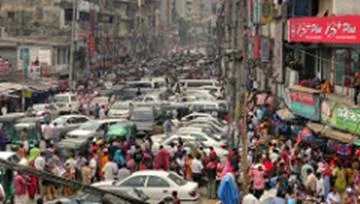
The hidden linkages between urbanization and food systems
This short perspective in the journal Science reviews how the rise of urbanization is transforming food systems in many areas, and argues for further research on this topic.
Read
Image
Resource
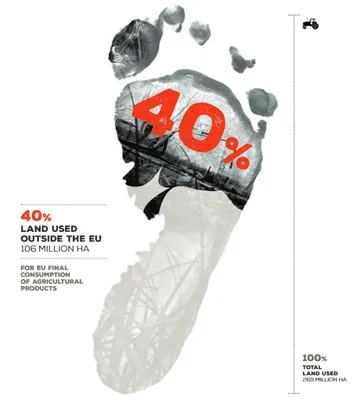
The True Cost of Consumption:The EU’s Land Footprint
The EU uses more than its fair share of global land; in 2010 the amount of land needed to satisfy our consumption of agricultural goods and services was 43% greater than the land available within its boundaries. This report stresses the responsibility that the EU has to measure, monitor and reduce its global land footprint.
Read
Image
Image: Woodleywonderworks, Flickr, Creative commons licence 2.0
Resource
Agricultural production and greenhouse gas emissions from world regions—The major trends over 40 years
Globally, agricultural production and land use change (of which some 90% is driven by agriculture) are responsible for approximately a quarter of global greenhouse gas emissions. 
Read
Image
Resource
Changing the food system to provide sustainable healthy diets
In this Perspective article in the journal Science, the FCRN’s Tara Garnett articulates the need for a strong policy focus on sustainable healthy diets, and assesses the current state of research and understanding on the relationship between health and sustainability. 
Read
Image
Resource
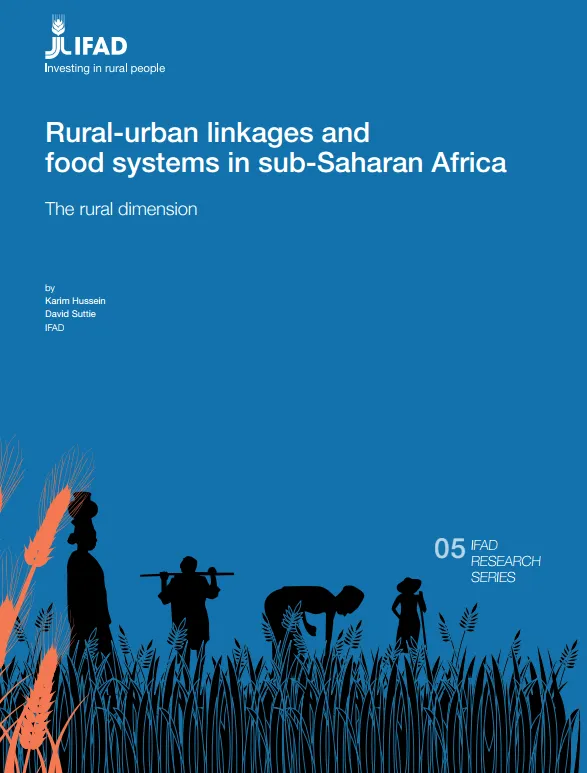
IFAD: Rural-urban linkages and food systems in sub-Saharan Africa
This report provides a developing country perspective on rural-urban linkages in food systems. It examines the role of rural-urban linkages in fostering inclusive and sustainable food systems, focusing in particular on sub-Saharan Africa.
Read
Image
Resource
New EAT-Lancet commission launched to tackle the global food system’s role in malnutrition and global change
On June 12th, prior to the annual EAT Forum in Stockholm, the establishment of the new EAT-Lancet Commission was announced jointly by the Director of the Stockholm Resilience Centre Johan Rockström, Chair of the EAT Foundation Gunhild Stordalen, and editor of The Lancet Richard Horton.
Read
Image
Photo: Devika, Chane ki daal, Flickr, creative commons licence, 2.0
Resource
Eating plant protein is associated with lower mortality, animal protein with higher risk of cardiovascular disease
This study, which analyses data from two long-term epidemiologic research studies in the US, found that specific food sources of protein in the diet affected health outcomes in differing ways. Taking into account a number of other dietary and lifestyle factors, the authors showed that animal protein intake was weakly associated with a higher risk for mortality.
Read
  • VIEW MORE

Sign up for Fodder, our newsletter covering sustainable food news.

Sign up
  • Glossary
  • About
  • Our Writing
  • Podcasts
  • Resources

Social

YouTube Facebook Instagram

© Copyright 2025

A collaboration between: