Close
Login Register
Search
  • About
    • What We Do
    • Who We Are
    • FAQs
  • Our Writing
    • Explainers
    • Essays
    • Letterbox
    • Reports & More
  • Podcasts
  • Our Events
  • Projects
    • Power In The Food Systems
    • Local-Global Scale Project
    • MEAT: The Four Futures Podcast
    • Fuel To Fork
    • Nature
    • Reckoning with Regeneration
    • SHIFT
    • Games at TABLE
    • Rethinking the Global Soy Dilemma
  • Resources
  • Opportunities
    • Jobs
    • Funding
    • Courses
    • Collaborations
    • Events
  • Newsletter
  • TABLE (EN)
Search
Back

TABLE

Image
Resource
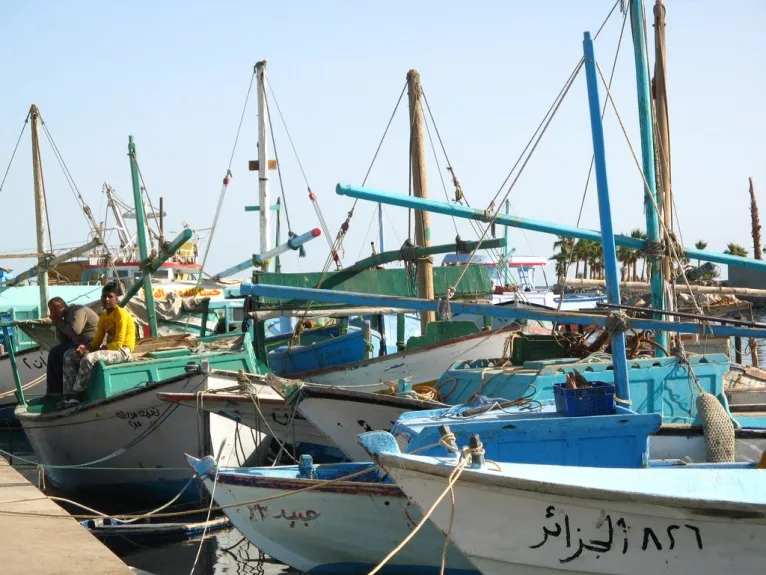
Secure sustainable seafood from developing countries
In this article in Science, researchers warn that imported fish sold in European and North American shops may be less sustainably caught than claims suggest. The experts argue that projects aimed at stimulating sustainable fishing in developing countries often don’t deliver on their goals and therefore, in order to prevent that the MSC (Marine Stewardship Council) quality label for sustainable fish is undermined,  requirements for market access need to be more rigorous.  
Read
Image
Resource
The rising cost of a healthy diet in high-income and emerging economies
The share of the population that is overweight or obese is increasing, especially in the emerging economies of the developing world. This report explores policies to combat obesity.  Specifically, it analyses the effects of relative price changes between different types of foods on consumer behaviour in high-income and emerging economies (Brazil, China, Republic of Korea and Mexico). The researchers look into the causes of increasing obesity and changes to the retail prices of foods and ask if healthy eating is becoming a luxury in emerging markets, as has been the trend in high-income countries.
Read
Image
Resource
Audit of the global carbon budget: estimate errors and their impact on uptake uncertainty
In this new paper researchers confirm that as carbon emissions continue to climb, so too has the Earth's capacity to absorb carbon dioxide from the atmosphere. About half of the emissions of CO2 each year remain in the atmosphere; the other half is taken up by the ecosystems on land and the oceans.
Read
Image
Resource
Resilience and reactivity of global food security: World population-food supply balance is becoming increasingly unstable
This study, which assesses the food supply available to more than 140 nations with populations greater than 1 million, shows that the globalization of trade is creating instability in the food distribution system.  As the world population increases, placing increasing pressure on use of limited land and water resources, food demand has grown and globalisation has made the food supply more sensitive to environmental and market fluctuations.
Read
Image
Resource
Success of Zero-Deforestation Agreements in Brazil – Beef industry keen on reducing deforestation in the Brazilian Amazon
This paper finds that the introduction of legally binding agreements, signed by ranchers and slaughterhouses in Brazil, have been effective in halting deforestation.
Read
Image
Resource
Food and fuel: model for bioenergy feedstock/vegetable double-cropping systems
One of the main concerns about bioenergy is that its production potentially competes with land needed to produce food.  In this paper researchers discuss the potential of a bioenergy feedstock/vegetable double-cropping system, in which both biofuel and pumpkin are produced.  
Read
Image
Resource
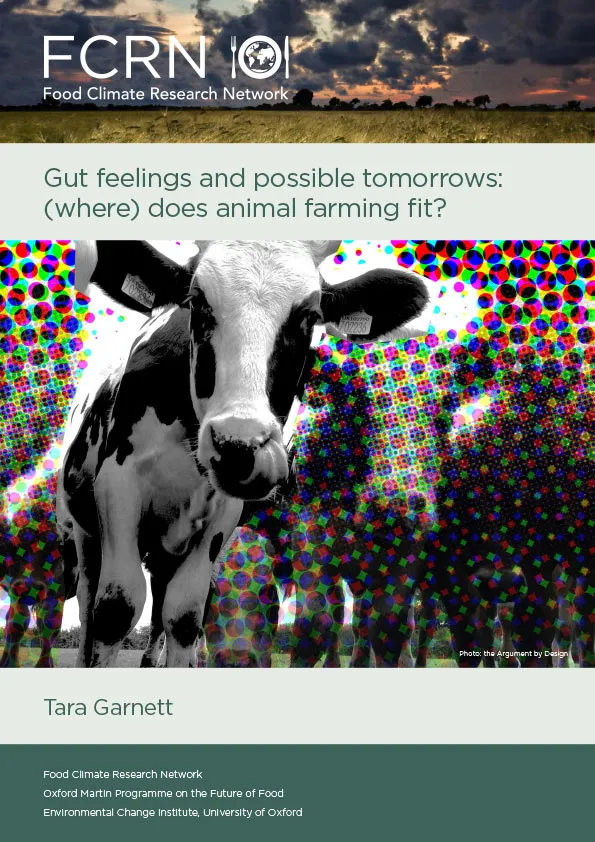
Gut feelings and possible tomorrows: (where) does animal farming fit?
This new FCRN think piece focuses on the future of livestock production - or rather on a range of different livestock futures.
Read
Image
Resource
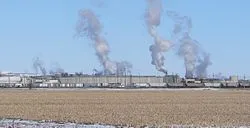
Japanese meat processing company builds meat plant waste system
A new green energy initiative has been launched by the Japanese meat processor NH Foods. Their Global Water Engineering (GWE) Cohral plant (in Australia)will extract green energy biogas from the waste water stream of production, replacing millions of dollars’ worth of natural gas currently consumed by the company factory.  It is reported that the effect of burning the methane will save the equivalent of 12,000 tonnes of CO2, equivalent to removing 2,700 cars from the road.
Read
Image
Resource
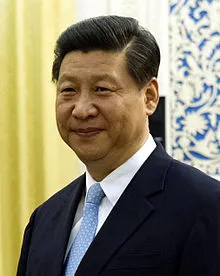
China’s president Xi Jinping: farmers must have a bigger role in China’s development
Better links between urban and rural areas will ensure that farmers in China are seen as equal to city workers and that they can take a greater part in the country’s development than before, Xi said when addressing the communist party’s policy chiefs at a session of the Central Committee’s Political Bureau.
Read
  • VIEW MORE

Sign up for Fodder, our monthly newsletter unpacking the future of food.

Tick below to opt-in to email communications.

You can change your mind at any time by clicking the unsubscribe link in the footer of any email you receive from us, or by contacting us at info@tabledebates.org.

We use Mailchimp as our marketing platform. By clicking below to subscribe, you acknowledge that your information will be transferred to Mailchimp for processing. Learn more about Mailchimp's privacy practices.
  • Glossary
  • About
  • Our Writing
  • Podcasts
  • Resources

Social

YouTube Facebook Instagram

© Copyright 2025

A collaboration between: