Close
Login Register
Search
  • About
    • What We Do
    • Who We Are
    • FAQs
  • Our Writing
    • Explainers
    • Essays
    • Letterbox
    • Reports & More
  • Podcasts
  • Our Events
  • Projects
    • Power In The Food Systems
    • Local-Global Scale Project
    • MEAT: The Four Futures Podcast
    • Fuel To Fork
    • Nature
    • Reckoning with Regeneration
    • SHIFT
    • Games at TABLE
    • Rethinking the Global Soy Dilemma
  • Resources
  • Opportunities
    • Jobs
    • Funding
    • Courses
    • Collaborations
    • Events
  • Newsletter
  • TABLE (EN)
Search
Back

TABLE

Image
Resource
Biochar for Environmental Management -Science, Technology and Implementation, 2nd Edition
Read
Image
Resource
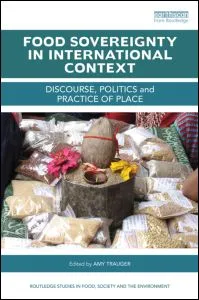
Food Sovereignty in International Context -Discourse, politics and practice of place
Abstract Food sovereignty is an emerging discourse of empowerment and autonomy in the food system with the development of associated practices in rural and some urban spaces. While literature on food sovereignty has proliferated since the first usage of the term in 1996 at the Rome Food Summit, most has been descriptive rather than explanatory in nature, and often confuses food sovereignty with other movements and objectives such as alternative food networks, food justice, or food self-sufficiency.
Read
Image
Resource
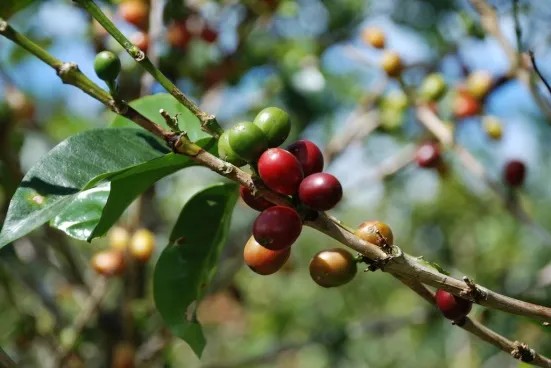
Arabica coffee production at risk due to changing climate
Coffee is the most widely traded agricultural commodity of the tropics, and studies have shown that as a crop it is very sensitive to rising temperatures arising from, climate change. Two new studies now look at the implications of warmer temperatures on Arabica coffee production.
Read
Image
Resource
Foods for Special Dietary Needs: Non-Dairy Plant Based Milk Substitutes and Fermented Dairy Type Products
This paper provides a useful overview of the nutritional, and (very briefly) some of the environmental differences between cow’s milk and substitute milks made from plants such as soy, rice, quinoa and oats.  Having described the process of transforming plants into milks it then goes on to conclude that there are important nutritional differences, with cow’s milk generally richer in protein and essential micronutrients.  It notes, however, that the GHG footprint non-dairy substitutes tends to be lower. It concludes:
Read
Image
Resource
Rescuing food from the organics waste stream to feed the food insecure in Australia
This paper, co-authored by FCRN member Christian Reynolds, investigates the economic and environmental efficiency of charities and NGOs that divert and redistribute wasted but edible food. Through a case study of food rescue organizations in Australia, the authors show that food rescue operations generate approximately six kilograms of food waste per tonne of food rescued, at a cost of US$222 per tonne of food rescued. This is lower than purchasing edible, non-food waste food at market-cost. Secondly, for every US dollar spent on food rescue, edible food to the value of US$5.71 (1863 calories) was rescued.
Read
Image
Resource
De-mystifying family farming: Features, diversity and trends across the globe
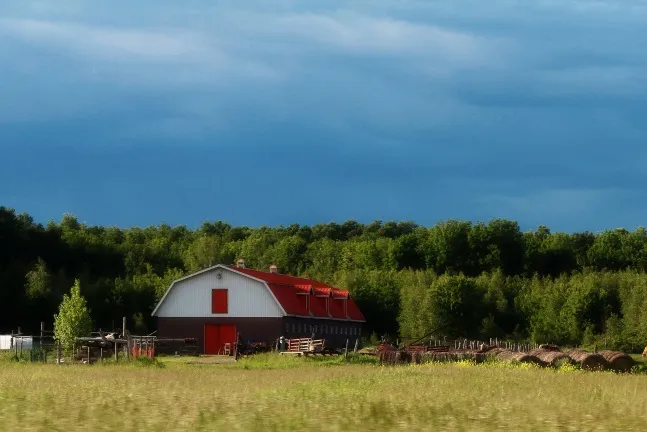
This very interesting paper, co-authored by FCRN member Ken Giller, pays serious attention to the question of what a family farm actually is and the assumptions that people make about them. Taking as its starting point for exploration the FAO’s assertion that family farms are important as a means of eradicating poverty, providing food and achieving sustainable development, it explores the characteristics and patterns of family farming in countries as diverse as the United States, Netherlands, China, Brazil, Ethiopia and India.
Read
Image
Resource
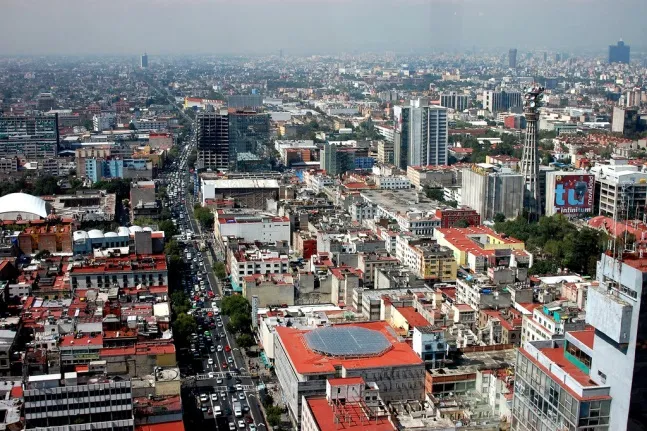
Megacity metabolism: What cities are the worst energy hogs?
This paper provides the first estimate of energy and material flows in the world’s 27 megacities (cities with over 10 million inhabitants). These megacities are home to 6.7 per cent of the world's population, but consume 9.3 per cent of global electricity and produce 12.6 per cent of global waste. The authors establish statistical relations for energy use, transport, water use, waste and so forth and factors such as average temperature, urban form, level and type of economic activity, and population growth.  This allows the researchers to evaluate which cities have high versus low levels of consumption and which ones make efficient use of resources.
Read
Resource
Waste not, want not: Reducing livestock's greenhouse gas emissions in the UK
Livestock, domestic animals raised for meat, dairy and eggs, is responsible for 14.5 percent of anthropogenic greenhouse gas (GHG) emissions.  Because of the scale of its contribution, mitigation of emissions from the livestock sector must be addressed in order to avoid an average global temperature rise of more than 2°C compared to pre-industrial times. 
Read
Image
Resource
FCRN China Briefing papers
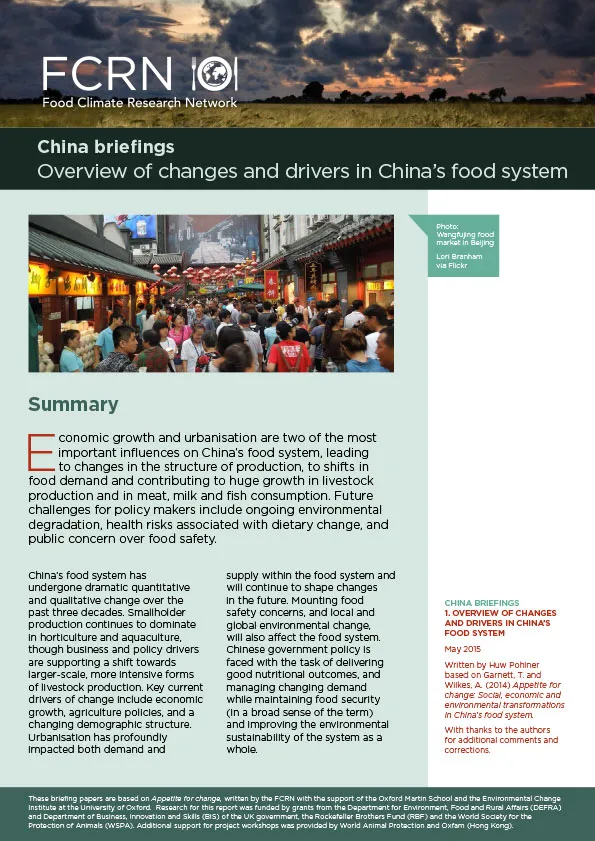
In 2014, the FCRN released a major report entitled Appetite for change: social, economic and environmental transformations in China’s food system. This provided a detailed and integrative analysis of the dramatic changes in China’s food system over the last 35 years, explored emerging environmental, health, economic and cultural trends and challenges, and identified policy and research implications.  
Read
  • VIEW MORE

Sign up for Fodder, our monthly newsletter unpacking the future of food.

Tick below to opt-in to email communications.

You can change your mind at any time by clicking the unsubscribe link in the footer of any email you receive from us, or by contacting us at info@tabledebates.org.

We use Mailchimp as our marketing platform. By clicking below to subscribe, you acknowledge that your information will be transferred to Mailchimp for processing. Learn more about Mailchimp's privacy practices.
  • Glossary
  • About
  • Our Writing
  • Podcasts
  • Resources

Social

YouTube Facebook Instagram

© Copyright 2025

A collaboration between: