Close
Login Register
Search
  • About
    • What We Do
    • Who We Are
    • FAQs
  • Our Writing
    • Explainers
    • Essays
    • Letterbox
    • Reports & More
  • Podcasts
  • Our Events
  • Projects
    • Power In The Food Systems
    • Local-Global Scale Project
    • MEAT: The Four Futures Podcast
    • Fuel To Fork
    • Nature
    • Reckoning with Regeneration
    • SHIFT
    • Games at TABLE
    • Rethinking the Global Soy Dilemma
  • Resources
  • Opportunities
    • Jobs
    • Funding
    • Courses
    • Collaborations
    • Events
  • Newsletter
  • TABLE (EN)
Search
Back

TABLE

Image
Photo credit: Sam Beebe (Flickr, creative commons licence, Attribution 2.0 Generic)
Resource
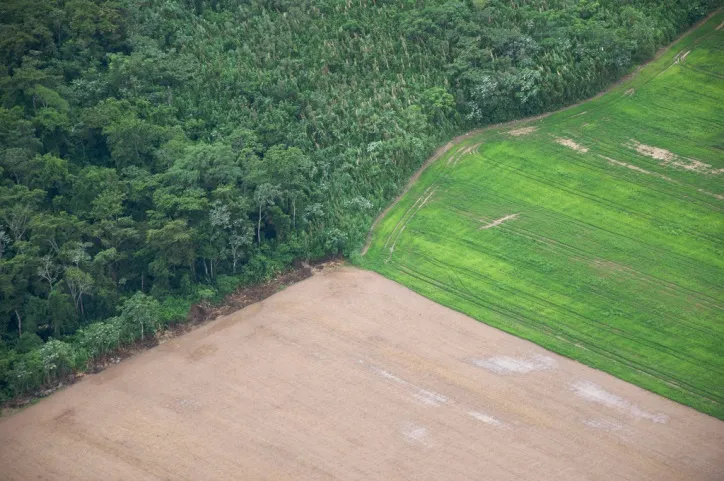
How can higher-yield farming help to spare nature?
This paper in Science discusses the potential of yield increase incentives as a way of convincing farmers to save land to protect biodiversity rather than increasing farmland.   The increase of agricultural land is one of the leading causes of biodiversity loss and greenhouse gas emissions in tropical countries. This paper argues that increasing yields on existing agricultural land can provide farmers with the incentive to spare land for wildlife and nature.
Read
Image
Photo credit: (Bernard Spragg, NZ. Under creative commons licence, Flickr)
Resource
How can the EU climate targets be met? A combined analysis of technological and demand-side changes in food and agriculture
This paper finds that the EU’s climate targets for 2050 for methane and nitrous oxide can be met by a combination of technological improvements in agriculture (found to have a potential to cut emissions by nearly 50% in optimistic scenarios) and through a reduction in beef consumption. The study authors argue that these targets can be met even with a continued high consumption of pork and poultry.
Read
Image
Resource
Impact of climate change on food production could cause over 500,000 extra deaths in 2050
This study, published in The Lancet, concludes that climate change will have a dampening effect on progress being made to reduce the number of people who are hungry and malnourished. It concludes that climate change will reduce the number of avoided deaths by 529,000 – or, put another way – will be responsible for 529,000 additional and avoidable deaths by 2050.
Read
Image
Resource
Greenhouse gas mitigation from livestock sector revealed
This new paper published in Nature Climate Change, assesses the mitigation potentials achievable through improved livestock management practices and moderating meat consumption. It estimates that livestock-oriented measures could account for up to half of the mitigation potential of the global agricultural, forestry and land-use sectors but emphasises that the gap between technical potential and social and economic feasibility is likely to be large.
Read
Image
Resource
Do we Have the Tools to Choose Sustainable Meat? Blog-post by Olivier De Schutter, Hans Herren and Emile Frison:
In their two-part contribution to the Livestock debate on the website of Arc2020 (the agricultural and rural convention), the IPES representatives Olivier de Schutter, Hans Herren and Emile Frison discuss the environmental footprint of livestock, the need for livestock farming to be reintegrated into landscapes and the flaws in the current factory farming model; and they propose ways to address the challenges posed by industrial livestock systems.
Read
Image
Resource
Food firms failing to tackle nutrition crisis
In a time of rising rates of obesity and ongoing malnutrition, this new report argues that the world’s largest food and beverage (F&B) companies are largely failing to be part of the solution.
Read
Image
Resource
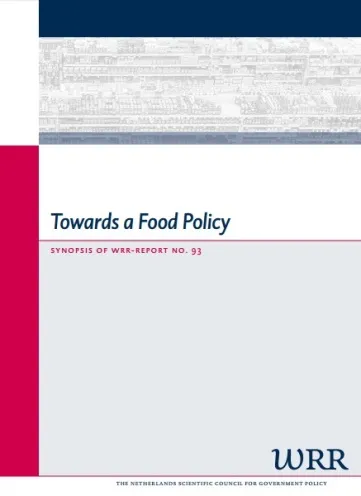
Why a Food Policy is needed – report by Netherlands Scientific Council for Government Policy
The report Towards a Food Policy by the Netherlands Scientific Council for Government Policy (WRR), an independent think-tank for the Dutch government, assesses the consequences for the Netherlands of the international developments around the food supply system and food consumption patterns. 
Read
Image
Resource
FAO report "Designing Nutrition-Sensitive Agriculture Investments: Checklist and guidance for programme formulation”
FAO has released a step-by-step approach to situation appraisal and programme design for nutrition-sensitive agriculture. With its emphasis on operational questions and considerations, it is intended to provide programme planners with practical tools.
Read
Image
Resource
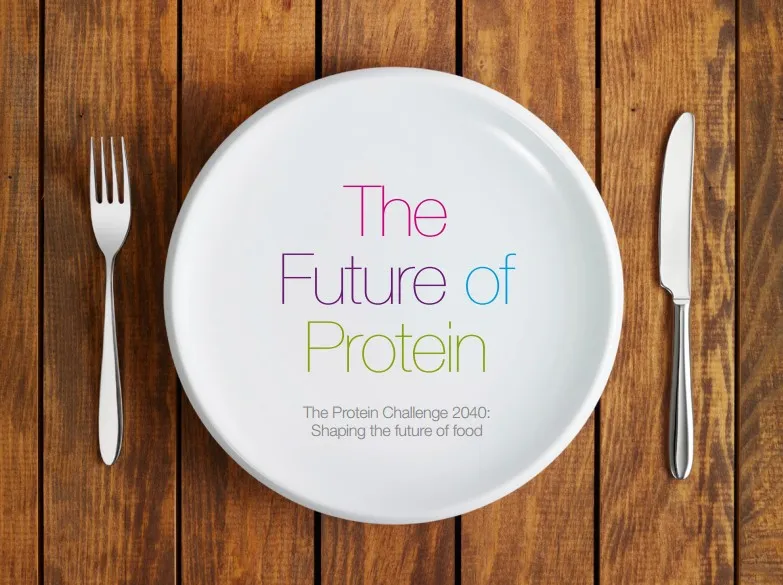
The protein challenge 2040 report by Forum for the Future
The Protein Challenge 2040 summary report condenses Forum for the Future’s analysis of the future of protein, and the challenges and opportunities we are facing in shifting the system onto a more sustainable path. It sets out the six key areas for innovation that Forum will embark on to catalyse large-scale change quickly across the system.
Read
  • VIEW MORE

Sign up for Fodder, our monthly newsletter unpacking the future of food.

Tick below to opt-in to email communications.

You can change your mind at any time by clicking the unsubscribe link in the footer of any email you receive from us, or by contacting us at info@tabledebates.org.

We use Mailchimp as our marketing platform. By clicking below to subscribe, you acknowledge that your information will be transferred to Mailchimp for processing. Learn more about Mailchimp's privacy practices.
  • Glossary
  • About
  • Our Writing
  • Podcasts
  • Resources

Social

YouTube Facebook Instagram

© Copyright 2025

A collaboration between: