Close
Login Register
Search
  • About
    • What We Do
    • Who We Are
    • FAQs
  • Our Writing
    • Explainers
    • Essays
    • Letterbox
    • Reports & More
  • Podcasts
  • Our Events
  • Projects
    • Power In The Food Systems
    • Local-Global Scale Project
    • MEAT: The Four Futures Podcast
    • Fuel To Fork
    • Nature
    • Reckoning with Regeneration
    • SHIFT
    • Games at TABLE
    • Rethinking the Global Soy Dilemma
  • Resources
  • Opportunities
    • Jobs
    • Funding
    • Courses
    • Collaborations
    • Events
  • Newsletter
  • TABLE (EN)
Search
Back

TABLE

Image
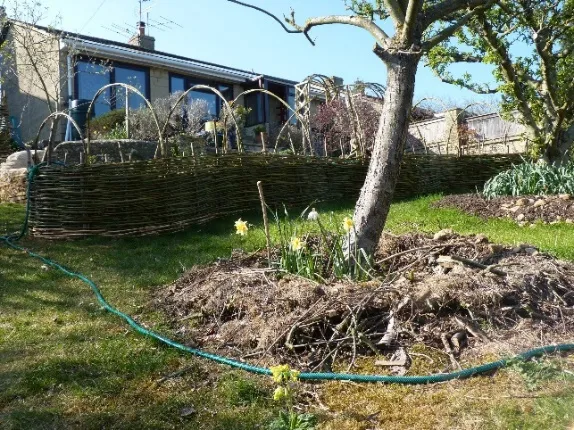
Photo: Tony Hirtenstein, Cowslips, Worcester Pearmain tree and garden, Flickr, Creative commons licence, 2.0
Resource
Permaculture movement found lacking in diversity
Permaculture is described here as a grassroots movement whose participants attempt to live in a sustainable way, taking inspiration from natural ecosystems in trying to live off the land as much as possible. The idea behind permaculture is to rely as much as possible on perennial crops, to recycle and reuse materials, and reduce waste. 
Read
Image
Photo: U.S. Department of Agriculture, Fall Line Farms; cooperative, co-op; Richmond, VA, Flickr, Creative commons licence 2.0
Resource
Are the claimed benefits of organic agriculture justified?
In the paper Organic agriculture in the twenty-first century by Reganold and Wachter (2016), that the FCRN has previously summarised, organic agriculture was found to be more profitable and environmentally beneficial compared with conventional farming as well as more productive and profitable in the long term, especially in developing countries where it provides an “ideal blueprint in addressing climate change”.
Read
Image
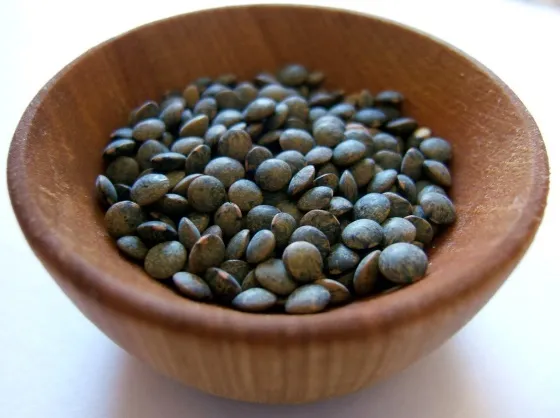
Photo: Jessica Spengler, Puy lentils, Flickr creative commons licence 2.0
Resource
Protein futures for Western Europe: potential land use and climate impacts in 2050
This paper looks at the agricultural land requirements and GHG emissions associated with supplying Western Europe with food in 2050 from its own land base. It modelled a range of food consumption scenarios based on different ‘protein futures’ to evaluate land use and GHG emissions taking into account both production and demand side mitigation options.
Read
Image
Resource
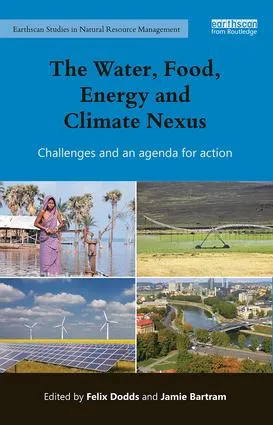
The Water, Food, Energy and Climate Nexus: Challenges and an agenda for action
Global trends of population growth, rising living standards and the rapidly increasing urbanized world are increasing the demand on water, food and energy. Added to this is the growing threat of climate change which will have huge impacts on water and food availability.
Read
Image
Photo: Sonla, Flickr, creative commons licence 2.0
Resource
100 Nobel laureates call out Greenpeace for Anti-GMO obstruction in developing world
109 Nobel laureates have signed a sharply worded letter to Greenpeace urging the environmental group to rethink its longstanding opposition to genetically modified organisms (GMOs). The signatories include past winners of the Nobel Prize in medicine, chemistry, physics, and economics.
Read
Image
Resource
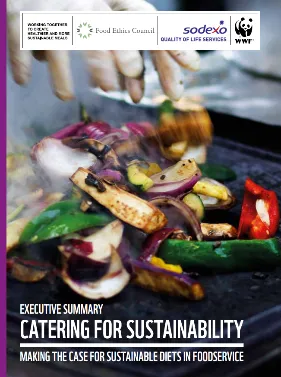
Catering for sustainability: Exploring the business cases for adopting and promoting sustainable diets in the foodservice sector
This report aims to understand whether, why and how sustainable diets are promoted by individual foodservice companies, and to assess the business cases for adopting and promoting sustainable diets across the sector.
Read
Image
Resource
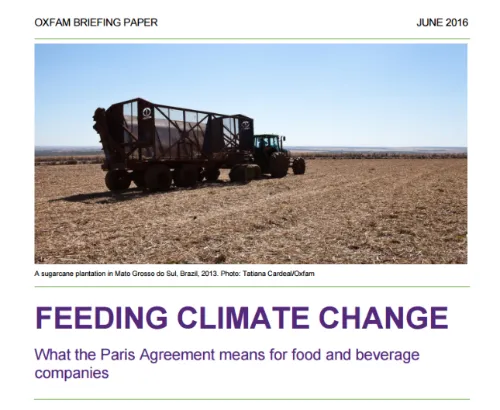
Feeding Climate Change: what the Paris Agreement Means for Food & Beverage Companies
The Oxfam briefing Feeding Climate Change: what the Paris Agreement Means for Food & Beverage Companies looks at commodities and climate change and policy from the perspective of the food and beverage industry.
Read
Image
Resource
OECD-FAO Agricultural Outlook 2016-2025
According to the latest joint OECD-FAO report Food Outlook which analyses global food markets, the coming decade will likely see an end to a period of high agricultural prices, although prices are expected to rise for livestock relative to those for crops.
Read
Image
Photo: Moyan Brenn, Flickr, creative commons licence 2.0)
Resource
Intensive grassland farming and soil carbon sequestration
According to this UK study there is a potential for improving soil carbon assessments if inventories increasingly assess soils below the current common level of 30 cm. The researchers estimate that over double the amount of carbon is stored in all UK grassland soils when looking at a depth of 1 metre compared to estimates where only the top 30 cm of soil is considered.
Read
  • VIEW MORE

Sign up for Fodder, our monthly newsletter unpacking the future of food.

Tick below to opt-in to email communications.

You can change your mind at any time by clicking the unsubscribe link in the footer of any email you receive from us, or by contacting us at info@tabledebates.org.

We use Mailchimp as our marketing platform. By clicking below to subscribe, you acknowledge that your information will be transferred to Mailchimp for processing. Learn more about Mailchimp's privacy practices.
  • Glossary
  • About
  • Our Writing
  • Podcasts
  • Resources

Social

YouTube Facebook Instagram

© Copyright 2025

A collaboration between: