Close
Login Register
Search
  • About
    • What We Do
    • Who We Are
    • FAQs
  • Our Writing
    • Explainers
    • Essays
    • Letterbox
    • Reports & More
  • Podcasts
  • Our Events
  • Projects
    • Power In The Food Systems
    • Local-Global Scale Project
    • MEAT: The Four Futures Podcast
    • Fuel To Fork
    • Nature
    • Reckoning with Regeneration
    • SHIFT
    • Games at TABLE
    • Rethinking the Global Soy Dilemma
  • Resources
  • Opportunities
    • Jobs
    • Funding
    • Courses
    • Collaborations
    • Events
  • Newsletter
  • TABLE (EN)
Search
Back

TABLE

Image
Photo: Livingasart, Buying Meat Two, Flickr, creative commons licence 2.0
Resource
Meat consumption contributing to global obesity
Energy intake has long been recognised as a factor in obesity, but more recently, interest has increased in whether some dietary patterns containing differing amounts of macronutrients and food groups, contribute more to body weight gain than do others.
Read
Image
Photo: USDA, People eating out at a fast food restaurant, Flickr, creative commons licence 2.0
Resource
Wicked Nutrition: The Controversial Greening of Official Dietary Guidance
This paper provides a detailed case study of the history and controversy surrounding the proposed inclusion of sustainability information in the 2015 Dietary Guidelines for Americans, as recommended by the Dietary Guidelines Advisory Committee (DGAC) – a body composed of nutritionists, physicians, and public health experts, tasked with reviewing the evidence base for the guidelines every 5 years.
Read
Image
Photo: Devika, Chane ki daal, Flickr, creative commons licence, 2.0
Resource
Eating plant protein is associated with lower mortality, animal protein with higher risk of cardiovascular disease
This study, which analyses data from two long-term epidemiologic research studies in the US, found that specific food sources of protein in the diet affected health outcomes in differing ways. Taking into account a number of other dietary and lifestyle factors, the authors showed that animal protein intake was weakly associated with a higher risk for mortality.
Read
Image
Victor Camilo, Flickr, Creative Commons License 2.0
Resource
Genome of banana fungus explored in bid to create more sustainable future for banana industry
The DNA of Pseudocercospora fijiensis, the fungus that causes the black Sigatoka disease in bananas, has been sequenced and assembled in an attempt to find means of disease control. The black Sigatoka disease occurs across the tropics and is responsible for huge banana yield losses. In addition, it can cause the fruit to ripen prematurely, which stops exports of the crop. The Cavendish banana, the clonal type of bananas most consumers in the west eat is especially vulnerable to the black Sigatoka fungi.
Read
Image
Resource
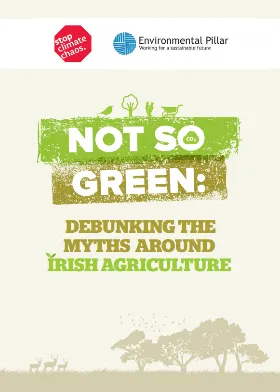
Not so Green: Debunking the Myths around Irish Agriculture
This report by members of the Environmental Pillar and Stop Climate Chaos aims to better inform discussions across civil society, media and government, and at EU policy level, regarding Ireland’s climate, energy, and wider environmental responsibilities.
Read
Image
Resource
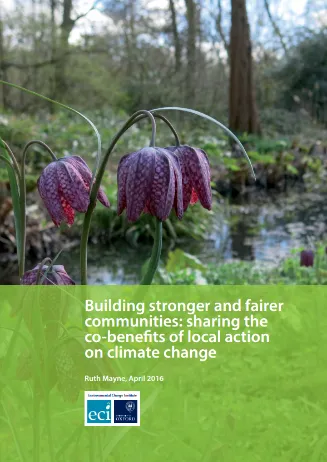
Building stronger and fairer communities: sharing the co-benefits of local action on climate change
This report by Agile-ox, a project based at the Environmental Change Institute at the University of Oxford, 'Sharing the co-benefits of local action on climate change' aims to promote discussion and provide practical ideas, case studies and a checklist about how local action can help contribute to a fair and fast transition to a low carbon economy in a way that benefits residents, reduces social divides and builds broad public support for action.
Read
Image
Photo: Patrick Gruban, UN General Assembly, Flickr creative commons licence 2.0
Resource
Designing Global Governance for Agricultural Development and Food and Nutrition Security
This paper looks at how global institutional arrangements and the lack of a global nutrition policy are hindering successful functioning of the global food system by failing to provide international public goods and services for poverty reduction.
Read
Image
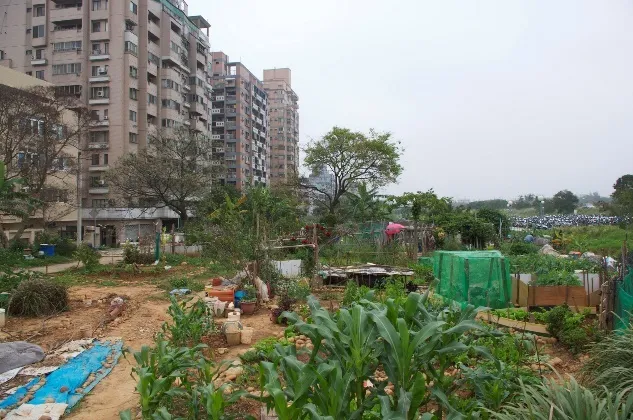
Photo: Shou-Hui Wang, The farm inside the city, Flickr, Creative Commons licence 2.0
Resource
The importance of local context for urban agriculture
This study evaluates urban agriculture in Ghent, Belgium, and Warsaw, Poland, and argues that local context is not reflected in current urban agriculture governance approaches. The authors critique recent discourse on urban agriculture as being overwhelmingly positive and uncritical, saying that it fails to place it in context and that the potential of urban agriculture requires a more nuanced analysis.
Read
Image
Photo: targut, rapeseed fields, Flickr, Creative commons licence 2.0
Resource
The impact of high crop prices on the use of agro-chemical inputs in France
Biofuel policies have been a major driver of rising prices for biofuel crops around the world, such as rapeseed, corn and soy. In this paper researchers take France as an example and show that a tax of €0.05–0.27 per kg of fertiliser could help to limit French farmers’ use of fertiliser (driven by the high rapeseed prices resulting from biofuels policy).
Read
  • VIEW MORE

Sign up for Fodder, our monthly newsletter unpacking the future of food.

Tick below to opt-in to email communications.

You can change your mind at any time by clicking the unsubscribe link in the footer of any email you receive from us, or by contacting us at info@tabledebates.org.

We use Mailchimp as our marketing platform. By clicking below to subscribe, you acknowledge that your information will be transferred to Mailchimp for processing. Learn more about Mailchimp's privacy practices.

  • Glossary
  • About
  • Our Writing
  • Podcasts
  • Resources

Social

YouTube Facebook Instagram

© Copyright 2025

A collaboration between: