Image Resources Our extensive research library contains thousands of summaries of journal articles, reports and news stories that can be searched by keyword and category RESOURCES CATEGORY Books Briefing paper Event recording Featured articles Featured report Game Journal articles News and resources Reports Think piece Video Working paper Workshop summary Year 2026 2025 2024 2023 2022 2021 2020 2019 2018 2017 2016 2015 2014 2013 2012 2011 2010 2009 2008 2007 2002 2001 Resource Report: Climate change and agriculture in the United States The USDA has published a report entitled Climate Change and Agriculture in the United States: Effects and Adaptation. Written by 56 expert authors from Federal service, universities, and non-government organizations, it reviews the evidence available of the expected consequences of climate change on U.S. agriculture, focusing on the next 25 to 100 years. Read Resource EU Sustainable Lifestyles Roadmap and Action Plan 2050 plus associated materials Members may be interested in the various publications of the SPREAD project. This is an EU sponsored iniatiative that seeks to provide a social platform for research and engagement on sustainable consumption. Read Image Resource Study: Adding selenium to fertilisers could combat selenium deficiency. A new study suggests that enriching crops by adding a naturally-occurring soil mineral to fertilisers could potentially help to reduce disease and premature death in Malawi. Dietary deficiency of the mineral selenium plays a vital role in keeping the immune system healthy and fighting illness and is likely to be endemic among the Malawi population. Read Image Resource Green Food Labels Make Nutrition-Poor Food Seem Healthy This is interesting, although not perhaps surprising, study finding that consumers are more likely to perceive an unhealthy food such as a candy bar as more healthful when it has a green coloured calorie label compared with when it had a red one - even though the number of calories are the same. And green coloured labels increase the perceived healthfulness of foods, especially among consumers who place high importance on healthy eating. Read Image Resource Duchy Originals Future Farming Programme Tom MacMillan, the Soil Association’s Head of Innovation has written a blog for the UK research councils’ Food Security website where he profiles the Association’s Duchy Originals Future Farming Programme, which it is running in partnership with the Organic Research Centre and supported by the Prince of Wales’s Charitable Foundation. Read Image Resource FOE report on consumption and land use This report says that Europe’s high consumption levels of products such as meat, dairy and textiles that require large areas of land, mean that Europe’s 'land footprint' remains one of the largest in the world. The report finds that the EU is importing the equivalent of 1,212,050 square kilometres to meet its demand for food. Read Image Resource European Environment Agency approach on quantifying environmental pressures arising from European consumption and production A new report from the European Environment Agency (EEA) describes methods for quantifying environmental pressures caused by European consumption patterns and economic production sectors, and shows the results from this approach. Read Image Resource Paper: Phosphorous efficient Enviropig Science Daily summarises the findings of a paper which reports on recent successful attempts to transgenically breed a pig that utilises phosphorous more efficiently. The pigs have genetically modified salivary glands, which help them digest phosphorus in feedstuffs, thereby reducing phosphorus pollution in the environment. Read Image Resource Paper: Impact of heat stress on French maize yields This paper highlights the impacts of heat stress on yields of maize in France. It finds that while irrigation can be used to adapt to reduced rainfall, heat stress is a concern that cannot be so easily managed. It finds that assuming current climate projections, yields per hectare will need to improve by 12% between 2016 and 2035 simply to maintain current production levels. Read VIEW MORE
Resource Report: Climate change and agriculture in the United States The USDA has published a report entitled Climate Change and Agriculture in the United States: Effects and Adaptation. Written by 56 expert authors from Federal service, universities, and non-government organizations, it reviews the evidence available of the expected consequences of climate change on U.S. agriculture, focusing on the next 25 to 100 years. Read
Resource EU Sustainable Lifestyles Roadmap and Action Plan 2050 plus associated materials Members may be interested in the various publications of the SPREAD project. This is an EU sponsored iniatiative that seeks to provide a social platform for research and engagement on sustainable consumption. Read
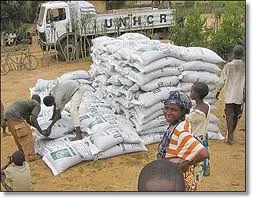
Image Resource Study: Adding selenium to fertilisers could combat selenium deficiency. A new study suggests that enriching crops by adding a naturally-occurring soil mineral to fertilisers could potentially help to reduce disease and premature death in Malawi. Dietary deficiency of the mineral selenium plays a vital role in keeping the immune system healthy and fighting illness and is likely to be endemic among the Malawi population. Read
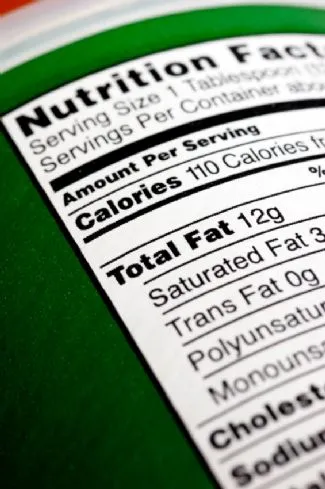
Image Resource Green Food Labels Make Nutrition-Poor Food Seem Healthy This is interesting, although not perhaps surprising, study finding that consumers are more likely to perceive an unhealthy food such as a candy bar as more healthful when it has a green coloured calorie label compared with when it had a red one - even though the number of calories are the same. And green coloured labels increase the perceived healthfulness of foods, especially among consumers who place high importance on healthy eating. Read
Image Resource Duchy Originals Future Farming Programme Tom MacMillan, the Soil Association’s Head of Innovation has written a blog for the UK research councils’ Food Security website where he profiles the Association’s Duchy Originals Future Farming Programme, which it is running in partnership with the Organic Research Centre and supported by the Prince of Wales’s Charitable Foundation. Read
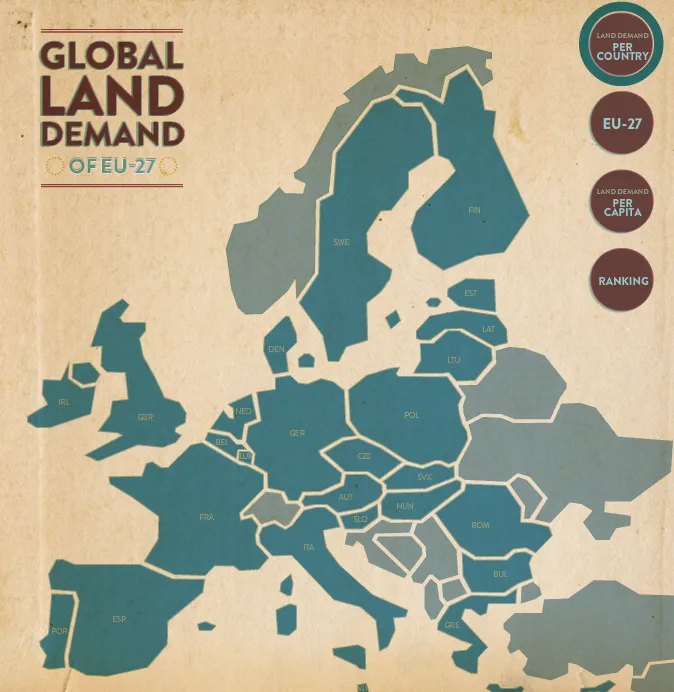
Image Resource FOE report on consumption and land use This report says that Europe’s high consumption levels of products such as meat, dairy and textiles that require large areas of land, mean that Europe’s 'land footprint' remains one of the largest in the world. The report finds that the EU is importing the equivalent of 1,212,050 square kilometres to meet its demand for food. Read
Image Resource European Environment Agency approach on quantifying environmental pressures arising from European consumption and production A new report from the European Environment Agency (EEA) describes methods for quantifying environmental pressures caused by European consumption patterns and economic production sectors, and shows the results from this approach. Read
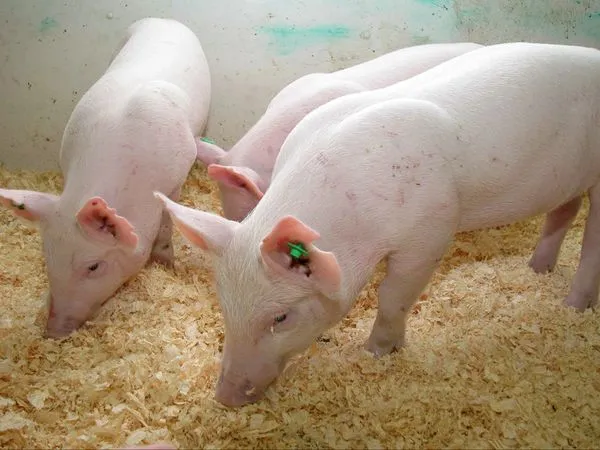
Image Resource Paper: Phosphorous efficient Enviropig Science Daily summarises the findings of a paper which reports on recent successful attempts to transgenically breed a pig that utilises phosphorous more efficiently. The pigs have genetically modified salivary glands, which help them digest phosphorus in feedstuffs, thereby reducing phosphorus pollution in the environment. Read
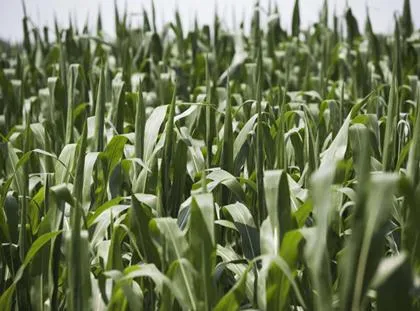
Image Resource Paper: Impact of heat stress on French maize yields This paper highlights the impacts of heat stress on yields of maize in France. It finds that while irrigation can be used to adapt to reduced rainfall, heat stress is a concern that cannot be so easily managed. It finds that assuming current climate projections, yields per hectare will need to improve by 12% between 2016 and 2035 simply to maintain current production levels. Read