Image Resources Our extensive research library contains thousands of summaries of journal articles, reports and news stories that can be searched by keyword and category RESOURCES CATEGORY Books Briefing paper Event recording Featured articles Featured report Game Journal articles News and resources Reports Think piece Video Working paper Workshop summary Year 2026 2025 2024 2023 2022 2021 2020 2019 2018 2017 2016 2015 2014 2013 2012 2011 2010 2009 2008 2007 2002 2001 Image Resource BBC article: How safe is mouldy food to eat? British families throw away about seven million tonnes of food and drink every year, enough to fill Wembley stadium to the brim. While most of this food has gone past its sell-by date, in this article Michael Mosley talks to a food safety expert to find how much of it could still safely be eaten. There is some useful information on when it is ok to scrap mould off food and eat it, and where it is not. Read the full article here. Read Image Resource National Geographic’s Future of Food series: The Next Green Revolution Read Image Resource National Geographic’s Future of Food series: Carnivore's Dilemma In the 'Carnivore's Dilemma', part of National Geographic’s special series on The Future of Food, Robert Kunzick (National Geographic’s senior environmental editor) contributes to the current meat debate by discussing his visit to 'Cactus Feeders', the company that operates 9 feed yards in Kansas, USA. He explores the role of pharmaceuticals and hormones for the health and productivity of the animals and also discusses environmental issues including water supply, beef’s carbon footprint and feedlots. For the complete article with infographics and photographs, see here. Read Image Resource Crop Composition Database Version 5.0 Crop, food, and feed composition studies are considered an essential part of the safety assessment of new crop varieties, including those developed through biotechnology. Information obtained from such studies is used to assess similarities and differences in important nutrients and anti-nutrients. This database created by International Life Sciences Institute, was generated from crop composition data obtained from studies conducted over a number of years at multiple worldwide locations. Read Image Resource Book: Food Ethics: The Basics Food Ethics: The Basics provides an introduction to the ethical dimensions of the production and consumption of food. Read Image Resource Global consumption an increasingly significant driver of tropical deforestation In this report commissioned by Center for Global Development, researchers at Chalmers University, Linköping University and Vienna University describe how international trade with agricultural and wood products is an increasingly important driver of tropical deforestation. More than a third of recent deforestation can be tied to production of beef, soy, palm oil and timber. Read Image Resource The 2014 Food and You Survey by the Food Standards Agency The latest survey by the Food Standards Agency presents results on reported behaviours, attitudes and knowledge relating to food safety issues. It provides data on people’s reports of their food purchasing, storage, preparation, consumption and factors that may affect these, such as eating habits, influences on where people choose to eat out and experiences of food poisoning. Read Image Resource Environmental Investigation Agency’s (EIA) Chilling Facts: Closing the Door on Hydrofluorocarbons (HFCs) This report, Closing the door on HFCs, documents the continued shift away from hydrofluorocarbons (HFCs) in the supermarket refrigeration sector. Now in its sixth year, EIA’s Chilling Facts reports have become an important resource used to disseminate information about progress in the shift away from HFC-based technology. Read Image Resource UNEP-WCMC study predicts climate change will drive fish towards the poles A study on the impact of climate change on fish stocks by scientists from the UN Environment Programme World Conservation Monitoring Centre (UNEP-WCMC) has identified ocean hotspots for fish extinction and a link between rising temperatures and fish movement. Read VIEW MORE
Image Resource BBC article: How safe is mouldy food to eat? British families throw away about seven million tonnes of food and drink every year, enough to fill Wembley stadium to the brim. While most of this food has gone past its sell-by date, in this article Michael Mosley talks to a food safety expert to find how much of it could still safely be eaten. There is some useful information on when it is ok to scrap mould off food and eat it, and where it is not. Read the full article here. Read
Image Resource National Geographic’s Future of Food series: Carnivore's Dilemma In the 'Carnivore's Dilemma', part of National Geographic’s special series on The Future of Food, Robert Kunzick (National Geographic’s senior environmental editor) contributes to the current meat debate by discussing his visit to 'Cactus Feeders', the company that operates 9 feed yards in Kansas, USA. He explores the role of pharmaceuticals and hormones for the health and productivity of the animals and also discusses environmental issues including water supply, beef’s carbon footprint and feedlots. For the complete article with infographics and photographs, see here. Read
Image Resource Crop Composition Database Version 5.0 Crop, food, and feed composition studies are considered an essential part of the safety assessment of new crop varieties, including those developed through biotechnology. Information obtained from such studies is used to assess similarities and differences in important nutrients and anti-nutrients. This database created by International Life Sciences Institute, was generated from crop composition data obtained from studies conducted over a number of years at multiple worldwide locations. Read
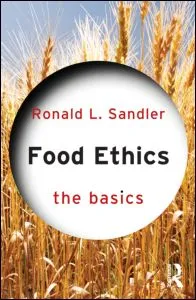
Image Resource Book: Food Ethics: The Basics Food Ethics: The Basics provides an introduction to the ethical dimensions of the production and consumption of food. Read
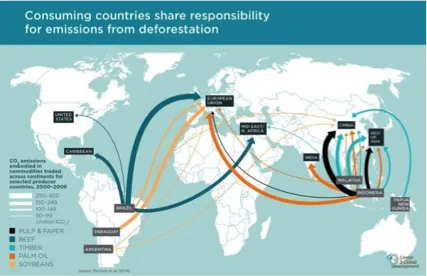
Image Resource Global consumption an increasingly significant driver of tropical deforestation In this report commissioned by Center for Global Development, researchers at Chalmers University, Linköping University and Vienna University describe how international trade with agricultural and wood products is an increasingly important driver of tropical deforestation. More than a third of recent deforestation can be tied to production of beef, soy, palm oil and timber. Read
Image Resource The 2014 Food and You Survey by the Food Standards Agency The latest survey by the Food Standards Agency presents results on reported behaviours, attitudes and knowledge relating to food safety issues. It provides data on people’s reports of their food purchasing, storage, preparation, consumption and factors that may affect these, such as eating habits, influences on where people choose to eat out and experiences of food poisoning. Read
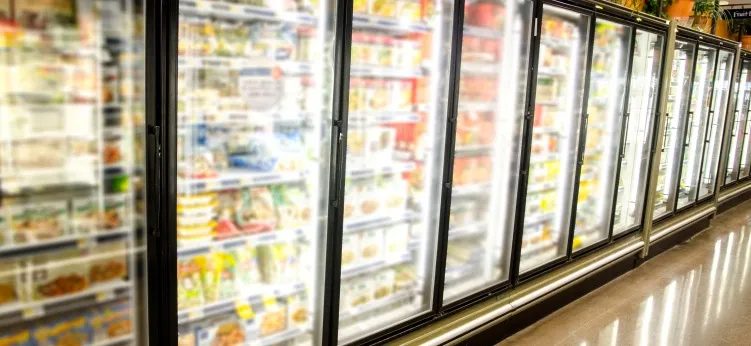
Image Resource Environmental Investigation Agency’s (EIA) Chilling Facts: Closing the Door on Hydrofluorocarbons (HFCs) This report, Closing the door on HFCs, documents the continued shift away from hydrofluorocarbons (HFCs) in the supermarket refrigeration sector. Now in its sixth year, EIA’s Chilling Facts reports have become an important resource used to disseminate information about progress in the shift away from HFC-based technology. Read
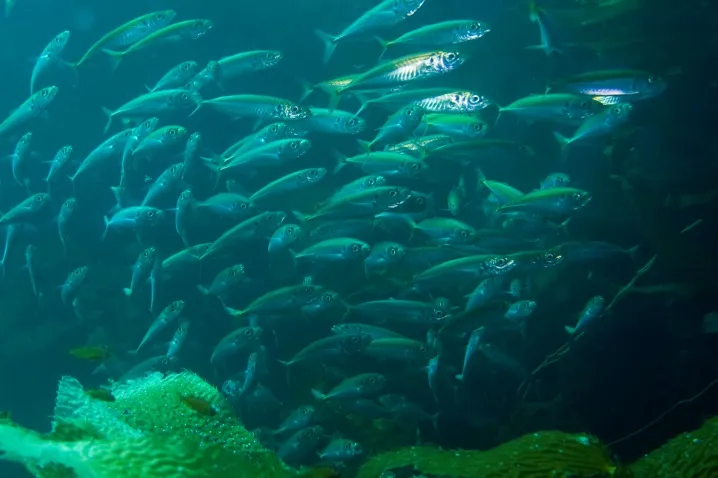
Image Resource UNEP-WCMC study predicts climate change will drive fish towards the poles A study on the impact of climate change on fish stocks by scientists from the UN Environment Programme World Conservation Monitoring Centre (UNEP-WCMC) has identified ocean hotspots for fish extinction and a link between rising temperatures and fish movement. Read