Image Resources Our extensive research library contains thousands of summaries of journal articles, reports and news stories that can be searched by keyword and category RESOURCES CATEGORY Books Briefing paper Event recording Featured articles Featured report Game Journal articles News and resources Reports Think piece Video Working paper Workshop summary Year 2026 2025 2024 2023 2022 2021 2020 2019 2018 2017 2016 2015 2014 2013 2012 2011 2010 2009 2008 2007 2002 2001 Image Resource Fact sheet on Antibiotic resistance: causes, consequences and means to limit it This fact sheet from Green Facts deals with antibiotic resistance, drawing upon and summarising several leading scientific reports. It discusses questions such as ‘What has caused this resistance and how can the spread of it be limited?’ There is a short section on antibiotics use in the livestock sector. Read the full fact sheet online here. Find more resources on antibiotic resistance on our website. Read Image Resource Eating better alliance blog: What has happened to the European Commission’s Sustainable Food Communication? In this blog, Eating Better’s Sue Dibb writes of her disappointment that the long awaited Communication on Sustainable Food from the European Commission remains unpublished, amid reports of political and industry lobbying to bury it. Read the full blog post here. You can also read more about sustainable healthy diets and food policy on our website. Read Image Resource Carbon Brief blog: How we can make good decisions about geoengineering In this Carbon Brief blog Dr. Rob Bellamy presents an analysis of geoengineering, discussing available alternative options, different perspectives and the complexity of applying such solutions to the real world. In presenting the results of past studies he concludes that despite the addition of more options and perspectives, there is a remarkable consistency of arguments in geoengineering proposals and alternatives. Read the full article here. Read more about geoengineering on our website. Read Image Resource Carbon Brief: reportage on the climate summit 2014 Read Image Resource Global Greendex survey says we're eating better, but our diet is still unsustainable According to the latest Greendex survey by the National Geographic Society, more people are eating local and organic foods and plan to consume less meat and bottled water. However, most also believe they lack enough information and influence to become more environmentally sustainable consumers. The survey, undertaken in collaboration with research consulting firm GlobeScan, measured consumption habits and attitudes in 18 countries. Each was scored on the relative size of its environmental footprint. Read Image Resource Global warming: Dwindling chances to stay below 2 degrees Celsius warming In the recent annual report from the Global Carbon Project (GCP) we are warned that if emissions continue to climb at current rates, we will not be able to keep global warming to less than two degrees Celsius. The research suggests that if we wish to limit global warming (to 2 degrees) we will have to stay below 3,200 billion tonnes of carbon dioxide. Read Image Resource Food waste reports by FAO The following two reports deal with food waste costs and mitigation. The first report focuses on costs and introduces a methodology that allows for full-cost accounting (FCA) of the food waste footprint, including costs associated with the environmental impacts of food waste. The FCA framework incorporates market based evaluations of the direct financial costs, non-market valuation of lost ecosystem goods and services and well-being valuation to assess the social costs associated with natural resource degradation. Read Image Resource Commercialising edible insects – How to market the impossible About 1900 species of insects are eaten worldwide by at least 2 billion people – not because they are short of food, but out of choice. But for most Western consumers the idea of insects as food is disgusting. However, a handful of entrepreneurial start-ups are working to change this. Read Image Resource Healthy and sustainable food choices among native and migrant citizens of the Netherlands In recent years there has been increasing attention for facilitating healthier and more sustainable food choices. Research and policy making in the field, however, have largely ignored important cultural changes that are taking place in the Netherlands (and elsewhere in Europe) due to the inflow of new ethnic groups. Read VIEW MORE
Image Resource Fact sheet on Antibiotic resistance: causes, consequences and means to limit it This fact sheet from Green Facts deals with antibiotic resistance, drawing upon and summarising several leading scientific reports. It discusses questions such as ‘What has caused this resistance and how can the spread of it be limited?’ There is a short section on antibiotics use in the livestock sector. Read the full fact sheet online here. Find more resources on antibiotic resistance on our website. Read
Image Resource Eating better alliance blog: What has happened to the European Commission’s Sustainable Food Communication? In this blog, Eating Better’s Sue Dibb writes of her disappointment that the long awaited Communication on Sustainable Food from the European Commission remains unpublished, amid reports of political and industry lobbying to bury it. Read the full blog post here. You can also read more about sustainable healthy diets and food policy on our website. Read
Image Resource Carbon Brief blog: How we can make good decisions about geoengineering In this Carbon Brief blog Dr. Rob Bellamy presents an analysis of geoengineering, discussing available alternative options, different perspectives and the complexity of applying such solutions to the real world. In presenting the results of past studies he concludes that despite the addition of more options and perspectives, there is a remarkable consistency of arguments in geoengineering proposals and alternatives. Read the full article here. Read more about geoengineering on our website. Read
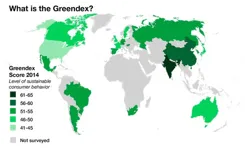
Image Resource Global Greendex survey says we're eating better, but our diet is still unsustainable According to the latest Greendex survey by the National Geographic Society, more people are eating local and organic foods and plan to consume less meat and bottled water. However, most also believe they lack enough information and influence to become more environmentally sustainable consumers. The survey, undertaken in collaboration with research consulting firm GlobeScan, measured consumption habits and attitudes in 18 countries. Each was scored on the relative size of its environmental footprint. Read
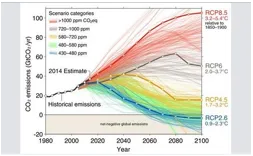
Image Resource Global warming: Dwindling chances to stay below 2 degrees Celsius warming In the recent annual report from the Global Carbon Project (GCP) we are warned that if emissions continue to climb at current rates, we will not be able to keep global warming to less than two degrees Celsius. The research suggests that if we wish to limit global warming (to 2 degrees) we will have to stay below 3,200 billion tonnes of carbon dioxide. Read
Image Resource Food waste reports by FAO The following two reports deal with food waste costs and mitigation. The first report focuses on costs and introduces a methodology that allows for full-cost accounting (FCA) of the food waste footprint, including costs associated with the environmental impacts of food waste. The FCA framework incorporates market based evaluations of the direct financial costs, non-market valuation of lost ecosystem goods and services and well-being valuation to assess the social costs associated with natural resource degradation. Read
Image Resource Commercialising edible insects – How to market the impossible About 1900 species of insects are eaten worldwide by at least 2 billion people – not because they are short of food, but out of choice. But for most Western consumers the idea of insects as food is disgusting. However, a handful of entrepreneurial start-ups are working to change this. Read
Image Resource Healthy and sustainable food choices among native and migrant citizens of the Netherlands In recent years there has been increasing attention for facilitating healthier and more sustainable food choices. Research and policy making in the field, however, have largely ignored important cultural changes that are taking place in the Netherlands (and elsewhere in Europe) due to the inflow of new ethnic groups. Read