Image Resources Our extensive research library contains thousands of summaries of journal articles, reports and news stories that can be searched by keyword and category RESOURCES CATEGORY Books Briefing paper Event recording Featured articles Featured report Game Journal articles News and resources Reports Think piece Video Working paper Workshop summary Year 2026 2025 2024 2023 2022 2021 2020 2019 2018 2017 2016 2015 2014 2013 2012 2011 2010 2009 2008 2007 2002 2001 Image Resource Reduced pesticide exposure from organic food This paper presented in EHP (Environmental Health Perspectives) claims to be the largest study to look at organophosphate exposure in humans. It specifically compares pesticide exposure from eating organic food as compared with conventionally farmed food. The question of whether organic foods are better relate both to a food’s nutrient values and to its pesticide exposure; this paper examines whether the belief that organic produce contains less pesticide holds true. Read Image Resource UK Department of Energy & Climate Change’s new report say eating less meat is necessary to prevent dangerous climate change The UK’s Department of Energy and Climate Change has published a report based on their newly developed Global Calculator tool. Read Image Resource Denmark launches ambitious organic food plan for national public institutions The online magazine The Local in Denmark reports that The Ministry of Food, Agriculture and Fisheries in Denmark has launched a new strategy to double organic farming and serve more organic food in national public institutions. The government has set a goal of doubling the amount of organic farming by 2020 compared to 2007. The nation’s public institutions serve some 800,000 meals every single day. Read Image Resource Video: Green Monday initiative aims to reduce ‘foodprint’ Green Monday is a global sustainability initiative that was designed to promote green lifestyle choices. In this video Phil Valko, assistant vice chancellor for sustainability at Washington University in St. Louis, talks about the global Green Monday initiative and how making a small change to one’s food choices can have a major impact. Read Image Resource A Better Retailing Climate progress report: Britain's retailers on track to meet environmental goals The first progress report of A Better Retailing Climate initiative has been published. It describes how retailers since 2005 have improved their performance against the environmental targets set out in the initiative, and that they have: Read Image Resource Nasdaq warns investors in light of “Death of Meat” threat from proposed USDA dietary guidelines This article from Nasdaq describes what they call a “shocking” reduction in meat consumption and how this may impact the meat industry and other sectors. The potential catalyst they argue is the release of preliminary recommendations from the committee of medical and nutrition experts involved in developing USDA dietary guidelines. Read Image Resource Evaluation of the environmental impact of weekly food consumption in different socio-economic households in Australia using environmentally extended input–output analysis This paper investigates the environmental impact of the diets of Australian households at different income quintiles. The paper looked at 2003 household consumption and argues that income affects the environmental impacts of household diet, with higher income corresponding to higher impacts. The higher the income bracket the more was spent on food and this translated through to a higher environmental impact (GHG CO2e, water, waste, energy) at higher incomes. Read Image Resource Global diets link environmental sustainability and human health –new study compares Mediterranean, vegetarian and pescetarian diets This major study compiles and analyses global-level data to assess relationships among diet, environmental sustainability and human health. It evaluates the potential future environmental impacts of the global dietary transition before exploring some possible solutions to the diet–environment–health trilemma. Read Image Resource Blog-post by Timothy Lang: “Sustainable Diets: Integrity has a sustainability dimension, too” In this blog-post for the The Institute of Food Safety, Integrity & Protection (TiFSiP) Tim Lang, Professor of Food Policy at the City University London and FCRN advisory board member, discusses sustainable diets. He argues that the pursuit of food integrity and authenticity is also the pursuit of sustainability. Read VIEW MORE
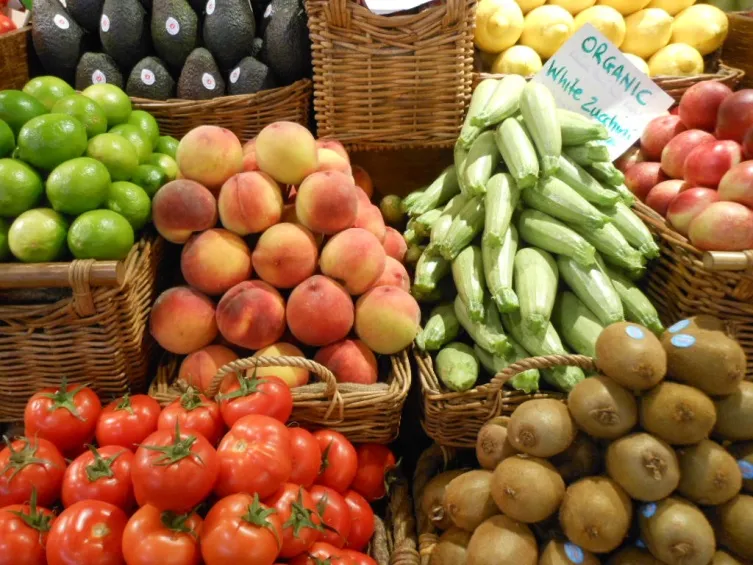
Image Resource Reduced pesticide exposure from organic food This paper presented in EHP (Environmental Health Perspectives) claims to be the largest study to look at organophosphate exposure in humans. It specifically compares pesticide exposure from eating organic food as compared with conventionally farmed food. The question of whether organic foods are better relate both to a food’s nutrient values and to its pesticide exposure; this paper examines whether the belief that organic produce contains less pesticide holds true. Read
Image Resource UK Department of Energy & Climate Change’s new report say eating less meat is necessary to prevent dangerous climate change The UK’s Department of Energy and Climate Change has published a report based on their newly developed Global Calculator tool. Read
Image Resource Denmark launches ambitious organic food plan for national public institutions The online magazine The Local in Denmark reports that The Ministry of Food, Agriculture and Fisheries in Denmark has launched a new strategy to double organic farming and serve more organic food in national public institutions. The government has set a goal of doubling the amount of organic farming by 2020 compared to 2007. The nation’s public institutions serve some 800,000 meals every single day. Read
Image Resource Video: Green Monday initiative aims to reduce ‘foodprint’ Green Monday is a global sustainability initiative that was designed to promote green lifestyle choices. In this video Phil Valko, assistant vice chancellor for sustainability at Washington University in St. Louis, talks about the global Green Monday initiative and how making a small change to one’s food choices can have a major impact. Read
Image Resource A Better Retailing Climate progress report: Britain's retailers on track to meet environmental goals The first progress report of A Better Retailing Climate initiative has been published. It describes how retailers since 2005 have improved their performance against the environmental targets set out in the initiative, and that they have: Read
Image Resource Nasdaq warns investors in light of “Death of Meat” threat from proposed USDA dietary guidelines This article from Nasdaq describes what they call a “shocking” reduction in meat consumption and how this may impact the meat industry and other sectors. The potential catalyst they argue is the release of preliminary recommendations from the committee of medical and nutrition experts involved in developing USDA dietary guidelines. Read
Image Resource Evaluation of the environmental impact of weekly food consumption in different socio-economic households in Australia using environmentally extended input–output analysis This paper investigates the environmental impact of the diets of Australian households at different income quintiles. The paper looked at 2003 household consumption and argues that income affects the environmental impacts of household diet, with higher income corresponding to higher impacts. The higher the income bracket the more was spent on food and this translated through to a higher environmental impact (GHG CO2e, water, waste, energy) at higher incomes. Read
Image Resource Global diets link environmental sustainability and human health –new study compares Mediterranean, vegetarian and pescetarian diets This major study compiles and analyses global-level data to assess relationships among diet, environmental sustainability and human health. It evaluates the potential future environmental impacts of the global dietary transition before exploring some possible solutions to the diet–environment–health trilemma. Read
Image Resource Blog-post by Timothy Lang: “Sustainable Diets: Integrity has a sustainability dimension, too” In this blog-post for the The Institute of Food Safety, Integrity & Protection (TiFSiP) Tim Lang, Professor of Food Policy at the City University London and FCRN advisory board member, discusses sustainable diets. He argues that the pursuit of food integrity and authenticity is also the pursuit of sustainability. Read