Image Resources Our extensive research library contains thousands of summaries of journal articles, reports and news stories that can be searched by keyword and category RESOURCES CATEGORY Books Briefing paper Event recording Featured articles Featured report Game Journal articles News and resources Reports Think piece Video Working paper Workshop summary Year 2026 2025 2024 2023 2022 2021 2020 2019 2018 2017 2016 2015 2014 2013 2012 2011 2010 2009 2008 2007 2002 2001 Image Resource Chinas growing appetite for pork In his article in The Economist, it is argued that China’s insatiable appetite for pork is not only a symbol of the country’s rise, but also a danger to the world from a sustainability perspective. The article discusses the history of pork consumption in China, its cultural and economic importance as well as how it impacts land use and large scale land acquisitions abroad. Read Image Resource Global best practice guidelines for reducing greenhouse gas emissions from livestock The Livestock Research Group (LRG) of the Global Research Alliance on Agricultural Greenhouse Gases (GRA) and Sustainable Agriculture Initiative (SAI) Platform have together compiled information about greenhouse gas (GHG) mitigation options currently available for the livestock sector, and produced a roadmap of emerging options based on current research. The aim is to help make progress on meeting global food demand while reducing the food industry’s contribution to global climate change. Read Image Resource Online knowledge platform for sustainable food value chains FAO has launched a new online platform, which provides access to resources on developing sustainable food value chains (SFVC). The goal is for SFVC development to provide a flexible framework to improve food systems, reducing poverty and hunger in a sustainable manner. FAO’s platform will include: Read Image Resource Little change in fast food portion size and product formulation between 1996 and 2013 Two new papers from researchers at the USDA Human Nutrition Research Center on Aging at Tufts University have analysed the portion sizes and nutritional contents (including calories, sodium, saturated fats and trans fats) of popular menu items served at three national fast-food chains between 1996 and 2013. The researchers found that average calories, sodium, and saturated fat stayed relatively constant, at high levels and the only decline seen was of trans fat of fries that took place between 2000-2009. The products analysed were: French fries, cheeseburgers, grilled chicken sandwich, and regular cola. Read Image Resource World’s Largest Indoor Farm is 100 Times More Productive This article from the Urbanist takes a look at Japan’s indoor farming is portrayed. The successful indoor farming endeavor in Japan is shown through some staggering statistics: 25,000 square feet producing 10,000 heads of lettuce per day (100 times more per square foot than traditional methods) with 40% less power, 80% less food waste and 99% less water usage than outdoor fields. Read Image Resource Two methods for jointly evaluating environmental impact and nutritional content of diets tested in new study on Swedish diets This paper presents two ways of including environmental and nutritional aspects in the sustainability assessment of diets. Three diets were assessed using these two methods: a diet issued from the National Food Agency as a recommended diet reflecting food preferences in Sweden (SNÖ), a diet corresponding to current average food consumption in Sweden according to the latest food intake survey (Riksmaten) and a Low Carbohydrate-High Fat (LCHF) diet, which is a popular life-style diet in Sweden currently. Read Image Resource Transcript of online debate: Climate change, sustainability and animal welfare: What are the solutions? Sentience Mosaic hosts live online debates where a variety of topics related to animal sentience are discussed. The description of the event was as follows: “Livestock production is responsible for a large proportion of global greenhouse gas emissions. Furthermore, livestock related gas emissions are expected to increase rapidly in coming years if no action is taken. Some propose that further intensification of animal production, in order to increase yield per animal, is the answer to reducing gas emissions. However, many argue that this is unethical and is not a solution. Read Image Resource New update to planetary boundaries work - Planetary boundaries: Guiding human development on a changing planet This updated version further develops the Planetary Boundaries concept, which was first published in 2009. In their original outline of the concept the authors identified nine key global processes and systems that regulate the stability and resilience of the Earth System – the interactions of land, ocean, atmosphere and life that together provide conditions upon which our societies depend. They argued that if these natural processes are disrupted beyond a certain ‘boundary’ point, the consequences could be irreversible and lead to abrupt environmental change, making life on earth very hard for humans. Read Image Resource New study calculates and compares the carbon footprint of food groups based on mass, calorie content and nutrient density In this study, 483 food items (developed by the Casino Group retailer company) were grouped into 34 categories and then 5 major food groups; meat and meat products, milk and dairy products, processed fruits and vegetables, grains and other foods and sweets. The aggregated average carbon footprints of the categories and major food groups were presented per 100 gram of product, per 100 kcal of product and per two different nutrient density scores including six and 15 nutrients respectively. Read VIEW MORE
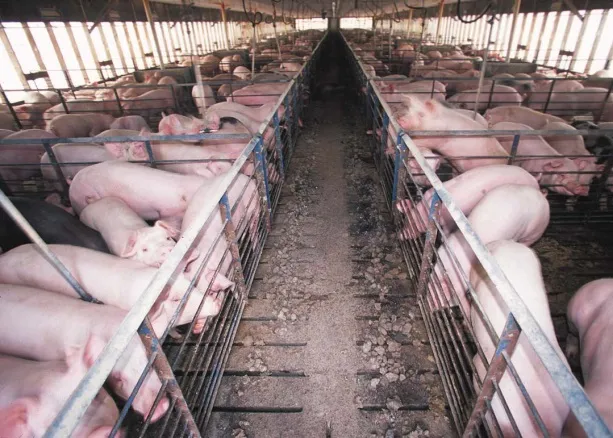
Image Resource Chinas growing appetite for pork In his article in The Economist, it is argued that China’s insatiable appetite for pork is not only a symbol of the country’s rise, but also a danger to the world from a sustainability perspective. The article discusses the history of pork consumption in China, its cultural and economic importance as well as how it impacts land use and large scale land acquisitions abroad. Read
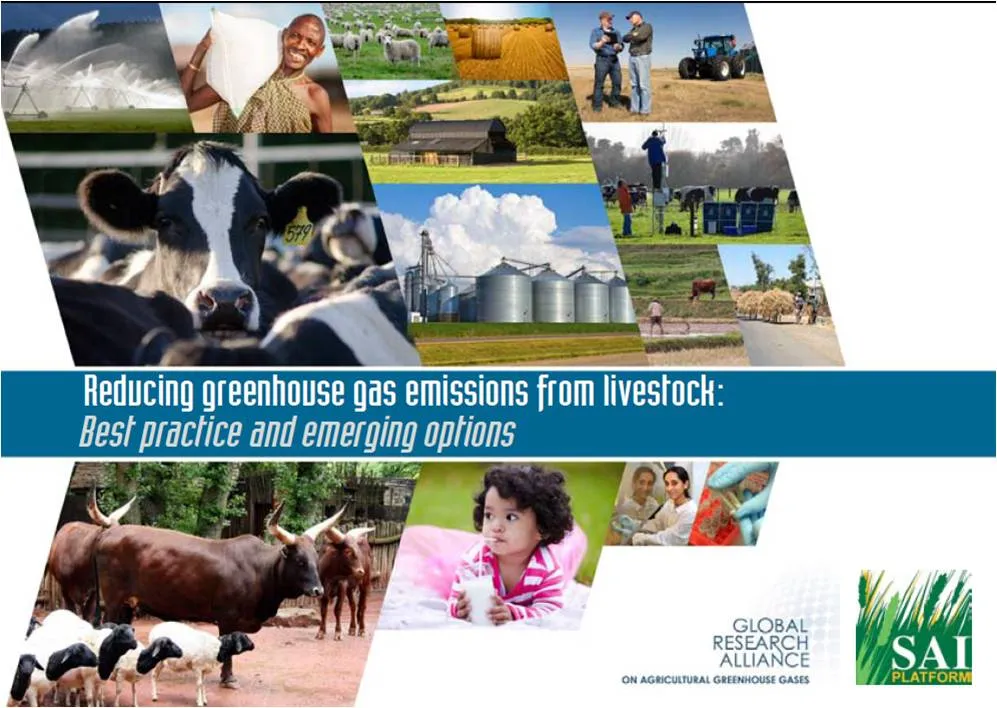
Image Resource Global best practice guidelines for reducing greenhouse gas emissions from livestock The Livestock Research Group (LRG) of the Global Research Alliance on Agricultural Greenhouse Gases (GRA) and Sustainable Agriculture Initiative (SAI) Platform have together compiled information about greenhouse gas (GHG) mitigation options currently available for the livestock sector, and produced a roadmap of emerging options based on current research. The aim is to help make progress on meeting global food demand while reducing the food industry’s contribution to global climate change. Read
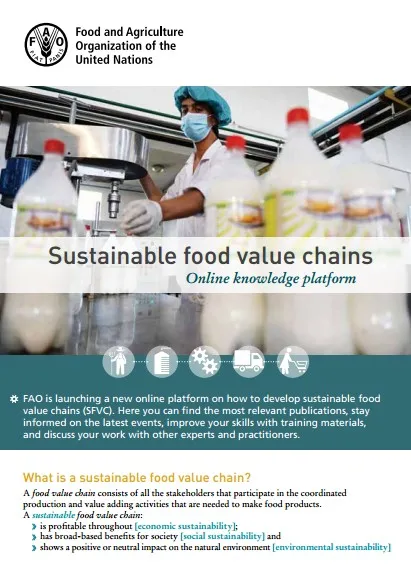
Image Resource Online knowledge platform for sustainable food value chains FAO has launched a new online platform, which provides access to resources on developing sustainable food value chains (SFVC). The goal is for SFVC development to provide a flexible framework to improve food systems, reducing poverty and hunger in a sustainable manner. FAO’s platform will include: Read
Image Resource Little change in fast food portion size and product formulation between 1996 and 2013 Two new papers from researchers at the USDA Human Nutrition Research Center on Aging at Tufts University have analysed the portion sizes and nutritional contents (including calories, sodium, saturated fats and trans fats) of popular menu items served at three national fast-food chains between 1996 and 2013. The researchers found that average calories, sodium, and saturated fat stayed relatively constant, at high levels and the only decline seen was of trans fat of fries that took place between 2000-2009. The products analysed were: French fries, cheeseburgers, grilled chicken sandwich, and regular cola. Read
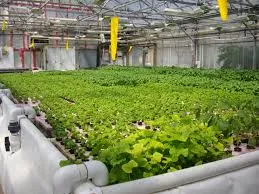
Image Resource World’s Largest Indoor Farm is 100 Times More Productive This article from the Urbanist takes a look at Japan’s indoor farming is portrayed. The successful indoor farming endeavor in Japan is shown through some staggering statistics: 25,000 square feet producing 10,000 heads of lettuce per day (100 times more per square foot than traditional methods) with 40% less power, 80% less food waste and 99% less water usage than outdoor fields. Read
Image Resource Two methods for jointly evaluating environmental impact and nutritional content of diets tested in new study on Swedish diets This paper presents two ways of including environmental and nutritional aspects in the sustainability assessment of diets. Three diets were assessed using these two methods: a diet issued from the National Food Agency as a recommended diet reflecting food preferences in Sweden (SNÖ), a diet corresponding to current average food consumption in Sweden according to the latest food intake survey (Riksmaten) and a Low Carbohydrate-High Fat (LCHF) diet, which is a popular life-style diet in Sweden currently. Read
Image Resource Transcript of online debate: Climate change, sustainability and animal welfare: What are the solutions? Sentience Mosaic hosts live online debates where a variety of topics related to animal sentience are discussed. The description of the event was as follows: “Livestock production is responsible for a large proportion of global greenhouse gas emissions. Furthermore, livestock related gas emissions are expected to increase rapidly in coming years if no action is taken. Some propose that further intensification of animal production, in order to increase yield per animal, is the answer to reducing gas emissions. However, many argue that this is unethical and is not a solution. Read
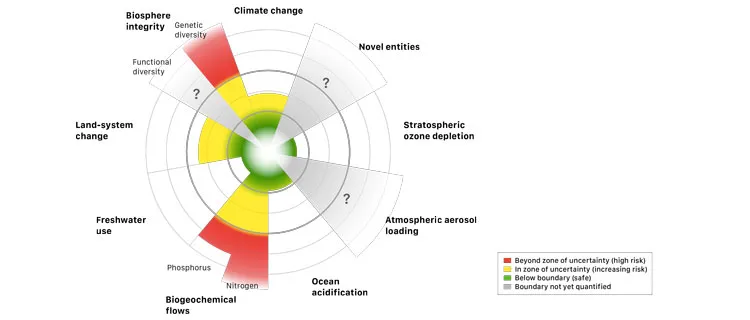
Image Resource New update to planetary boundaries work - Planetary boundaries: Guiding human development on a changing planet This updated version further develops the Planetary Boundaries concept, which was first published in 2009. In their original outline of the concept the authors identified nine key global processes and systems that regulate the stability and resilience of the Earth System – the interactions of land, ocean, atmosphere and life that together provide conditions upon which our societies depend. They argued that if these natural processes are disrupted beyond a certain ‘boundary’ point, the consequences could be irreversible and lead to abrupt environmental change, making life on earth very hard for humans. Read
Image Resource New study calculates and compares the carbon footprint of food groups based on mass, calorie content and nutrient density In this study, 483 food items (developed by the Casino Group retailer company) were grouped into 34 categories and then 5 major food groups; meat and meat products, milk and dairy products, processed fruits and vegetables, grains and other foods and sweets. The aggregated average carbon footprints of the categories and major food groups were presented per 100 gram of product, per 100 kcal of product and per two different nutrient density scores including six and 15 nutrients respectively. Read