Image Resources Our extensive research library contains thousands of summaries of journal articles, reports and news stories that can be searched by keyword and category RESOURCES CATEGORY Books Briefing paper Event recording Featured articles Featured report Game Journal articles News and resources Reports Think piece Video Working paper Workshop summary Year 2026 2025 2024 2023 2022 2021 2020 2019 2018 2017 2016 2015 2014 2013 2012 2011 2010 2009 2008 2007 2002 2001 Image Resource New study first to quantify global population growth compared to energy use This study is the first to quantify the relationship between human population growth and energy use on an international scale. It explains how global population growth has begun, in the past 50 years, to catch up with energy consumption for the first time in 500 years. Until that point, each generation had produced more energy per person than its predecessor, which allowed for an increase in Earth's carrying capacity and in the number of people it could sustain at equilibrium. Read Image Resource News report on American dietary guidelines debate between food companies and health advocates This Bloomberg article and video interview discusses the new recommendations published to inform the development of the 2015 US dietary guidelines. Read Image Resource Starving for answers: Why hunger and thirst don't have to doom the world These two articles in Foreign Policy discuss the role of power and agency to solve our global water and food problems. In the first article “Don’t Let Food Be the Problem - Producing too much food is what starves the planet” Professor Olivier De Schutter reflects on lessons learnt during his work over the past 6 years as UN Special Rapporteur on the right to food. He argues that international action cannot solve the food crises without local responses. He writes “These interconnected systems of overproduction won’t feed the world. Read Image Resource “Don’t count on industry goodwill: tax for healthy, sustainable food” FCRN - Chatham House report covered in new article An article in Beverage Daily covers the recent FCRN-Chatham House (EAT-funded) report “Policies and actions to shift eating patterns: What works.” The article highlights a key conclusion of the report: Read Image Resource Global survey on climate change awareness More than a third of the world's adults have never heard of climate change according to a new study published in Nature Climate Change. The study is based on the results of a Gallup World Poll undertaken in 2007-08 which collected responses in 119 countries . As reported in a Carbon brief blog-post the poll asked people: ‘How much do you know about global warming or climate change?’ Those who were aware of the issue were then asked the follow-up question: ‘How serious a threat is global warming to you and your family?’ Read Image Resource Book: Nitrogen & Climate Change - An Explosive Story Abstract It is the perfect storm. Limited food, water and energy unequally spread between an expanding population, and a warming climate as the bitter icing on the cake. In all these global challenges nitrogen has a leading role to play. Read Image Resource Report on Novel food production Read Image Resource Global Sustainable Development Report GSDR, 2015 edition The 2015 Global Sustainable Development Report was launched in the end of June 2015 and is intended to contribute to the 2015 session of the High Level Political Forum (HLPF) on Sustainable Development. Read Image Resource Energy use in the EU food sector: state of play and opportunities for improvement – Joint Research Centre Science and Policy Report This report summarises research from scientific, policy and industrial experiences on energy use in the EU food sector. It acknowledges that while the EU has made progress in incorporating renewable energy across the economy, the share of renewables in the food system remains relatively small. The report discusses the way ahead and highlights the main challenges to be faced in decreasing energy use and in increasing the renewable energy share in the food sector. Read VIEW MORE
Image Resource New study first to quantify global population growth compared to energy use This study is the first to quantify the relationship between human population growth and energy use on an international scale. It explains how global population growth has begun, in the past 50 years, to catch up with energy consumption for the first time in 500 years. Until that point, each generation had produced more energy per person than its predecessor, which allowed for an increase in Earth's carrying capacity and in the number of people it could sustain at equilibrium. Read
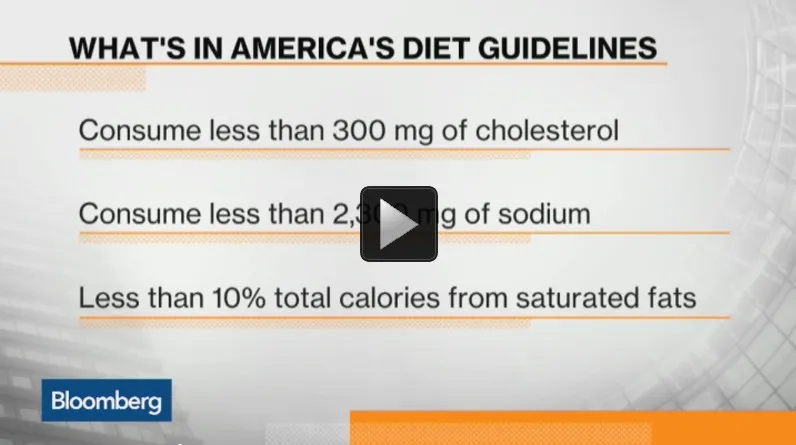
Image Resource News report on American dietary guidelines debate between food companies and health advocates This Bloomberg article and video interview discusses the new recommendations published to inform the development of the 2015 US dietary guidelines. Read
Image Resource Starving for answers: Why hunger and thirst don't have to doom the world These two articles in Foreign Policy discuss the role of power and agency to solve our global water and food problems. In the first article “Don’t Let Food Be the Problem - Producing too much food is what starves the planet” Professor Olivier De Schutter reflects on lessons learnt during his work over the past 6 years as UN Special Rapporteur on the right to food. He argues that international action cannot solve the food crises without local responses. He writes “These interconnected systems of overproduction won’t feed the world. Read
Image Resource “Don’t count on industry goodwill: tax for healthy, sustainable food” FCRN - Chatham House report covered in new article An article in Beverage Daily covers the recent FCRN-Chatham House (EAT-funded) report “Policies and actions to shift eating patterns: What works.” The article highlights a key conclusion of the report: Read
Image Resource Global survey on climate change awareness More than a third of the world's adults have never heard of climate change according to a new study published in Nature Climate Change. The study is based on the results of a Gallup World Poll undertaken in 2007-08 which collected responses in 119 countries . As reported in a Carbon brief blog-post the poll asked people: ‘How much do you know about global warming or climate change?’ Those who were aware of the issue were then asked the follow-up question: ‘How serious a threat is global warming to you and your family?’ Read
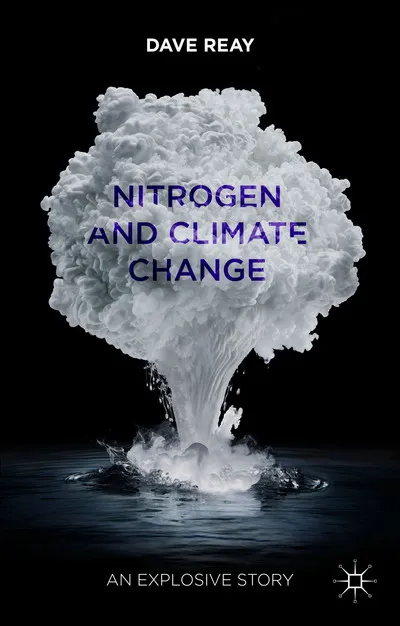
Image Resource Book: Nitrogen & Climate Change - An Explosive Story Abstract It is the perfect storm. Limited food, water and energy unequally spread between an expanding population, and a warming climate as the bitter icing on the cake. In all these global challenges nitrogen has a leading role to play. Read
Image Resource Global Sustainable Development Report GSDR, 2015 edition The 2015 Global Sustainable Development Report was launched in the end of June 2015 and is intended to contribute to the 2015 session of the High Level Political Forum (HLPF) on Sustainable Development. Read
Image Resource Energy use in the EU food sector: state of play and opportunities for improvement – Joint Research Centre Science and Policy Report This report summarises research from scientific, policy and industrial experiences on energy use in the EU food sector. It acknowledges that while the EU has made progress in incorporating renewable energy across the economy, the share of renewables in the food system remains relatively small. The report discusses the way ahead and highlights the main challenges to be faced in decreasing energy use and in increasing the renewable energy share in the food sector. Read