Image Resources Our extensive research library contains thousands of summaries of journal articles, reports and news stories that can be searched by keyword and category RESOURCES CATEGORY Books Briefing paper Event recording Featured articles Featured report Game Journal articles News and resources Reports Think piece Video Working paper Workshop summary Year 2026 2025 2024 2023 2022 2021 2020 2019 2018 2017 2016 2015 2014 2013 2012 2011 2010 2009 2008 2007 2002 2001 Image Resource Australia boosts climate science research in u-turn The newly elected Australian conservative government makes a clear break from the previous government – led by climate skeptic Prime Minister Tony Abott – after announcing more funding for climate science. Read Image Resource Sustainable Protein Sources This books provides a first reference on dietary proteins that covers the land, water, and energy usage inputs, nutritive outputs, and food applications of plant and other non-meat proteins. Read Image Resource IFAD: Rural-urban linkages and food systems in sub-Saharan Africa This report provides a developing country perspective on rural-urban linkages in food systems. It examines the role of rural-urban linkages in fostering inclusive and sustainable food systems, focusing in particular on sub-Saharan Africa. Read Image Resource How under-reporting of consumption can explain the apparent fall in UK calorie intake This report, produced by the Behavioural Insights Team, seeks to resolve an important area of uncertainty for obesity policy, asking, are official UK statistics on calorie consumption plausible? Read Image Resource New UK childhood obesity strategy criticised as weak and failing to deliver essential action to restrict advertising A new strategy has been launched by the UK government to tackle overweight and obesity among children. The strategy highlights a reaffirmed commitment to the sugary drinks tax (the only measure in the strategy which is not based on voluntary action) and it emphasises the importance of sports and school breakfast clubs. Read Image Resource Agriculture and overharvesting are still the main drivers of species loss In this analysis presented in the journal Nature, four conservation scientists warn against the current trend of over-reporting on climate change’s impacts on biodiversity. Instead, they find that by far the biggest drivers of biodiversity loss are overexploitation (the harvesting of species from the wild at rates that cannot be compensated for by reproduction or regrowth) and agriculture. Read Image Resource Sustainable intensification of agriculture for human prosperity and global sustainability Entering into the sustainable intensification debate, Johan Rockström from the Stockholm Resilience Centre and colleagues propose that a paradigm for sustainable intensification can be defined and translated into an quantitative, operational framework for agricultural development. Read Image Resource Reconciling agriculture, carbon and biodiversity in a savannah transformation frontier In parts of the world such as sub-Saharan Africa, significant agricultural expansion into natural ecosystems is predictable and likely unavoidable. This study presents a newly developed modelling tool, designed to provide quantitative answers to problem of how agricultural expansion could be located in ways that meet agricultural production goals, but which incur substantially lower losses of carbon and biodiversity than conventional agricultural development pathways. Read Image Resource Alternative arable cropping systems: A key to increase soil organic carbon storage? Results from a 16 year field experiment Alternative cropping systems such as organic or conservation agriculture are often expected to lead to enhanced soil carbon storage as compared with conventional systems, and therefore to hold potential to contribute to climate change mitigation via carbon sequestration. Read VIEW MORE
Image Resource Australia boosts climate science research in u-turn The newly elected Australian conservative government makes a clear break from the previous government – led by climate skeptic Prime Minister Tony Abott – after announcing more funding for climate science. Read
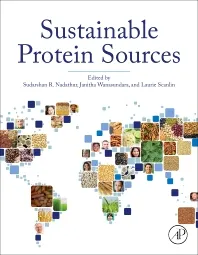
Image Resource Sustainable Protein Sources This books provides a first reference on dietary proteins that covers the land, water, and energy usage inputs, nutritive outputs, and food applications of plant and other non-meat proteins. Read
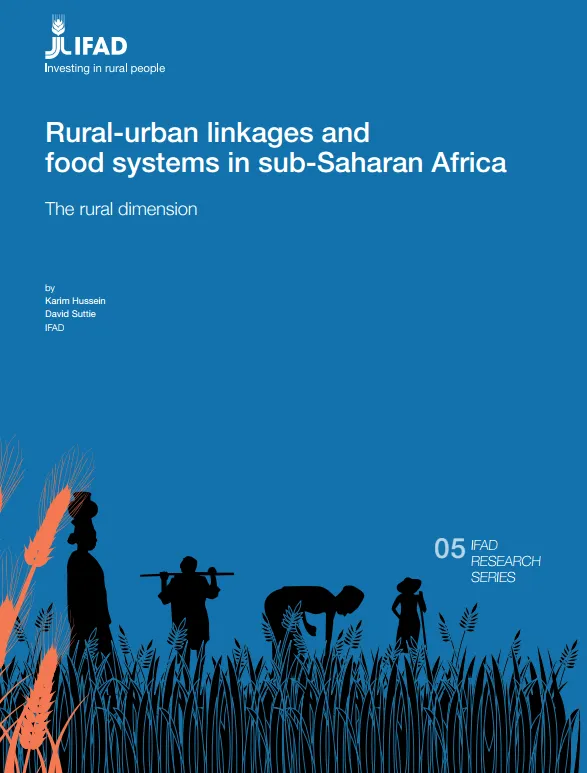
Image Resource IFAD: Rural-urban linkages and food systems in sub-Saharan Africa This report provides a developing country perspective on rural-urban linkages in food systems. It examines the role of rural-urban linkages in fostering inclusive and sustainable food systems, focusing in particular on sub-Saharan Africa. Read
Image Resource How under-reporting of consumption can explain the apparent fall in UK calorie intake This report, produced by the Behavioural Insights Team, seeks to resolve an important area of uncertainty for obesity policy, asking, are official UK statistics on calorie consumption plausible? Read
Image Resource New UK childhood obesity strategy criticised as weak and failing to deliver essential action to restrict advertising A new strategy has been launched by the UK government to tackle overweight and obesity among children. The strategy highlights a reaffirmed commitment to the sugary drinks tax (the only measure in the strategy which is not based on voluntary action) and it emphasises the importance of sports and school breakfast clubs. Read
Image Resource Agriculture and overharvesting are still the main drivers of species loss In this analysis presented in the journal Nature, four conservation scientists warn against the current trend of over-reporting on climate change’s impacts on biodiversity. Instead, they find that by far the biggest drivers of biodiversity loss are overexploitation (the harvesting of species from the wild at rates that cannot be compensated for by reproduction or regrowth) and agriculture. Read
Image Resource Sustainable intensification of agriculture for human prosperity and global sustainability Entering into the sustainable intensification debate, Johan Rockström from the Stockholm Resilience Centre and colleagues propose that a paradigm for sustainable intensification can be defined and translated into an quantitative, operational framework for agricultural development. Read
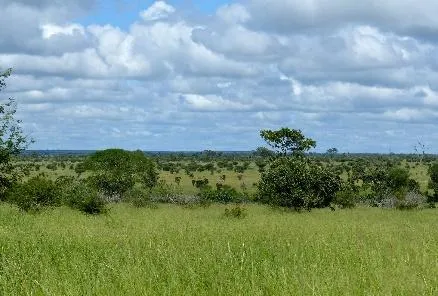
Image Resource Reconciling agriculture, carbon and biodiversity in a savannah transformation frontier In parts of the world such as sub-Saharan Africa, significant agricultural expansion into natural ecosystems is predictable and likely unavoidable. This study presents a newly developed modelling tool, designed to provide quantitative answers to problem of how agricultural expansion could be located in ways that meet agricultural production goals, but which incur substantially lower losses of carbon and biodiversity than conventional agricultural development pathways. Read
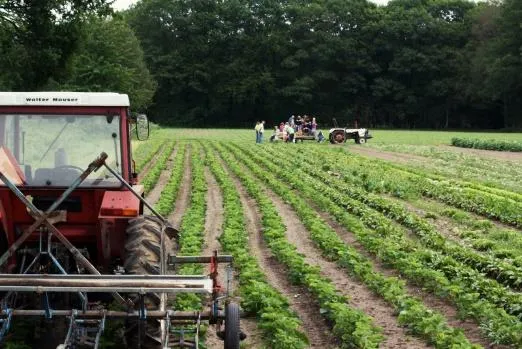
Image Resource Alternative arable cropping systems: A key to increase soil organic carbon storage? Results from a 16 year field experiment Alternative cropping systems such as organic or conservation agriculture are often expected to lead to enhanced soil carbon storage as compared with conventional systems, and therefore to hold potential to contribute to climate change mitigation via carbon sequestration. Read