Image Resources Our extensive research library contains thousands of summaries of journal articles, reports and news stories that can be searched by keyword and category RESOURCES CATEGORY Books Briefing paper Event recording Featured articles Featured report Game Journal articles News and resources Reports Think piece Video Working paper Workshop summary Year 2026 2025 2024 2023 2022 2021 2020 2019 2018 2017 2016 2015 2014 2013 2012 2011 2010 2009 2008 2007 2002 2001 Image Resource Reducing meat consumption in developed and transition countries to counter climate change and biodiversity loss: a review of influence factors FCRN members Prof. Dr. Susanne Stoll-Kleemann and Uta Schmidt (MSc.) have brought our attention to their recent article on reducing meat consumption. Read Image Resource PODCAST: Liz Goodwin on Reducing Food Loss and Waste — Lessons from the UK On this episode of the World Resources Institute (WRI) podcast, Lawrence MacDonald interviews Dr Liz Goodwin, who is a WRI senior fellow and their first Director of food loss and waste. Read Image Resource How Mars and WRI Developed Science-based Sustainability Targets for climate, land and water This blog on the World Resources Institute’s (WRI) website discusses their collaboration with food multinational Mars in developing science-based sustainability targets for climate, land use, and water. Read Image Resource New campaign, launch 10th November: Are you #vegcurious? The Eating Better Alliance has launched a new campaign about eating less meat. The alliance have worked to create a new way of talking about eating less meat, through fun and positive messages and a set of adverts to inspire a new generation of men to be more daring with their food and give vegetarian options a chance. Read Image Resource Lecture by Tim Lang on Brexit and the food system On 24th of October 2016, Professor Tim Lang gave a ‘Food Thinkers’ lecture on the potential consequences of Brexit on the food system. It discussed: Read Image Resource Feeding Cities: Improving local food access, security, and resilience Publisher’s abstract as follows: There is enormous current interest in urban food systems, with a wide array of policies and initiatives intended to increase food security, decrease ecological impacts and improve public health. This volume is a cross-disciplinary and applied approach to urban food system sustainability, health, and equity. Read Image Resource Transdisciplinary Perspectives on Transitions to Sustainability FCRN member Colin Sage from University College Cork, Ireland, is co-editor of this book. The following information was provided: Read Image Resource FAO Report 2016: The State of Food and Agriculture This report highlights the impacts of climate change on the agricultural sector and how, in the future, this is increasingly threatening food security for millions. The report states that meeting the goals of eradicating hunger and poverty by 2030, while addressing the threat of climate change, will require profound transformation of food and agriculture systems worldwide – which is of course a major challenge. Read Image Resource Social norms as solutions: Policies may influence large-scale behavioural tipping This article in Science explores the importance of social norms as a factor in sustainable behavioural change. It notes that formal institutions can drive behaviours that positively influence, for example, environmental and public health outcomes (examples given include lead pollution and acid rain). However, in many instances, it is not possible to enforce collectively desirable outcomes. Social norms, so the authors argue, are a key entry point to meaningful change in relation to many global issues. Read VIEW MORE
Image Resource Reducing meat consumption in developed and transition countries to counter climate change and biodiversity loss: a review of influence factors FCRN members Prof. Dr. Susanne Stoll-Kleemann and Uta Schmidt (MSc.) have brought our attention to their recent article on reducing meat consumption. Read
Image Resource PODCAST: Liz Goodwin on Reducing Food Loss and Waste — Lessons from the UK On this episode of the World Resources Institute (WRI) podcast, Lawrence MacDonald interviews Dr Liz Goodwin, who is a WRI senior fellow and their first Director of food loss and waste. Read
Image Resource How Mars and WRI Developed Science-based Sustainability Targets for climate, land and water This blog on the World Resources Institute’s (WRI) website discusses their collaboration with food multinational Mars in developing science-based sustainability targets for climate, land use, and water. Read
Image Resource New campaign, launch 10th November: Are you #vegcurious? The Eating Better Alliance has launched a new campaign about eating less meat. The alliance have worked to create a new way of talking about eating less meat, through fun and positive messages and a set of adverts to inspire a new generation of men to be more daring with their food and give vegetarian options a chance. Read
Image Resource Lecture by Tim Lang on Brexit and the food system On 24th of October 2016, Professor Tim Lang gave a ‘Food Thinkers’ lecture on the potential consequences of Brexit on the food system. It discussed: Read
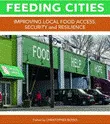
Image Resource Feeding Cities: Improving local food access, security, and resilience Publisher’s abstract as follows: There is enormous current interest in urban food systems, with a wide array of policies and initiatives intended to increase food security, decrease ecological impacts and improve public health. This volume is a cross-disciplinary and applied approach to urban food system sustainability, health, and equity. Read
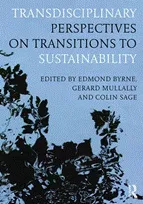
Image Resource Transdisciplinary Perspectives on Transitions to Sustainability FCRN member Colin Sage from University College Cork, Ireland, is co-editor of this book. The following information was provided: Read
Image Resource FAO Report 2016: The State of Food and Agriculture This report highlights the impacts of climate change on the agricultural sector and how, in the future, this is increasingly threatening food security for millions. The report states that meeting the goals of eradicating hunger and poverty by 2030, while addressing the threat of climate change, will require profound transformation of food and agriculture systems worldwide – which is of course a major challenge. Read
Image Resource Social norms as solutions: Policies may influence large-scale behavioural tipping This article in Science explores the importance of social norms as a factor in sustainable behavioural change. It notes that formal institutions can drive behaviours that positively influence, for example, environmental and public health outcomes (examples given include lead pollution and acid rain). However, in many instances, it is not possible to enforce collectively desirable outcomes. Social norms, so the authors argue, are a key entry point to meaningful change in relation to many global issues. Read