Image Resources Our extensive research library contains thousands of summaries of journal articles, reports and news stories that can be searched by keyword and category RESOURCES CATEGORY Books Briefing paper Event recording Featured articles Featured report Game Journal articles News and resources Reports Think piece Video Working paper Workshop summary Year 2026 2025 2024 2023 2022 2021 2020 2019 2018 2017 2016 2015 2014 2013 2012 2011 2010 2009 2008 2007 2002 2001 Image Resource Agriculture, food systems, diets and nutrition in Zambia This policy brief by the NGOs IIED and Hivos describes how diversification of agriculture and food systems in Zambia can contribute to improving Zambian food and nutrition security, while also building more resilient food systems. It outlines policy recommendations on how the food and agriculture sector can better serve the country’s population through the development of sustainable diets for all. Read Image Resource Report from Sustain: Beyond 2020 - New farm policy The UK NGO Sustain has published a briefing presenting principles and policies that it argues would deliver better food and farming when the UK leaves the European Common Agriculture Policy. Read Image Resource Aligning Land Use with Land Potential: The Role of Integrated Agriculture In this article a group of American researchers provide commentary on how sustainable applications of integrated agricultural systems (IAS) can be designed to enhance all ecosystem services, without compromising the land’s resilience. The authors describe IAS as an interactive and synergistic resource transfer between multiple agricultural enterprises over space and/or time. Read Image Resource Arla organic milk ad’s claims that it is good for the land judged by Ad regulator as ‘misleading’ An ad used by Arla Foods to promote their organic milk has been banned as it used the "misleading" claim that its production is "good for the land". Read Image Resource Launch of the EAT-Lancet Commission's website Foodplanethealth.org The EAT-Lancet Commission on Food, Planet, Health brings together 20 world-leading scientists from across the globe to reach a scientific consensus that defines a healthy and sustainable diet. The commission’s report will be published by The Lancet in Spring 2018. Read Image Resource Agriculture and Rural Development in a Globalizing World: Challenges and Opportunities Abbreviated abstract Rapid structural transformation and urbanization are transforming agriculture and food production in rural areas across the world. This textbook provides a comprehensive review and assessment of the multi-faceted nature of agriculture and rural development, particularly in the developing world, where the greatest challenges occur. Read Image Resource Flemish Agriculture and Fisheries Report This report describes the whole Flemish food system, what the Flemish eat, what attitudes, behaviors and trends play a role and the economic, environmental and social consequences of Flemish food consumption. It analyses the different Flemish food supply chains and indicate the importance of distribution, processing and production and concludes with a set of recommendations. Read Image Resource European Public Health Association report: Healthy and Sustainable Diets for European Countries This report by the European Public Health Association (EUPHA) presents both evidence and recommendations for European policy development on sustainable healthy diets. Starting with an overview of the health and environmental consequences of dietary habits this report moves on to present an analysis of individual and societal costs and benefits of implementing sustainable healthy diets, and a list of the European actors and institutions working on this issue. It also looks at evidence of progress from different European countries (FBDG Food Based Dietary Guidelines, Labeling, fiscal policy, procurement and other EU regional level initiatives). Read Image Resource Microbes and the next nitrogen revolution This paper proposes a solution to the problems associated with the high inefficiencies and indirect detrimental environmental impacts caused by reactive nitrogen use in agriculture.The researchers suggest that land-based agriculture could be bypassed and that Haber Bosch derived nitrogen could be used directly for reactor based microbial protein production. The advantages of microbial protein production are summarised, as are the opportunities and technical challenges for large-scale production. The authors emphasise that, aside from the scientific innovation required, the main challenge to address is obtaining acceptability from regulators and consumers. Read VIEW MORE
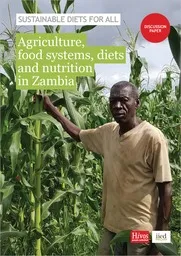
Image Resource Agriculture, food systems, diets and nutrition in Zambia This policy brief by the NGOs IIED and Hivos describes how diversification of agriculture and food systems in Zambia can contribute to improving Zambian food and nutrition security, while also building more resilient food systems. It outlines policy recommendations on how the food and agriculture sector can better serve the country’s population through the development of sustainable diets for all. Read
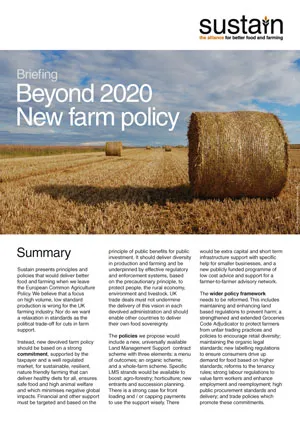
Image Resource Report from Sustain: Beyond 2020 - New farm policy The UK NGO Sustain has published a briefing presenting principles and policies that it argues would deliver better food and farming when the UK leaves the European Common Agriculture Policy. Read
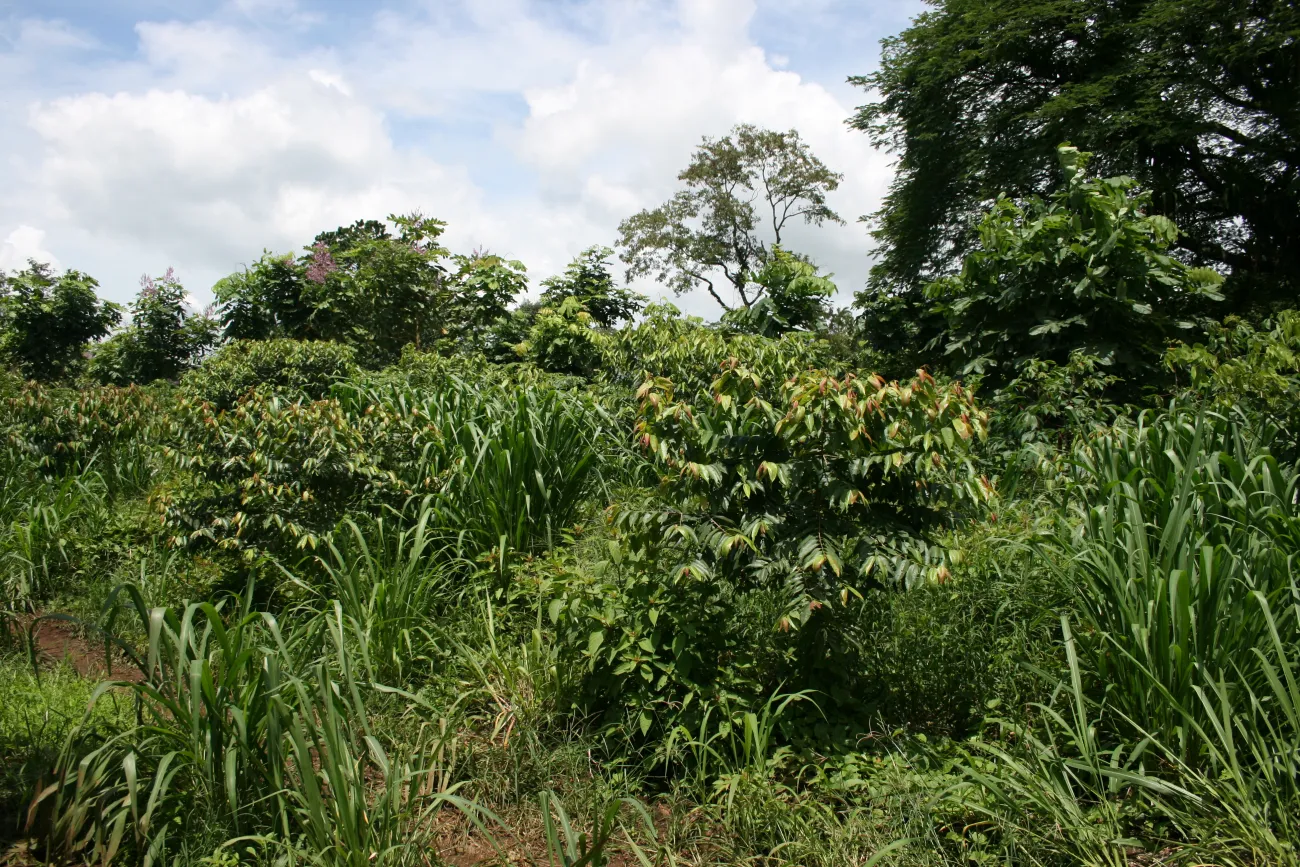
Image Resource Aligning Land Use with Land Potential: The Role of Integrated Agriculture In this article a group of American researchers provide commentary on how sustainable applications of integrated agricultural systems (IAS) can be designed to enhance all ecosystem services, without compromising the land’s resilience. The authors describe IAS as an interactive and synergistic resource transfer between multiple agricultural enterprises over space and/or time. Read
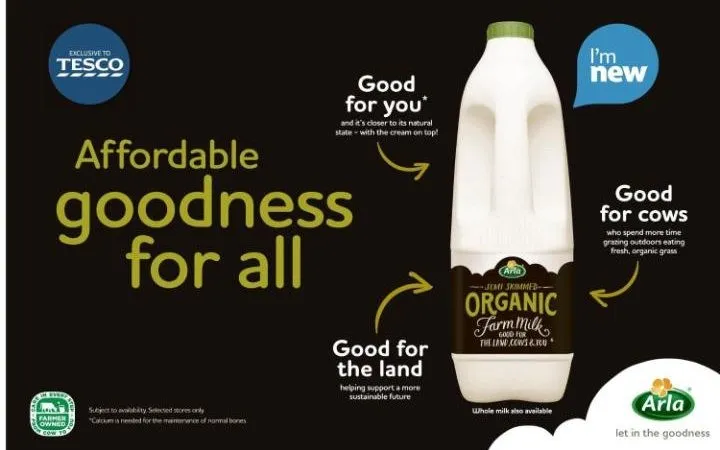
Image Resource Arla organic milk ad’s claims that it is good for the land judged by Ad regulator as ‘misleading’ An ad used by Arla Foods to promote their organic milk has been banned as it used the "misleading" claim that its production is "good for the land". Read
Image Resource Launch of the EAT-Lancet Commission's website Foodplanethealth.org The EAT-Lancet Commission on Food, Planet, Health brings together 20 world-leading scientists from across the globe to reach a scientific consensus that defines a healthy and sustainable diet. The commission’s report will be published by The Lancet in Spring 2018. Read
Image Resource Agriculture and Rural Development in a Globalizing World: Challenges and Opportunities Abbreviated abstract Rapid structural transformation and urbanization are transforming agriculture and food production in rural areas across the world. This textbook provides a comprehensive review and assessment of the multi-faceted nature of agriculture and rural development, particularly in the developing world, where the greatest challenges occur. Read
Image Resource Flemish Agriculture and Fisheries Report This report describes the whole Flemish food system, what the Flemish eat, what attitudes, behaviors and trends play a role and the economic, environmental and social consequences of Flemish food consumption. It analyses the different Flemish food supply chains and indicate the importance of distribution, processing and production and concludes with a set of recommendations. Read
Image Resource European Public Health Association report: Healthy and Sustainable Diets for European Countries This report by the European Public Health Association (EUPHA) presents both evidence and recommendations for European policy development on sustainable healthy diets. Starting with an overview of the health and environmental consequences of dietary habits this report moves on to present an analysis of individual and societal costs and benefits of implementing sustainable healthy diets, and a list of the European actors and institutions working on this issue. It also looks at evidence of progress from different European countries (FBDG Food Based Dietary Guidelines, Labeling, fiscal policy, procurement and other EU regional level initiatives). Read
Image Resource Microbes and the next nitrogen revolution This paper proposes a solution to the problems associated with the high inefficiencies and indirect detrimental environmental impacts caused by reactive nitrogen use in agriculture.The researchers suggest that land-based agriculture could be bypassed and that Haber Bosch derived nitrogen could be used directly for reactor based microbial protein production. The advantages of microbial protein production are summarised, as are the opportunities and technical challenges for large-scale production. The authors emphasise that, aside from the scientific innovation required, the main challenge to address is obtaining acceptability from regulators and consumers. Read