Image Resources Our extensive research library contains thousands of summaries of journal articles, reports and news stories that can be searched by keyword and category RESOURCES CATEGORY Books Briefing paper Event recording Featured articles Featured report Game Journal articles News and resources Reports Think piece Video Working paper Workshop summary Year 2026 2025 2024 2023 2022 2021 2020 2019 2018 2017 2016 2015 2014 2013 2012 2011 2010 2009 2008 2007 2002 2001 Image Books Governing sustainable seafood This book, by Simon R. Bush and Peter Oosterveer, examines the sustainability, governance and future of seafood. Read Image Reports Brexit business forum The Food Ethics Council has produced a report of its business forum “Brexit breakfast <200 days to go… How can we get the best post-Brexit outcomes for UK food and farming systems?”, which was held on 11 September 2018. Forum participants discussed the Irish border, future trade deals, organic certification, promoting public health after Brexit, farm labour, and future food standards. Read Image Reports Sustainable food systems and diets: mapping initiatives WWF-UK has produced a report that maps multi-stakeholder initiatives in the food system by commodities, geographies, issues and stakeholders involved. The report is aimed at helping initiatives identify the gaps where they can make a unique contribution. Read Image Reports 10 million Brits live in “food deserts” A quarter of survey respondents claim that healthy and nutritious food in the UK is too expensive, while 10 million people live in “food deserts”, according to a report by London-based think tank the Social Market Foundation. The report examined three barriers to healthy eating: prices, affordability (relative to income) and access to food stores. Read Image Reports IPCC special report on 1.5°C of climate change The Intergovernmental Panel on Climate Change (IPCC) has released a special report on keeping climate change to 1.5°C. The report says, “Limiting global warming to 1.5°C would require rapid, far-reaching and unprecedented changes in all aspects of society.” Read Image Journal articles Ultra-processed foods: definitions and policy issues A paper argues that current definitions of ultra-processed foods are inconsistently applied. Furthermore, while higher consumption of ultra-processed foods is associated with higher sugar intake and lower fibre intake, the paper claims that intakes of fat, saturated fat and salt are not associated with ultra-processed food consumption. The paper questions the policy recommendation that ultra-processed foods should be avoided. Read Image Journal articles Improved indicators for agriculture and food security FCRN member Ken Giller has co-authored a paper that reviews the targets and indicators used to measure the second sustainable development goal (SDG-2), i.e. the pursuit of global food security and agricultural sustainability. The paper concludes that the UN’s current set of targets and indicators for SDG-2 are not universally applicable, and proposes a revised set of indicators. Read Image Journal articles Options for keeping the food system within environmental limits A combination of measures including a shift towards plant-based diets, halving food waste and technological changes in agriculture (such as more efficient fertiliser application, feed additives and changes in irrigation) could significantly reduce the food system’s environmental impacts relative to 2050 projections and potentially even reduce impacts below today’s levels, according to a new paper. Read Image News and resources Vegan food now a legal right in Californian hospitals and prisons A new law requires that state institutions such as hospitals, nursing homes and prisons in California must provide a vegan menu option. The move has been welcomed by health and animal welfare campaigners. Read VIEW MORE
Image Books Governing sustainable seafood This book, by Simon R. Bush and Peter Oosterveer, examines the sustainability, governance and future of seafood. Read
Image Reports Brexit business forum The Food Ethics Council has produced a report of its business forum “Brexit breakfast <200 days to go… How can we get the best post-Brexit outcomes for UK food and farming systems?”, which was held on 11 September 2018. Forum participants discussed the Irish border, future trade deals, organic certification, promoting public health after Brexit, farm labour, and future food standards. Read
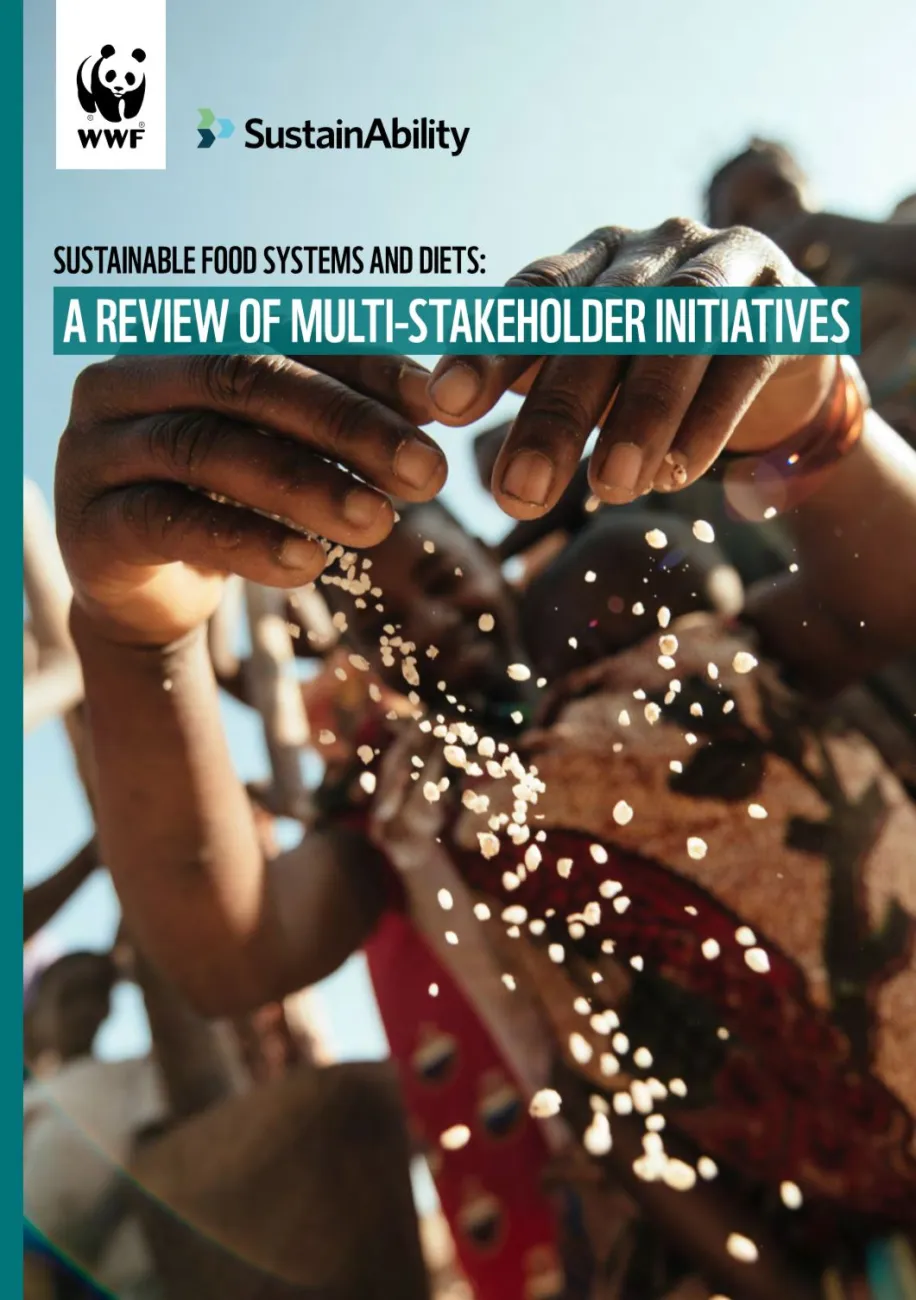
Image Reports Sustainable food systems and diets: mapping initiatives WWF-UK has produced a report that maps multi-stakeholder initiatives in the food system by commodities, geographies, issues and stakeholders involved. The report is aimed at helping initiatives identify the gaps where they can make a unique contribution. Read
Image Reports 10 million Brits live in “food deserts” A quarter of survey respondents claim that healthy and nutritious food in the UK is too expensive, while 10 million people live in “food deserts”, according to a report by London-based think tank the Social Market Foundation. The report examined three barriers to healthy eating: prices, affordability (relative to income) and access to food stores. Read
Image Reports IPCC special report on 1.5°C of climate change The Intergovernmental Panel on Climate Change (IPCC) has released a special report on keeping climate change to 1.5°C. The report says, “Limiting global warming to 1.5°C would require rapid, far-reaching and unprecedented changes in all aspects of society.” Read
Image Journal articles Ultra-processed foods: definitions and policy issues A paper argues that current definitions of ultra-processed foods are inconsistently applied. Furthermore, while higher consumption of ultra-processed foods is associated with higher sugar intake and lower fibre intake, the paper claims that intakes of fat, saturated fat and salt are not associated with ultra-processed food consumption. The paper questions the policy recommendation that ultra-processed foods should be avoided. Read
Image Journal articles Improved indicators for agriculture and food security FCRN member Ken Giller has co-authored a paper that reviews the targets and indicators used to measure the second sustainable development goal (SDG-2), i.e. the pursuit of global food security and agricultural sustainability. The paper concludes that the UN’s current set of targets and indicators for SDG-2 are not universally applicable, and proposes a revised set of indicators. Read
Image Journal articles Options for keeping the food system within environmental limits A combination of measures including a shift towards plant-based diets, halving food waste and technological changes in agriculture (such as more efficient fertiliser application, feed additives and changes in irrigation) could significantly reduce the food system’s environmental impacts relative to 2050 projections and potentially even reduce impacts below today’s levels, according to a new paper. Read
Image News and resources Vegan food now a legal right in Californian hospitals and prisons A new law requires that state institutions such as hospitals, nursing homes and prisons in California must provide a vegan menu option. The move has been welcomed by health and animal welfare campaigners. Read