Image Resources Our extensive research library contains thousands of summaries of journal articles, reports and news stories that can be searched by keyword and category RESOURCES CATEGORY Books Briefing paper Event recording Featured articles Featured report Game Journal articles News and resources Reports Think piece Video Working paper Workshop summary Year 2026 2025 2024 2023 2022 2021 2020 2019 2018 2017 2016 2015 2014 2013 2012 2011 2010 2009 2008 2007 2002 2001 Image Books The Meat Question: Animals, humans & the deep history of food This book questions whether the rising demand for meat is indeed driven mainly by wealth and argues that the consumption of cheap meat is linked to economic insecurity. It also questions the view that the modern human brain evolved because of the consumption of meat. Read Image Books Book chapter: The solution on our plates The book chapter Why sustainable plant-based diets are needed to reverse the food-climate-health-equity crisis by FCRN member David A Cleveland, part of the book Plant-based diets for succulence and sustainability, argues that plant-based diets are a key part of the response to the interlinked crises in food, climate, health and inequality. Read Image Reports Lessons on food sustainability from Denmark This report from the Food Ethics Council sets out how UK food businesses and government could learn from the Danish food system. Although Denmark and the UK have similarities, e.g. in climate, Denmark ranked 7th in the 2018 Food Sustainability Index while the UK ranked 24th. Read Image Reports Rethinking Food & Agriculture 2020-2030 This report by US think tank ReThinkX examines the implications of ongoing disruptions to livestock industries. It predicts that current livestock production will be replaced to a large extent by a “Food-as-Software” model, where food can be engineered on the molecular level and produced using “precision fermentation”, e.g. using engineered microorganisms to produce proteins that mimic milk proteins. Read Image Reports The role of food in city-based climate and nature policies This report from UK NGO alliance Sustain aims to help policymakers at the city level understand the role of food, farming and land use in policies designed to respond to climate change and protect nature. Read Image Reports Food Policy on Trial: Plain packaging on junk food and drink This report from the UK Food Ethics Council details the verdict reached by the “jury” in the event “Food Policy on Trial: In the dock – plain packaging on junk food & drink”. The jury (consisting of four volunteer members of the Food Ethics Council) concluded that much stronger regulation is required on food and drink packaging, for example banning the use of cartoon figures to market unhealthy foods to children, but also thought that introducing plain packaging on certain foods and drinks should be kept as a potential future intervention rather than introduced immediately. Read Image Reports Food: an opportunity to tackle multiple policy challenges This report by the Centre for Food Policy at City, University of London sets out how a “Food in All Policies” approach to food systems challenges can meet goals not only relating to food but also relating to education, social inclusion, livelihoods and fair economic development. Read Image Journal articles A world of co-benefits: solving the global nitrogen challenge This paper outlines the main sustainability challenges linked to nitrogen, including inadequate access to nitrogen fertiliser in some parts of the world and excessive fertiliser application in other areas, leading to water pollution, algal blooms and risks to human health. The paper argues that solving nitrogen problems would have co-benefits for other sustainability issues such as hunger, air, soil and water quality, climate and biodiversity. Read Image Featured articles Comment: Towards a sustainable and equitable blue economy This commentary article sets out five priorities for developing the so-called “blue economy” (i.e. ocean-based activities such as fishing, aquaculture, tourism, seabed mining and shipping) in a way that is both environmentally sustainable and socially equitable. The article notes that human activities are already negatively affecting ocean ecosystems and that future economic development of the oceans may have further, sometimes poorly understood, impacts on both the environment and people. Read VIEW MORE
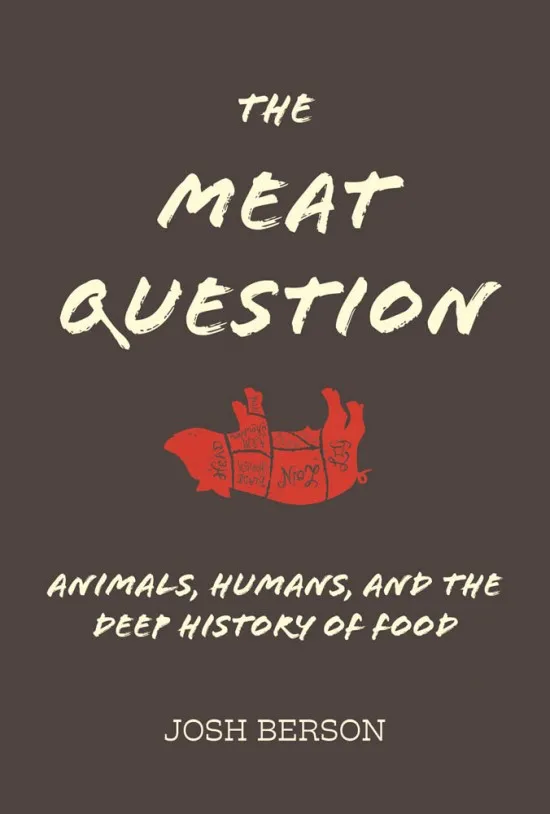
Image Books The Meat Question: Animals, humans & the deep history of food This book questions whether the rising demand for meat is indeed driven mainly by wealth and argues that the consumption of cheap meat is linked to economic insecurity. It also questions the view that the modern human brain evolved because of the consumption of meat. Read
Image Books Book chapter: The solution on our plates The book chapter Why sustainable plant-based diets are needed to reverse the food-climate-health-equity crisis by FCRN member David A Cleveland, part of the book Plant-based diets for succulence and sustainability, argues that plant-based diets are a key part of the response to the interlinked crises in food, climate, health and inequality. Read
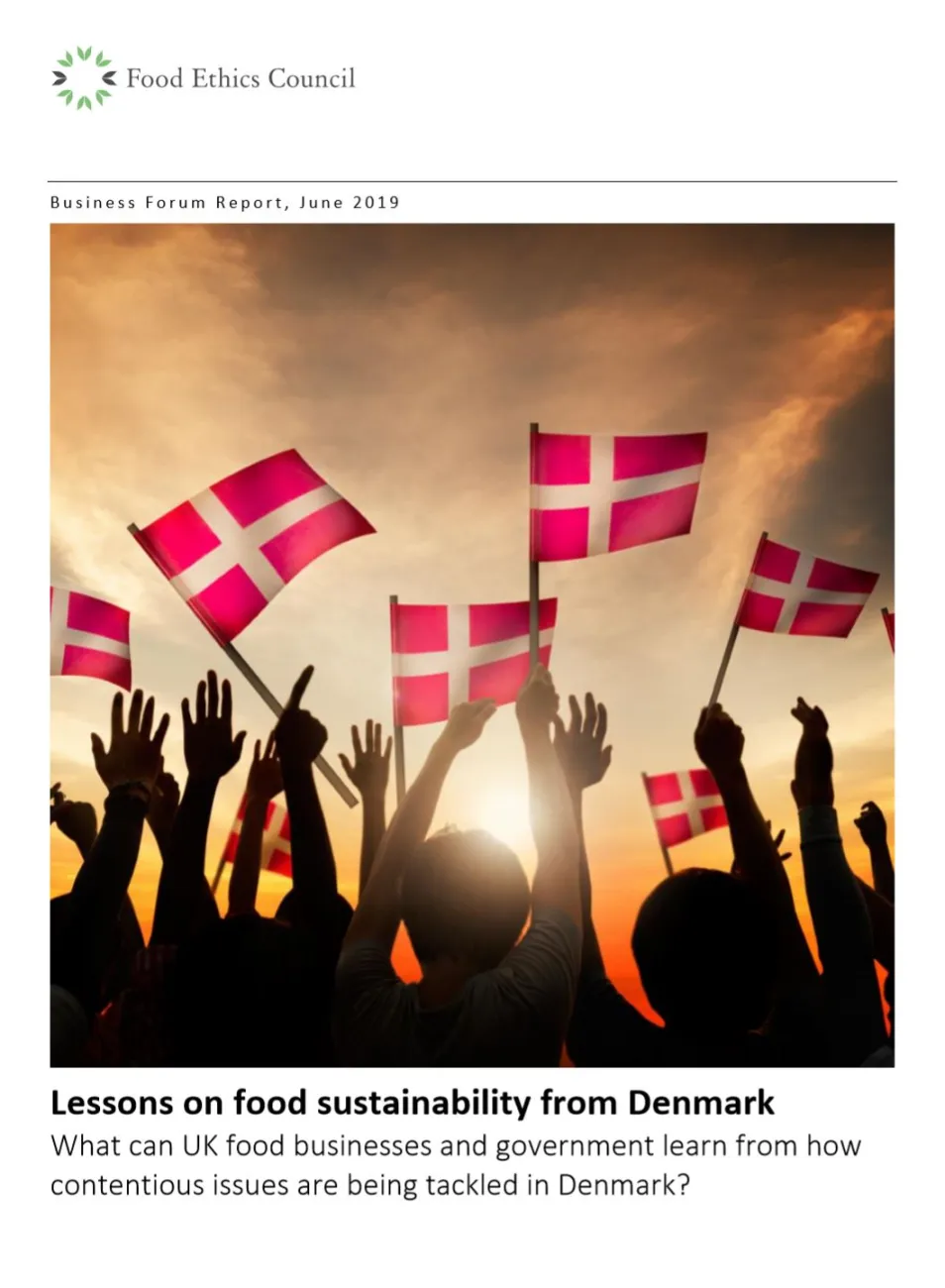
Image Reports Lessons on food sustainability from Denmark This report from the Food Ethics Council sets out how UK food businesses and government could learn from the Danish food system. Although Denmark and the UK have similarities, e.g. in climate, Denmark ranked 7th in the 2018 Food Sustainability Index while the UK ranked 24th. Read
Image Reports Rethinking Food & Agriculture 2020-2030 This report by US think tank ReThinkX examines the implications of ongoing disruptions to livestock industries. It predicts that current livestock production will be replaced to a large extent by a “Food-as-Software” model, where food can be engineered on the molecular level and produced using “precision fermentation”, e.g. using engineered microorganisms to produce proteins that mimic milk proteins. Read
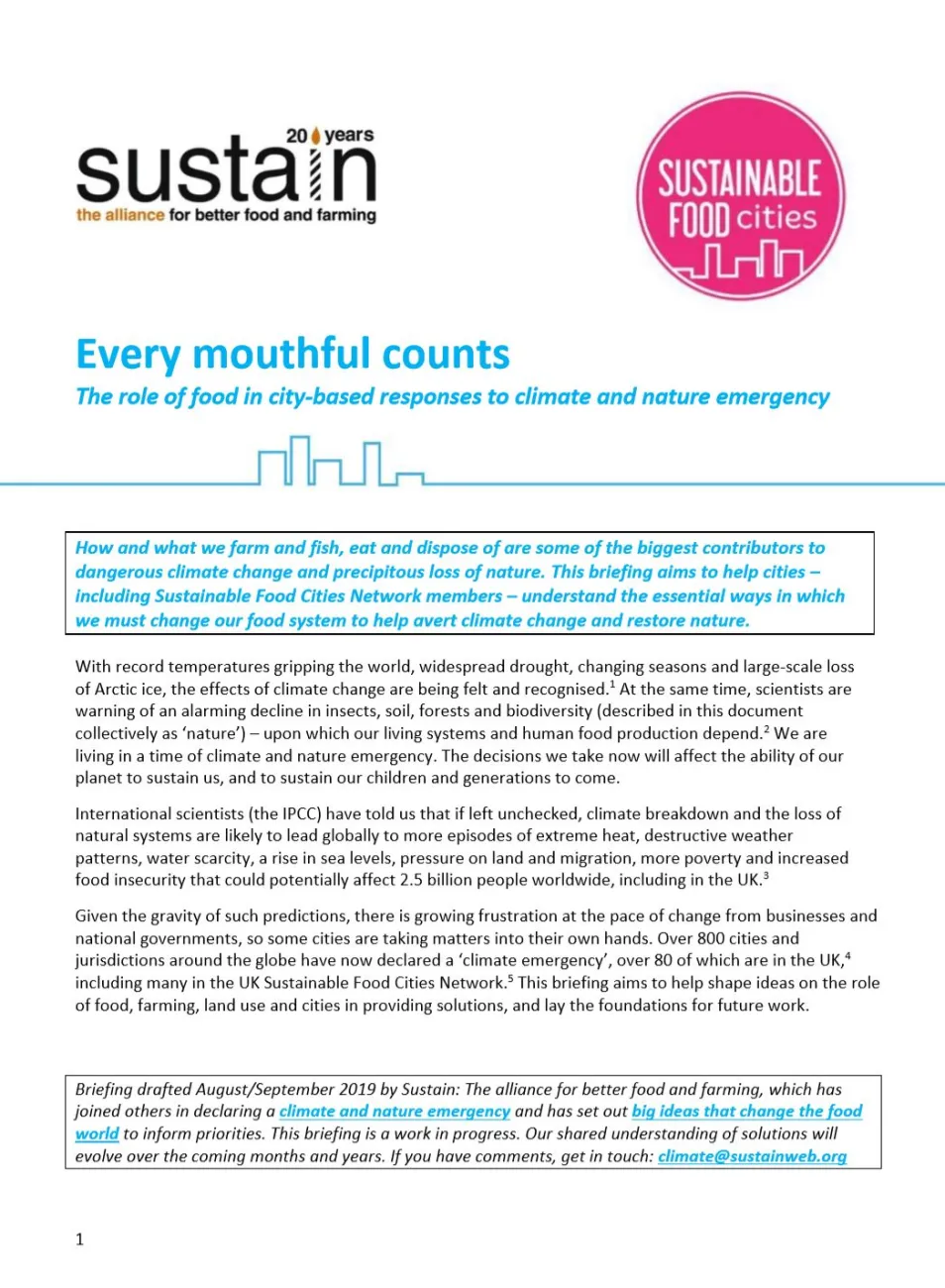
Image Reports The role of food in city-based climate and nature policies This report from UK NGO alliance Sustain aims to help policymakers at the city level understand the role of food, farming and land use in policies designed to respond to climate change and protect nature. Read
Image Reports Food Policy on Trial: Plain packaging on junk food and drink This report from the UK Food Ethics Council details the verdict reached by the “jury” in the event “Food Policy on Trial: In the dock – plain packaging on junk food & drink”. The jury (consisting of four volunteer members of the Food Ethics Council) concluded that much stronger regulation is required on food and drink packaging, for example banning the use of cartoon figures to market unhealthy foods to children, but also thought that introducing plain packaging on certain foods and drinks should be kept as a potential future intervention rather than introduced immediately. Read
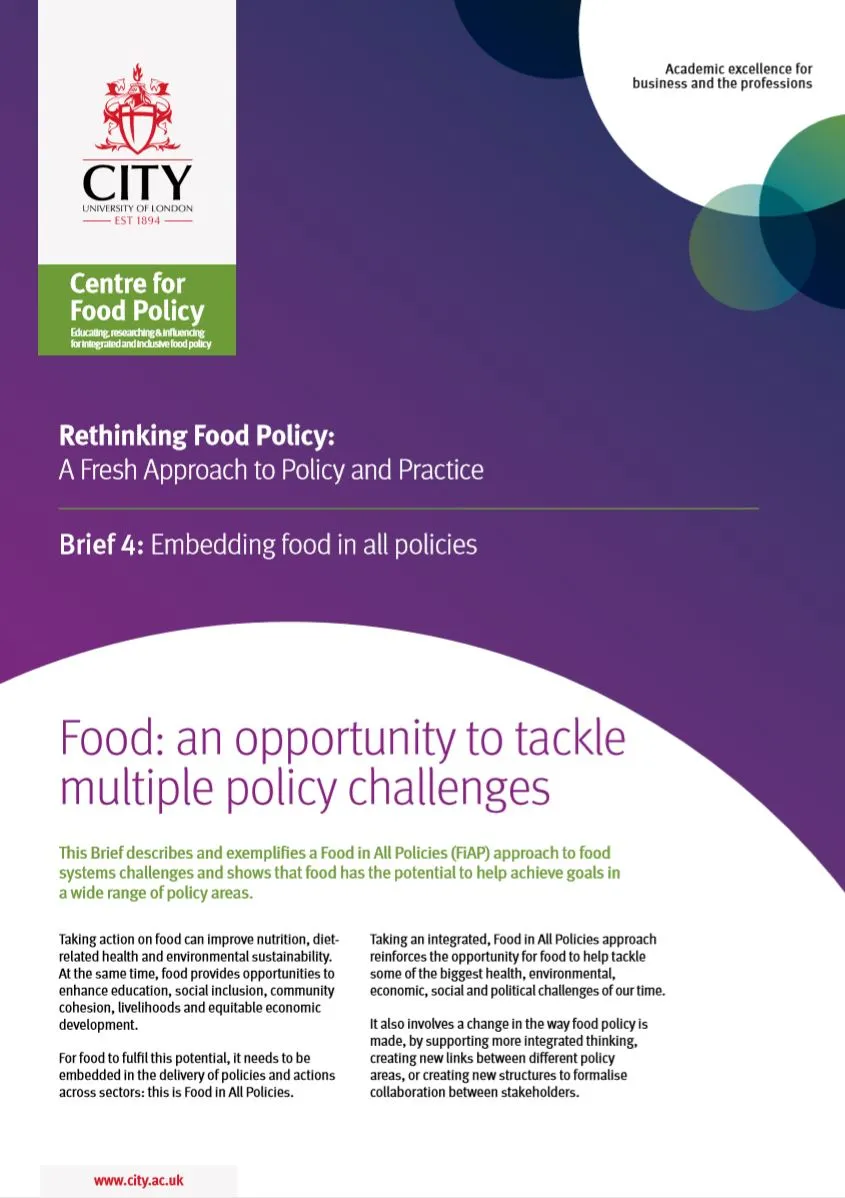
Image Reports Food: an opportunity to tackle multiple policy challenges This report by the Centre for Food Policy at City, University of London sets out how a “Food in All Policies” approach to food systems challenges can meet goals not only relating to food but also relating to education, social inclusion, livelihoods and fair economic development. Read
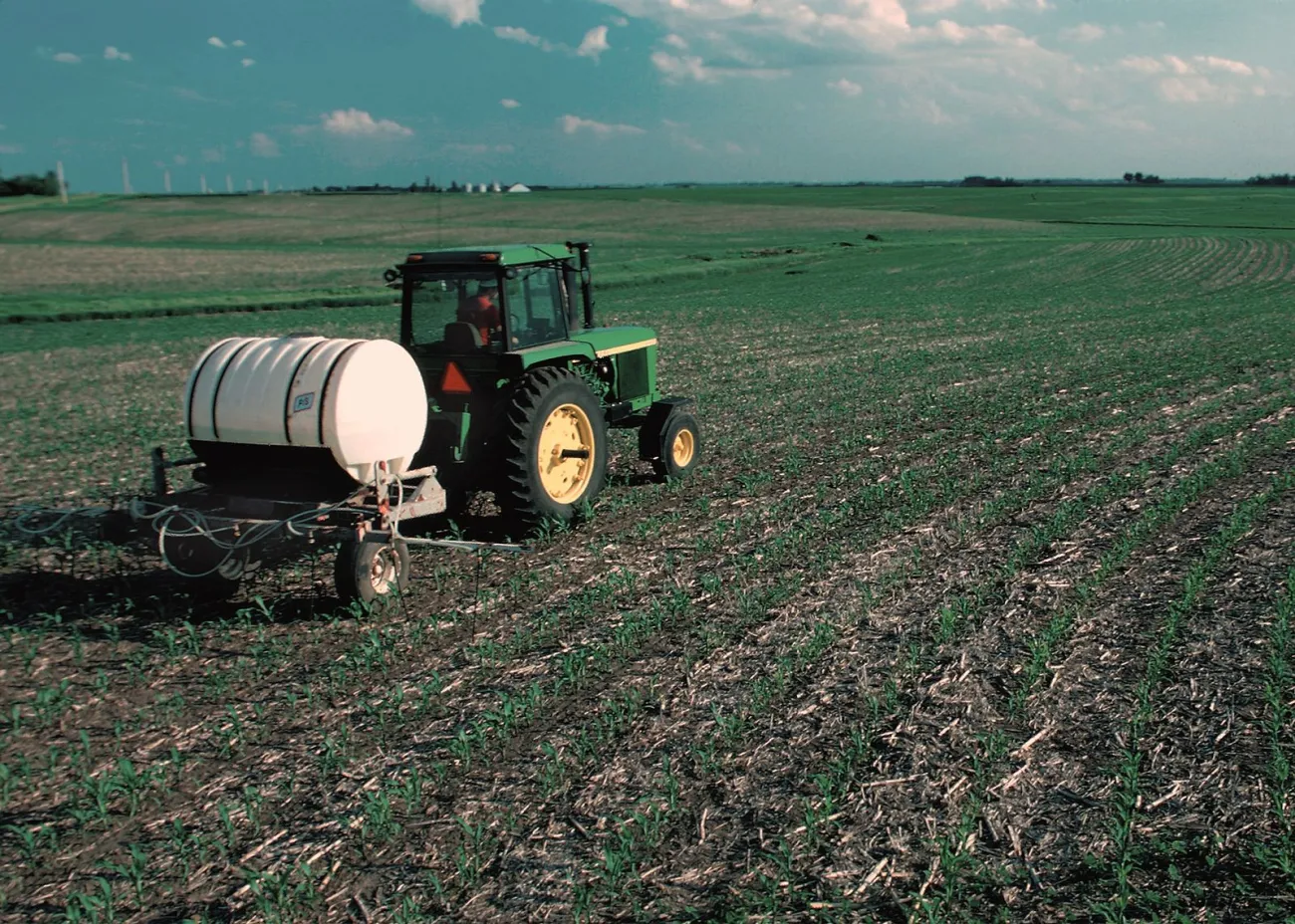
Image Journal articles A world of co-benefits: solving the global nitrogen challenge This paper outlines the main sustainability challenges linked to nitrogen, including inadequate access to nitrogen fertiliser in some parts of the world and excessive fertiliser application in other areas, leading to water pollution, algal blooms and risks to human health. The paper argues that solving nitrogen problems would have co-benefits for other sustainability issues such as hunger, air, soil and water quality, climate and biodiversity. Read
Image Featured articles Comment: Towards a sustainable and equitable blue economy This commentary article sets out five priorities for developing the so-called “blue economy” (i.e. ocean-based activities such as fishing, aquaculture, tourism, seabed mining and shipping) in a way that is both environmentally sustainable and socially equitable. The article notes that human activities are already negatively affecting ocean ecosystems and that future economic development of the oceans may have further, sometimes poorly understood, impacts on both the environment and people. Read