Image Resources Our extensive research library contains thousands of summaries of journal articles, reports and news stories that can be searched by keyword and category RESOURCES CATEGORY Books Briefing paper Event recording Featured articles Featured report Game Journal articles News and resources Reports Think piece Video Working paper Workshop summary Year 2026 2025 2024 2023 2022 2021 2020 2019 2018 2017 2016 2015 2014 2013 2012 2011 2010 2009 2008 2007 2002 2001 Image Journal articles Divergent perceptions of agricultural biodiversity This paper surveys farmers and environmental scientists in Germany and Austria on their attitudes towards biodiversity-friendly management practices for agriculture. It finds significant differences between the attitudes of these different stakeholder groups. The motivation for the study was to examine why farmers rarely use certain biodiversity-oriented management practices despite growing scientific evidence for their benefits. Read Image Journal articles Twitter narratives around the role of meat This paper analyses data from selected hashtags on Twitter (specifically, #sustainablemeat, #ethicalmeat and #eatlessmeat) to outline how social media discussions of meat consumption relate to emerging societal narratives around the role of meat in sustainable healthy diets. Read Image Journal articles Legumes as a sustainable source of protein in human diets This article by researchers from the Johns Hopkins Center for a Livable Future argues that more emphasis should be placed on legumes - such as soybeans, peanuts, chickpeas, fava beans, lentils and other beans and peas - as a source of dietary protein, for reduction of greenhouse gas emissions from agriculture, and for their ability to increase soil fertility through atmospheric nitrogen fixation. It reviews trends in legume production and consumption and identifies challenges and limitations to increasing legume use worldwide. Read Image News and resources 1,200 ideas put forward for UN Food Systems Summit Public engagement ahead of the 2021 United Nations Food Systems Summit has so far produced over 1,200 ideas for transforming the food system. Ideas were put forward by farmer and producer groups, indigenous communities, civil society, academics, the private sector and UN Member States. Further ideas can be submitted until 1 May 2021. Read Image Books Our Changing Menu: Climate change and the foods we love This book, co-authored by Table member Michael P. Hoffmann, uses a typical menu - from appetisers to desserts - to explain how climate change is challenging people in the supply chain who help bring food to grocery stores. Read Image Reports The global science-policy interface for food systems This report from PBL Netherlands Environmental Assessment Agency, co-authored by Table’s Jeroen Candel, analyses the current interface between science and policy for global food systems, identifies current gaps and weaknesses, and suggests options for improvement. Read Image Reports The case for public investment in alternative proteins This report from the US think tank The Breakthrough Institute argues that the US government should invest heavily in the development of alternative proteins, because of the potential to significantly reduce greenhouse gas emissions and negative health impacts associated with animal agriculture as well as drive economic growth. Read Image Reports A Long Food Movement: transforming food systems by 2045 This report from IPES-Food and ETC Group maps two diverging visions for the future of food systems: business-as-usual with high dependence on data platforms, private equity firms and AI-controlled farming systems, versus the “Long Food Movement” - a food system transformation led by civil society and social movements where the emphasis is on food sovereignty and agroecology. Read Image Reports Bull market? Corporate venturing and alternative proteins This report from the University of Oxford’s Smith School of Enterprise and the Environment explores the rapid growth of corporate involvement in the alternative proteins sector, and argues that corporate-led innovation can be a major contributor to emissions reductions. Read VIEW MORE
Image Journal articles Divergent perceptions of agricultural biodiversity This paper surveys farmers and environmental scientists in Germany and Austria on their attitudes towards biodiversity-friendly management practices for agriculture. It finds significant differences between the attitudes of these different stakeholder groups. The motivation for the study was to examine why farmers rarely use certain biodiversity-oriented management practices despite growing scientific evidence for their benefits. Read
Image Journal articles Twitter narratives around the role of meat This paper analyses data from selected hashtags on Twitter (specifically, #sustainablemeat, #ethicalmeat and #eatlessmeat) to outline how social media discussions of meat consumption relate to emerging societal narratives around the role of meat in sustainable healthy diets. Read
Image Journal articles Legumes as a sustainable source of protein in human diets This article by researchers from the Johns Hopkins Center for a Livable Future argues that more emphasis should be placed on legumes - such as soybeans, peanuts, chickpeas, fava beans, lentils and other beans and peas - as a source of dietary protein, for reduction of greenhouse gas emissions from agriculture, and for their ability to increase soil fertility through atmospheric nitrogen fixation. It reviews trends in legume production and consumption and identifies challenges and limitations to increasing legume use worldwide. Read
Image News and resources 1,200 ideas put forward for UN Food Systems Summit Public engagement ahead of the 2021 United Nations Food Systems Summit has so far produced over 1,200 ideas for transforming the food system. Ideas were put forward by farmer and producer groups, indigenous communities, civil society, academics, the private sector and UN Member States. Further ideas can be submitted until 1 May 2021. Read
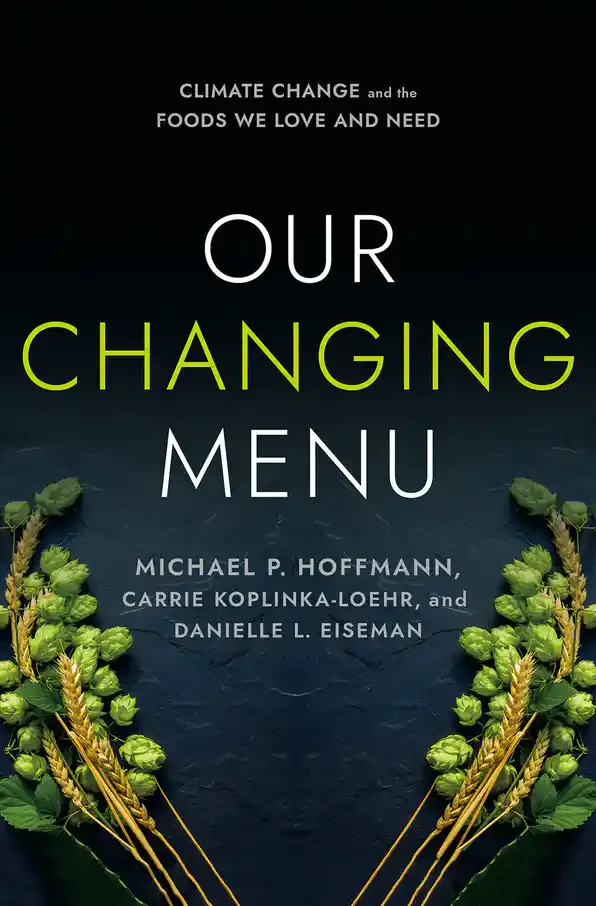
Image Books Our Changing Menu: Climate change and the foods we love This book, co-authored by Table member Michael P. Hoffmann, uses a typical menu - from appetisers to desserts - to explain how climate change is challenging people in the supply chain who help bring food to grocery stores. Read
Image Reports The global science-policy interface for food systems This report from PBL Netherlands Environmental Assessment Agency, co-authored by Table’s Jeroen Candel, analyses the current interface between science and policy for global food systems, identifies current gaps and weaknesses, and suggests options for improvement. Read
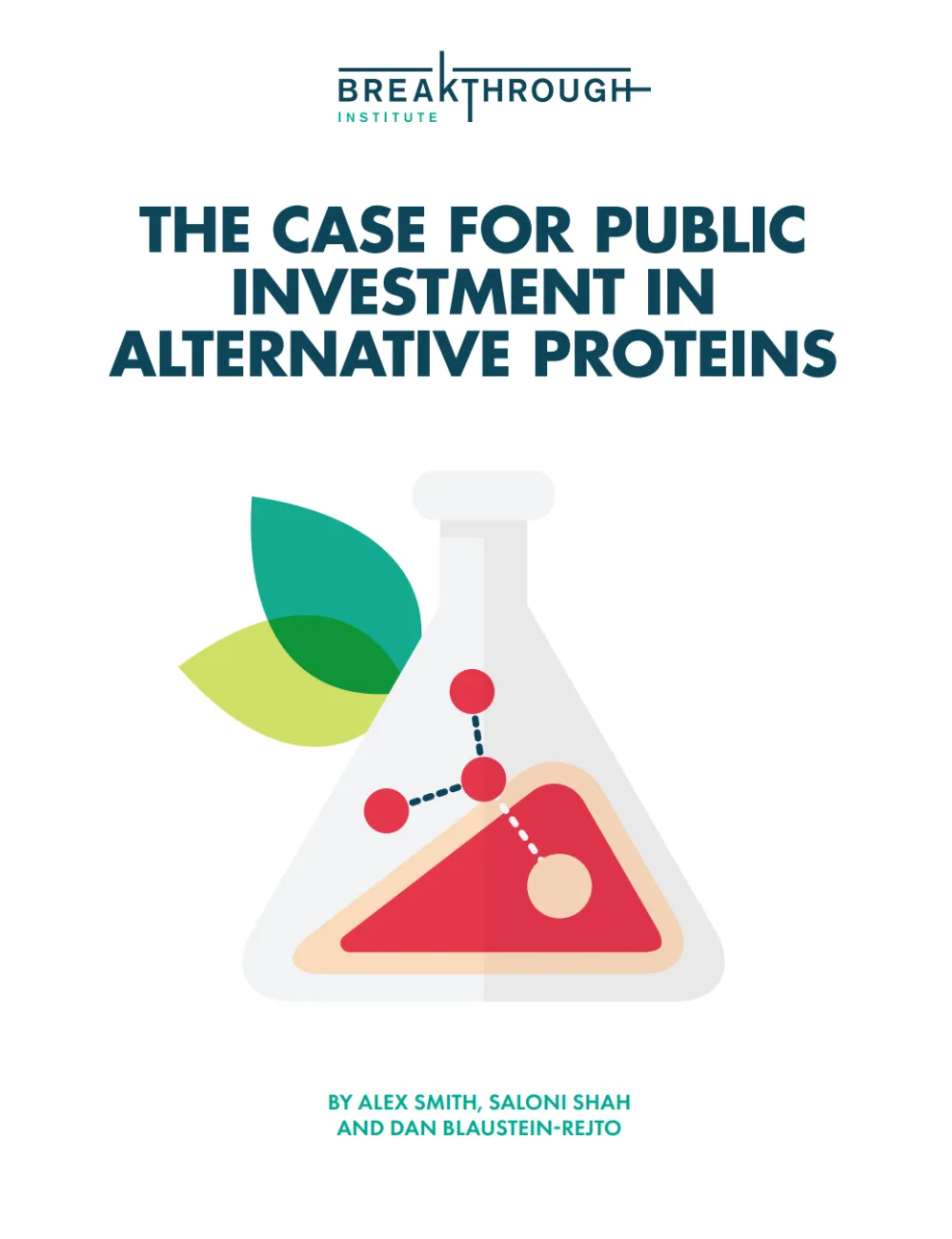
Image Reports The case for public investment in alternative proteins This report from the US think tank The Breakthrough Institute argues that the US government should invest heavily in the development of alternative proteins, because of the potential to significantly reduce greenhouse gas emissions and negative health impacts associated with animal agriculture as well as drive economic growth. Read
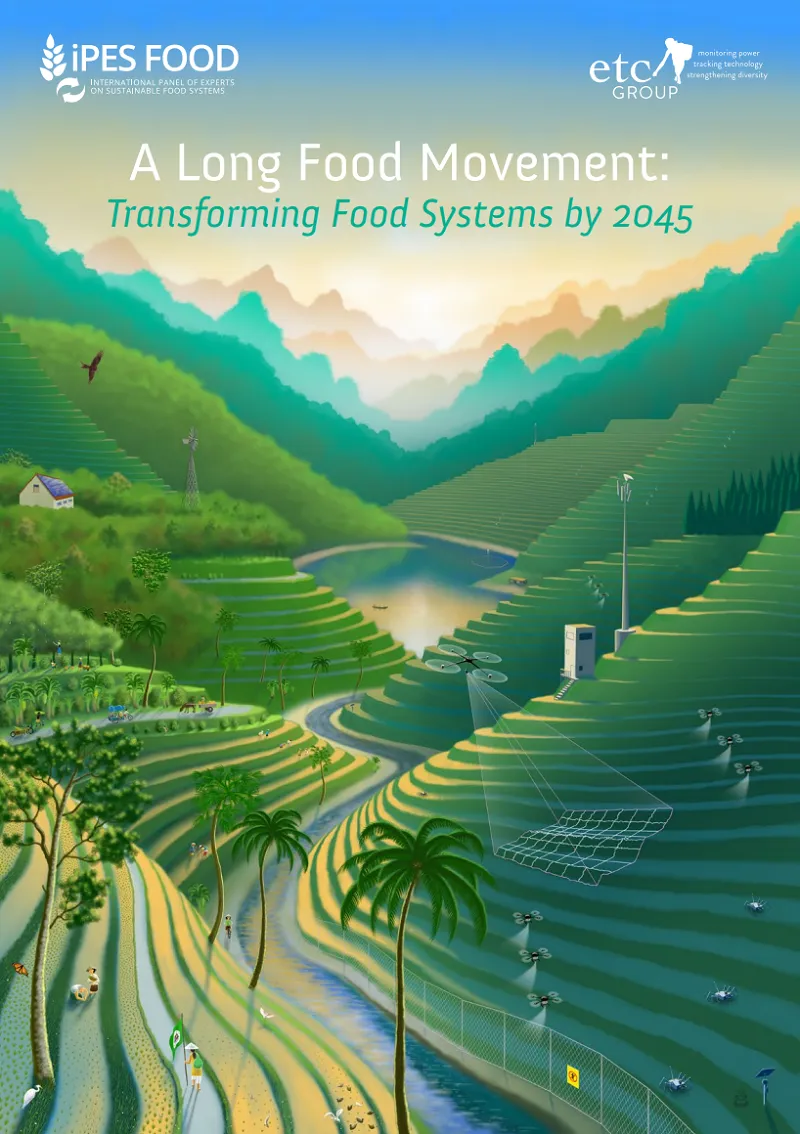
Image Reports A Long Food Movement: transforming food systems by 2045 This report from IPES-Food and ETC Group maps two diverging visions for the future of food systems: business-as-usual with high dependence on data platforms, private equity firms and AI-controlled farming systems, versus the “Long Food Movement” - a food system transformation led by civil society and social movements where the emphasis is on food sovereignty and agroecology. Read
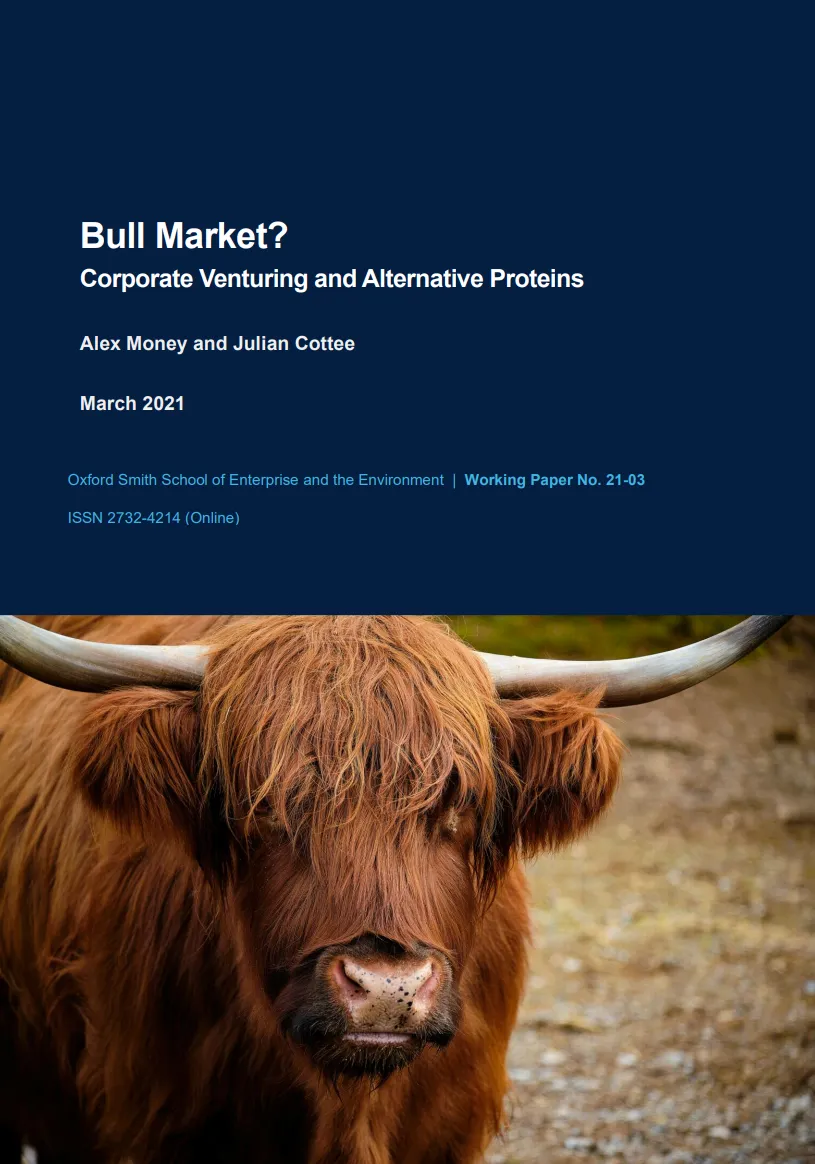
Image Reports Bull market? Corporate venturing and alternative proteins This report from the University of Oxford’s Smith School of Enterprise and the Environment explores the rapid growth of corporate involvement in the alternative proteins sector, and argues that corporate-led innovation can be a major contributor to emissions reductions. Read