Image Resources Our extensive research library contains thousands of summaries of journal articles, reports and news stories that can be searched by keyword and category RESOURCES CATEGORY Books Briefing paper Event recording Featured articles Featured report Game Journal articles News and resources Reports Think piece Video Working paper Workshop summary Year 2026 2025 2024 2023 2022 2021 2020 2019 2018 2017 2016 2015 2014 2013 2012 2011 2010 2009 2008 2007 2002 2001 Image Reports Stories of food systems transformation during COVID-19 This report from the Global Alliance for the Future of Food profiles how various food initiatives have responded to the COVID-19 pandemic, with the aim of demonstrating that transformative food system change is possible. Case studies include a non-profit distributor of sustainably grown food in Philadelphia, a food bank in Lagos, Fiji’s Ministry of Agriculture and “solidarity kitchens” in Rio de Janeiro. Read Image Journal articles A Sustainability Compass for food policy navigation This paper proposes a “Sustainability Compass” that uses a hierarchical approach to define sustainability scores for four aspects of food systems: health, environment, economy and equity. The framework is designed to evaluate food policies, including by drawing attention to trade-offs and synergies across different goals. The paper suggests that the Compass can be used during agenda setting, policy formulation, decision-making and policy evaluation. Read Image Journal articles Taxing food consumption to reduce environmental impacts This modelling paper, co-authored by TABLE member Elin Röös, examines the synergies and goal conflicts that could arise from different food taxation scenarios in Sweden. It finds that while taxing foods can reduce most environmental impacts, one scenario - reducing tax on plant-based products - might cause increases in environmental impacts by encouraging higher total food consumption. It also examines the trade-offs for land use and biodiversity protection associated with limiting beef consumption through taxation. Read Image Journal articles Effects of a consolidated seed sector on the food system This perspective article by Jennifer Clapp examines the effects of corporate consolidation in the global seed and agrochemical industry. Clapp argues that corporations in this sector with concentrated power can influence the wider food system in many ways, including by influencing markets, technology and governance. The global seed and agrochemical sector is dominated by just four firms - Bayer, Corteva, ChemChina-Syngenta and BASF - down from six in the early 2000s. Read Image Event recording Recording: TABLE launch event: Should the future of food be global or local? TABLE's official launch event on 2 June 2021 celebrated the transition from the Food Climate Research Network into TABLE. The event centred on perhaps one of the most complex questions around food and sustainability: At what scale should the food system operate? In other words, should the future food system be more globalised or localised, and why? Please leave your comments and reflections on this question or the event in the commenting section at the bottom of this page. Read Image News and resources CowCredits approved to offset flights Carbon credits generated through feed supplementation to reduce methane emissions from cattle farming have been approved under the CORSIA scheme, which is an international agreement on offsetting increases in carbon dioxide emissions from aviation. The feed supplement, created by Swiss company Mootral, is based on compounds from garlic and citrus and has been found to reduce methane emissions by an average of 30% in a trial on a commercial dairy farm. Read Image News and resources Mealworms soon to be available for human consumption in EU Insects are one step closer to being available as snacks or food ingredients in Europe. The European Commission’s Standing Committee on Plants, Animals, Food and Feed has approved a draft legal act that, once adopted by the Commission, would permit dried yellow mealworm (the larvae of the beetle Tenebrio molitor) to be sold in the European Union for consumption by people. The yellow mealworm will be the first insect to be approved under the Novel Food Regulation. 11 further applications for edible insects are waiting to be evaluated by the European Food Safety Authority. Read Image News and resources Podcast: Landscape-level challenges for cocoa and coffee In this podcast from the Innovation Forum, representatives from the Rainforest Alliance, agriculture commodities trader Ecom and finance provider Norandino discuss a LandScale pilot project that is working on deforestation, resilient ecosystems and farm incomes in a coffee and cocoa growing region in Lamas Province, northern Peru. Read Image Books The challenges of co-existing with animals in the Anthropocene This open access book explores the ethics of the changing relationships between humans and animals in the Anthropocene. It takes animal agency as its starting point and includes discussion of farmed animals, rewilding and cultured meat. Read VIEW MORE
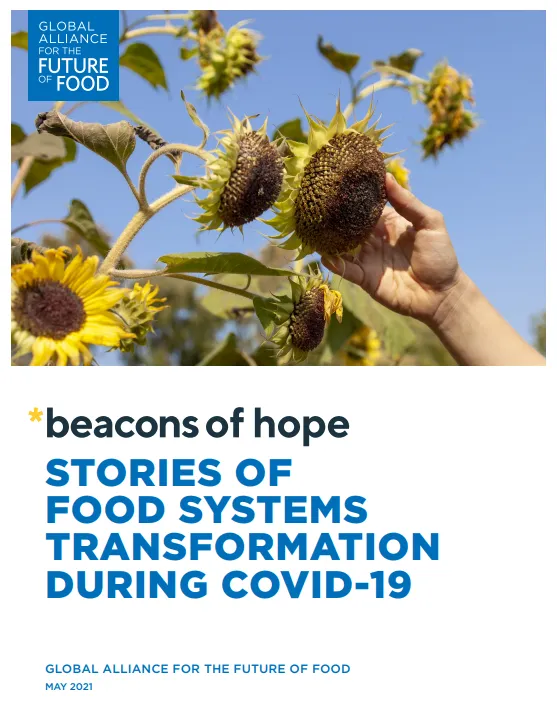
Image Reports Stories of food systems transformation during COVID-19 This report from the Global Alliance for the Future of Food profiles how various food initiatives have responded to the COVID-19 pandemic, with the aim of demonstrating that transformative food system change is possible. Case studies include a non-profit distributor of sustainably grown food in Philadelphia, a food bank in Lagos, Fiji’s Ministry of Agriculture and “solidarity kitchens” in Rio de Janeiro. Read
Image Journal articles A Sustainability Compass for food policy navigation This paper proposes a “Sustainability Compass” that uses a hierarchical approach to define sustainability scores for four aspects of food systems: health, environment, economy and equity. The framework is designed to evaluate food policies, including by drawing attention to trade-offs and synergies across different goals. The paper suggests that the Compass can be used during agenda setting, policy formulation, decision-making and policy evaluation. Read
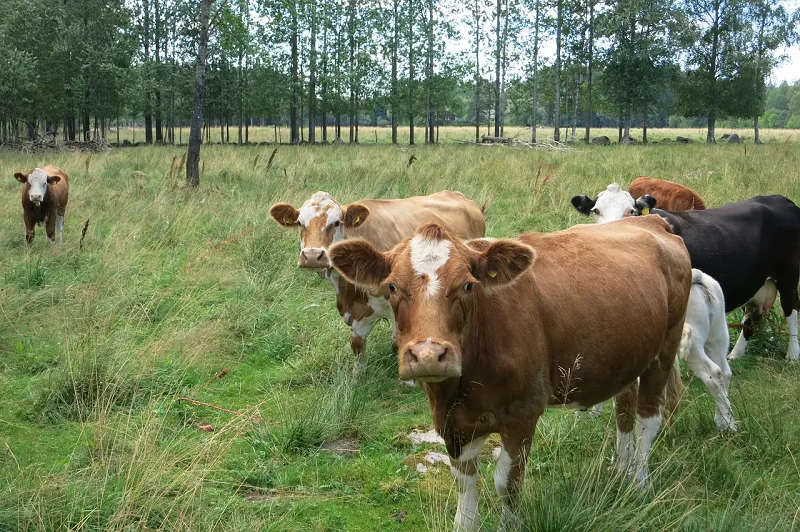
Image Journal articles Taxing food consumption to reduce environmental impacts This modelling paper, co-authored by TABLE member Elin Röös, examines the synergies and goal conflicts that could arise from different food taxation scenarios in Sweden. It finds that while taxing foods can reduce most environmental impacts, one scenario - reducing tax on plant-based products - might cause increases in environmental impacts by encouraging higher total food consumption. It also examines the trade-offs for land use and biodiversity protection associated with limiting beef consumption through taxation. Read
Image Journal articles Effects of a consolidated seed sector on the food system This perspective article by Jennifer Clapp examines the effects of corporate consolidation in the global seed and agrochemical industry. Clapp argues that corporations in this sector with concentrated power can influence the wider food system in many ways, including by influencing markets, technology and governance. The global seed and agrochemical sector is dominated by just four firms - Bayer, Corteva, ChemChina-Syngenta and BASF - down from six in the early 2000s. Read
Image Event recording Recording: TABLE launch event: Should the future of food be global or local? TABLE's official launch event on 2 June 2021 celebrated the transition from the Food Climate Research Network into TABLE. The event centred on perhaps one of the most complex questions around food and sustainability: At what scale should the food system operate? In other words, should the future food system be more globalised or localised, and why? Please leave your comments and reflections on this question or the event in the commenting section at the bottom of this page. Read
Image News and resources CowCredits approved to offset flights Carbon credits generated through feed supplementation to reduce methane emissions from cattle farming have been approved under the CORSIA scheme, which is an international agreement on offsetting increases in carbon dioxide emissions from aviation. The feed supplement, created by Swiss company Mootral, is based on compounds from garlic and citrus and has been found to reduce methane emissions by an average of 30% in a trial on a commercial dairy farm. Read
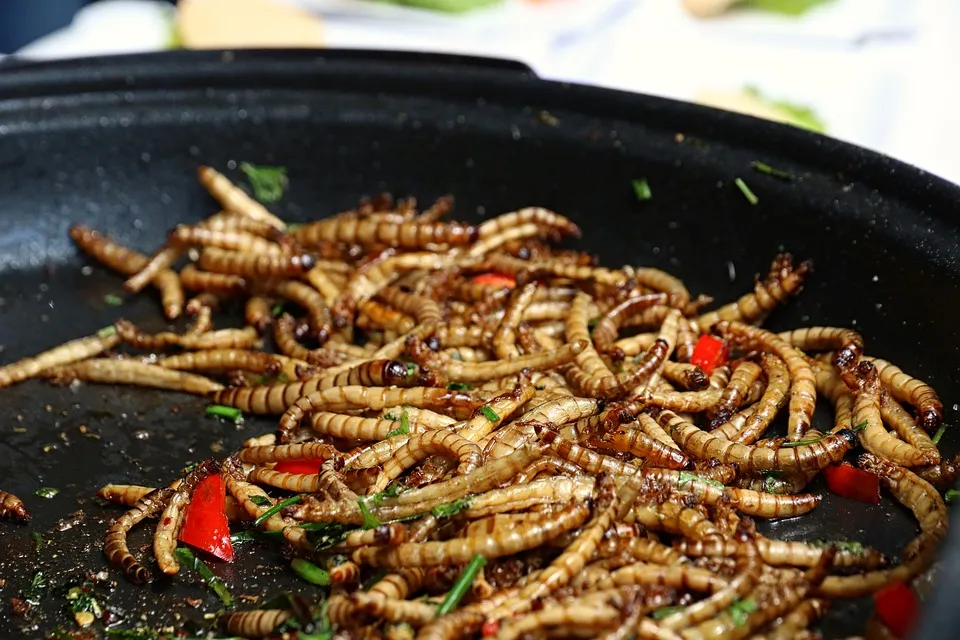
Image News and resources Mealworms soon to be available for human consumption in EU Insects are one step closer to being available as snacks or food ingredients in Europe. The European Commission’s Standing Committee on Plants, Animals, Food and Feed has approved a draft legal act that, once adopted by the Commission, would permit dried yellow mealworm (the larvae of the beetle Tenebrio molitor) to be sold in the European Union for consumption by people. The yellow mealworm will be the first insect to be approved under the Novel Food Regulation. 11 further applications for edible insects are waiting to be evaluated by the European Food Safety Authority. Read
Image News and resources Podcast: Landscape-level challenges for cocoa and coffee In this podcast from the Innovation Forum, representatives from the Rainforest Alliance, agriculture commodities trader Ecom and finance provider Norandino discuss a LandScale pilot project that is working on deforestation, resilient ecosystems and farm incomes in a coffee and cocoa growing region in Lamas Province, northern Peru. Read
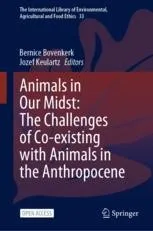
Image Books The challenges of co-existing with animals in the Anthropocene This open access book explores the ethics of the changing relationships between humans and animals in the Anthropocene. It takes animal agency as its starting point and includes discussion of farmed animals, rewilding and cultured meat. Read