Image Resources Our extensive research library contains thousands of summaries of journal articles, reports and news stories that can be searched by keyword and category RESOURCES CATEGORY Books Briefing paper Event recording Featured articles Featured report Game Journal articles News and resources Reports Think piece Video Working paper Workshop summary Year 2026 2025 2024 2023 2022 2021 2020 2019 2018 2017 2016 2015 2014 2013 2012 2011 2010 2009 2008 2007 2002 2001 Image Reports Repurposing agricultural support to transform food systems This report by the Food and Agriculture Organisation (FAO), the UN Development Programme (UNDP) and the UN Environment Programme (UNEP) finds that 87% of current global government support for farming includes measures that are harmful to nature or health. It argues that redirecting - rather than eliminating - agricultural subsidies is key to making the global food system more healthy, sustainable and equitable. Read Image Reports Crop Diseases & Pests - Roundtable Report on Interventions This report from the Food Systems Handbook examines the impacts of crop pests and diseases on food security and farmer livelihoods, drawing on a roundtable of experts held in August 2021. It discusses the scale of the problems, the additional impacts that climate change is likely to have, and various interventions including genetic engineering, early warning systems, integrated pest management, post-harvest storage techniques, crop diversity, and legumes to enhance the soil biome. Read Image Reports The high cost of agribusiness consolidation in the US This report by ActionAid USA examines corporate consolidation by US agribusinesses. It attributes the high degree of market control by a small number of multinational companies to decades of policy choices that supported corporate consolidation and larger farms. The report summarises the impacts on rural communities, such as loss of autonomy for farmers when using pricing models based on data-driven corporate recommendations. It also sets out an alternative model: a network of small-scale, localised farms and markets. Read Image Journal articles Can insect protein reduce chicken’s carbon footprint? This paper compares the carbon footprint of broiler meat production in Europe with two uses of insect protein: either as chicken feed (in the place of soybean meal), or as food for direct consumption by humans. There is high variation in performance between insect species. On average, the carbon footprint per kg of protein produced for human consumption is lowest in the case of consuming insect protein directly as food, where the insects are fed on low-value industrial side streams. Replacing soybean meal chicken feed with insects can increase the carbon footprint, especially if the insects are fed on industrially produced composite feed as opposed to a waste stream. Read Image Journal articles The future of farming: Who will produce our food? This paper, co-authored by TABLE’s Ken Giller, looks at trends in farming systems and land ownership to explore who the farmers of the future might be, with a focus on the future of smallholder farming. Read Image Journal articles How does market power affect the resilience of food supply? This paper explores the links between market power - i.e. the influence that a firm or group of firms has over customers or suppliers - and the resilience of food supply chains to shocks, focusing on the UK as an example. It finds that market power can produce both positive and negative effects on resilience. Read Image Journal articles Sustainability standards in global agrifood supply chains This paper reviews the effects of voluntary sustainability standards - such as Fairtrade, organic and Rainforest Alliance - in the food supply chain, discussing several different crops. It argues that while standards can improve production sustainability in some circumstances, they are not alone sufficient to make the whole food system sustainable. Read Image News and resources Blog: Biodiversity Net Gain - a policy that must be changed This blog post published by the Food Research Collaboration discusses the Biodiversity Net Gain (BNG) requirement that would become part of the UK’s planning system under the new Environment Bill. BNG requires that building developments must prove they produce a 10% increase in biodiversity value, which can be achieved by buying biodiversity “credits” from farmers who change their production practices. The blog argues that the policy will reward farmers who currently manage their land unsustainably, and not those who already farm in biodiversity-friendly ways. Read Image News and resources Questioning the future of lab-grown meat This article in The Counter argues that, contrary to previous predictions, meat grown via cellular agriculture is unlikely to become economically viable as a mainstream source of food. Citing a competing technical analysis, the article argues that the cost of the equipment needed to grow cells and keep them from contamination is likely to remain prohibitive, as is the cost of animal-ingredient-free versions of the liquid used to feed cells. Read VIEW MORE
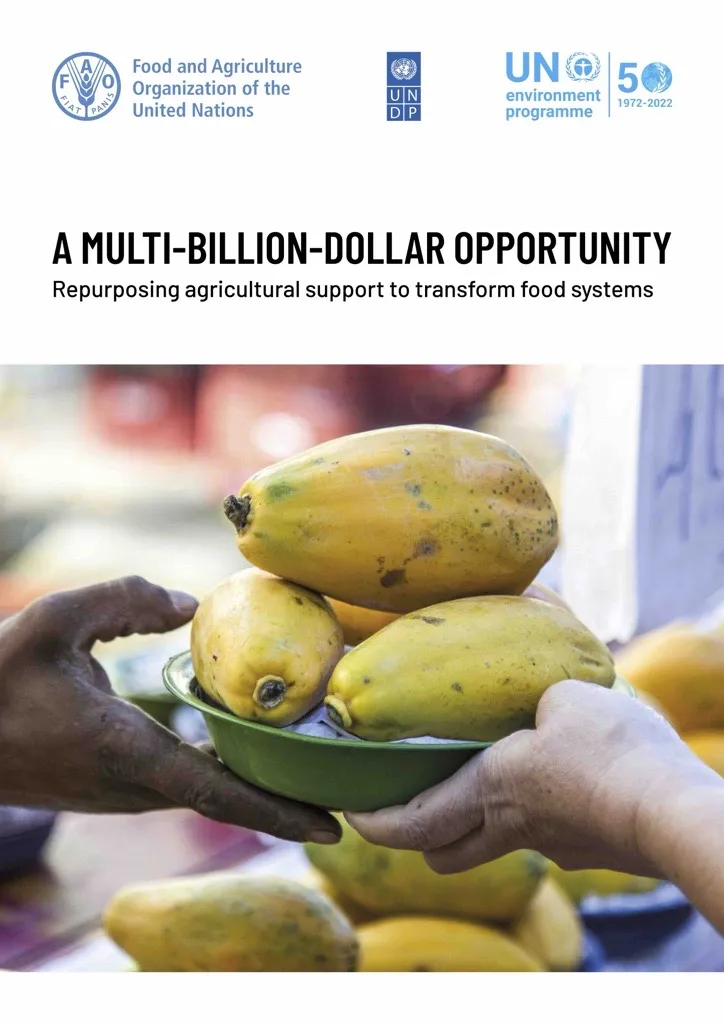
Image Reports Repurposing agricultural support to transform food systems This report by the Food and Agriculture Organisation (FAO), the UN Development Programme (UNDP) and the UN Environment Programme (UNEP) finds that 87% of current global government support for farming includes measures that are harmful to nature or health. It argues that redirecting - rather than eliminating - agricultural subsidies is key to making the global food system more healthy, sustainable and equitable. Read
Image Reports Crop Diseases & Pests - Roundtable Report on Interventions This report from the Food Systems Handbook examines the impacts of crop pests and diseases on food security and farmer livelihoods, drawing on a roundtable of experts held in August 2021. It discusses the scale of the problems, the additional impacts that climate change is likely to have, and various interventions including genetic engineering, early warning systems, integrated pest management, post-harvest storage techniques, crop diversity, and legumes to enhance the soil biome. Read
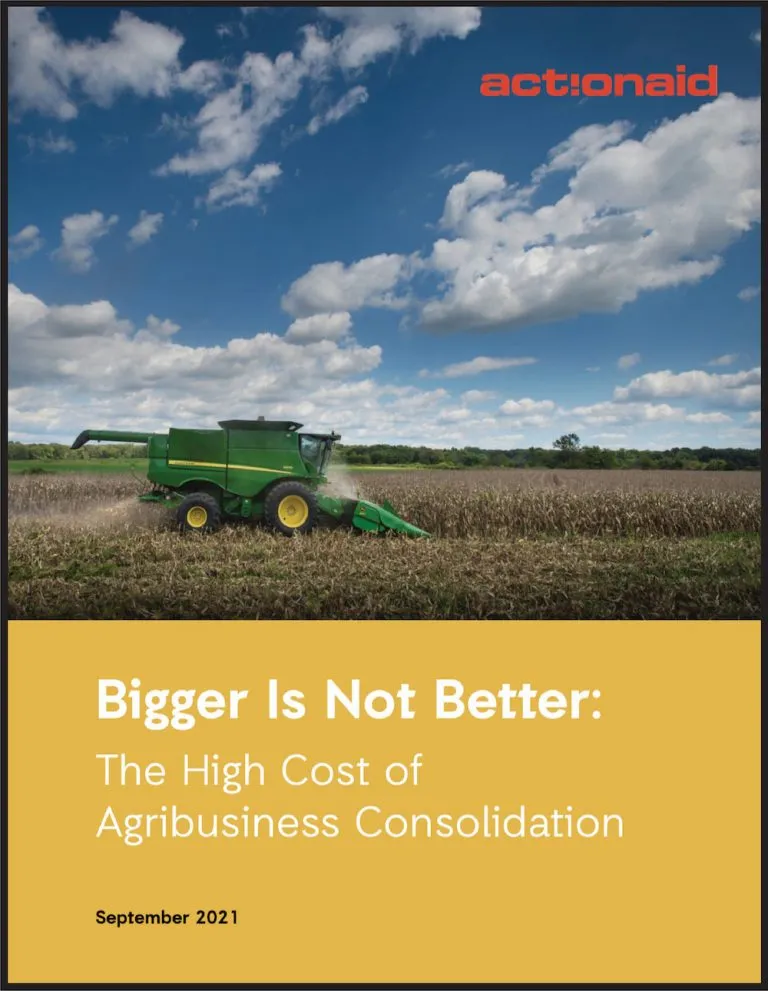
Image Reports The high cost of agribusiness consolidation in the US This report by ActionAid USA examines corporate consolidation by US agribusinesses. It attributes the high degree of market control by a small number of multinational companies to decades of policy choices that supported corporate consolidation and larger farms. The report summarises the impacts on rural communities, such as loss of autonomy for farmers when using pricing models based on data-driven corporate recommendations. It also sets out an alternative model: a network of small-scale, localised farms and markets. Read
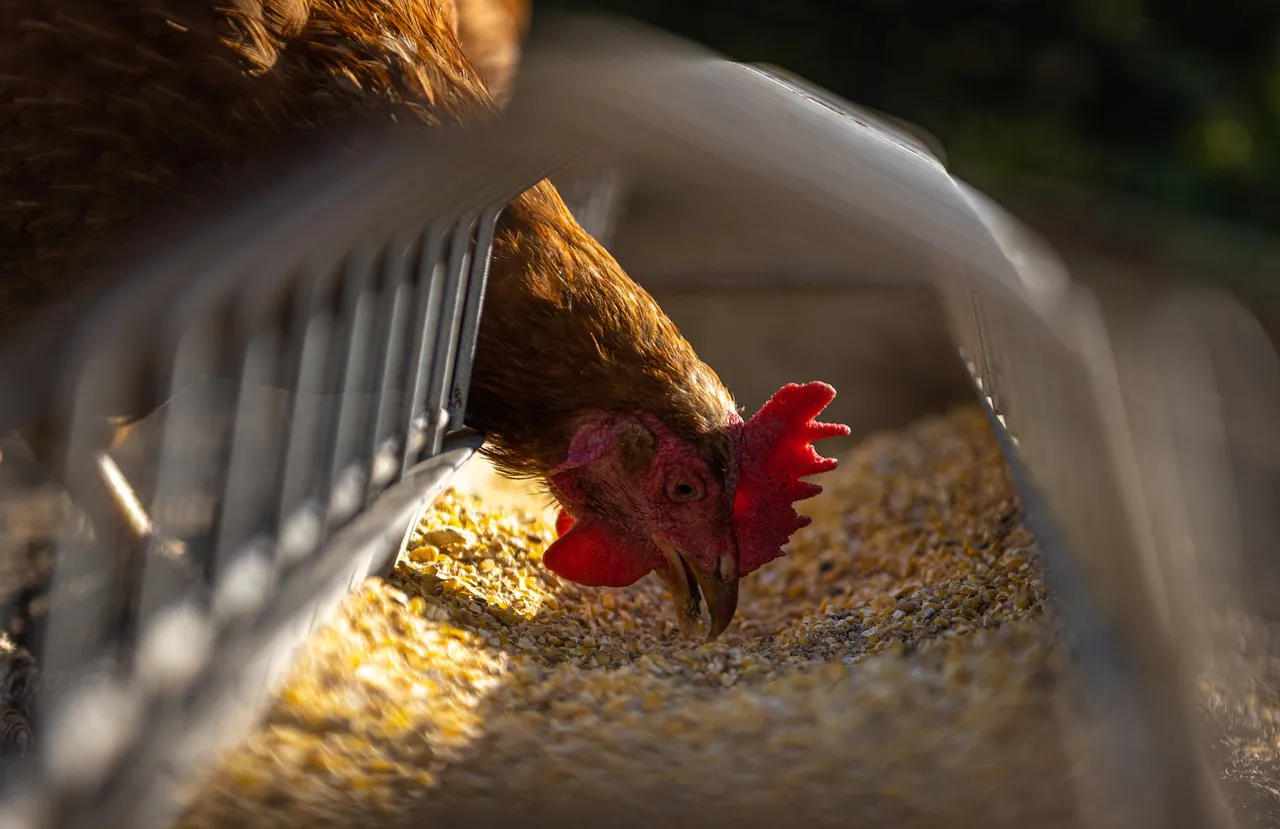
Image Journal articles Can insect protein reduce chicken’s carbon footprint? This paper compares the carbon footprint of broiler meat production in Europe with two uses of insect protein: either as chicken feed (in the place of soybean meal), or as food for direct consumption by humans. There is high variation in performance between insect species. On average, the carbon footprint per kg of protein produced for human consumption is lowest in the case of consuming insect protein directly as food, where the insects are fed on low-value industrial side streams. Replacing soybean meal chicken feed with insects can increase the carbon footprint, especially if the insects are fed on industrially produced composite feed as opposed to a waste stream. Read
Image Journal articles The future of farming: Who will produce our food? This paper, co-authored by TABLE’s Ken Giller, looks at trends in farming systems and land ownership to explore who the farmers of the future might be, with a focus on the future of smallholder farming. Read
Image Journal articles How does market power affect the resilience of food supply? This paper explores the links between market power - i.e. the influence that a firm or group of firms has over customers or suppliers - and the resilience of food supply chains to shocks, focusing on the UK as an example. It finds that market power can produce both positive and negative effects on resilience. Read
Image Journal articles Sustainability standards in global agrifood supply chains This paper reviews the effects of voluntary sustainability standards - such as Fairtrade, organic and Rainforest Alliance - in the food supply chain, discussing several different crops. It argues that while standards can improve production sustainability in some circumstances, they are not alone sufficient to make the whole food system sustainable. Read
Image News and resources Blog: Biodiversity Net Gain - a policy that must be changed This blog post published by the Food Research Collaboration discusses the Biodiversity Net Gain (BNG) requirement that would become part of the UK’s planning system under the new Environment Bill. BNG requires that building developments must prove they produce a 10% increase in biodiversity value, which can be achieved by buying biodiversity “credits” from farmers who change their production practices. The blog argues that the policy will reward farmers who currently manage their land unsustainably, and not those who already farm in biodiversity-friendly ways. Read
Image News and resources Questioning the future of lab-grown meat This article in The Counter argues that, contrary to previous predictions, meat grown via cellular agriculture is unlikely to become economically viable as a mainstream source of food. Citing a competing technical analysis, the article argues that the cost of the equipment needed to grow cells and keep them from contamination is likely to remain prohibitive, as is the cost of animal-ingredient-free versions of the liquid used to feed cells. Read