Image Resources Our extensive research library contains thousands of summaries of journal articles, reports and news stories that can be searched by keyword and category RESOURCES CATEGORYBooksBriefing paperEvent recordingFeatured articlesFeatured reportGameJournal articlesNews and resourcesReportsThink pieceVideoWorking paperWorkshop summary YEAR201220132014201520162017201820192020202120222023202420252026 Image Resource Special Issue on Cooperatives and Alternative Food Systems Initiatives A special issue of the Journal of Agriculture, Food Systems, and Community Development (JAFSCD) on Cooperatives and Alternative Food Systems Initiatives is now out. Read Image Resource New Paper: Putting Back Meaning into “Sustainable Intensification” This paper critiques the concept of sustainable intensification as follows: “Though often lauded by scientists and policy makers alike as a panacea to the mass environmental degradation that accompanies typical food production processes, the authors find that ‘sustainable intensification’ is actually highly unsustainable as it fails to consider the long run social, economic and ecological consequences of intensified production. Thus the authors aim to redefine the scope of the discourse, moving beyond simple calls for increased production capacities to instead enmesh food security within a more holistic approach to development which requires better governance, more empowerment, and greater access and fairer distribution of food within more resilient food systems. Ultimately, sustainable intensification is rendered worthless if those facing dire food insecurity remain unable to access the yields of increasing production.“ Read Image Resource Organic agriculture and biodiversity impacts This study, entitled "Gains to species diversity in organically farmed fields are not propagated at the farm level, investigates whether organic farming contributes to biodiversity at the farm level." Read Image Resource Reducing carbon dioxide most important of all climate pollutants to address climate change This paper, Short-Lived Climate Pollution, published in Annual Review of Earth and Planetary Sciences, argues that since carbon dioxide has the longest living effects of all climate pollutants, remaining in the atmosphere for thousands of years, it should be the primary focus of global climate change mitigation efforts. Read Image Resource “Land-grabbing” holds potential to increase yields sufficient to feed additional 100 million people globally This study calculates that crops grown on land obtained through large scale acquisitions in developing countries could potentially feed 100 million more people than current practices do today. Read Image Resource Insecticides put world food supplies at risk The Worldwide Integrated Assessment (WIA) report on insecticides will shortly be published as a special issue of Environmental Science and Pollution Research. In the report, the global group of researchers in the Task Force on Systemic Pesticides argue that insecticide use may already have caused severe harm to global food production through its impacts on the environment. The researchers look at the impacts and risks associated with neonicotinoids use. They argue that rather than protecting food production, the use of the insecticide is threatening the productivity of our natural and farmed environment. Read Image Resource Different paths to a sustainable society - new issue of "Green Growth the Nordic Way" This issue of "Green Growth the Nordic Way”, a web magazine from the Nordic Council of Ministers, discusses the topic of circular economy and the work of the Council within the areas of waste management and sustainable building. Read Image Resource CONSENSUS Book: Challenging Consumption The book ‘Challenging Consumption’, produced by the CONSENSUS research team, explores the topic of sustainable consumption. It includes discussions on future scenarios and innovations for sustainable food consumption practices. The book was launched in Dublin on 12th June 2014 by Dara Lynott, a Director of the Environmental Protection Agency who funds CONSENSUS research. Read Image Resource WRAP's household food waste report In 2013 the UK’s Waste Resources Action Programme (WRAP) released the publication entitled Household Food and Drink Waste in the UK 2012 which quantified the amounts, types and reasons for food and drink being wasted from UK households. It found that the amount of avoidable household food waste in 2012 (4.2 million tonnes per year) is equivalent to six meals every week for the average UK household. Preventing this food waste could save the average family up to £700 a year and deliver significant environmental benefits through landfill avoidance and by mitigating climate change (on the basis that this ‘unnecessary’ food would not need to be produced and hence all the costs associated with its production and distribution would be avoided). Read VIEW MORE
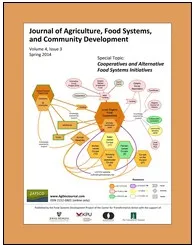
Image Resource Special Issue on Cooperatives and Alternative Food Systems Initiatives A special issue of the Journal of Agriculture, Food Systems, and Community Development (JAFSCD) on Cooperatives and Alternative Food Systems Initiatives is now out. Read
Image Resource New Paper: Putting Back Meaning into “Sustainable Intensification” This paper critiques the concept of sustainable intensification as follows: “Though often lauded by scientists and policy makers alike as a panacea to the mass environmental degradation that accompanies typical food production processes, the authors find that ‘sustainable intensification’ is actually highly unsustainable as it fails to consider the long run social, economic and ecological consequences of intensified production. Thus the authors aim to redefine the scope of the discourse, moving beyond simple calls for increased production capacities to instead enmesh food security within a more holistic approach to development which requires better governance, more empowerment, and greater access and fairer distribution of food within more resilient food systems. Ultimately, sustainable intensification is rendered worthless if those facing dire food insecurity remain unable to access the yields of increasing production.“ Read
Image Resource Organic agriculture and biodiversity impacts This study, entitled "Gains to species diversity in organically farmed fields are not propagated at the farm level, investigates whether organic farming contributes to biodiversity at the farm level." Read
Image Resource Reducing carbon dioxide most important of all climate pollutants to address climate change This paper, Short-Lived Climate Pollution, published in Annual Review of Earth and Planetary Sciences, argues that since carbon dioxide has the longest living effects of all climate pollutants, remaining in the atmosphere for thousands of years, it should be the primary focus of global climate change mitigation efforts. Read
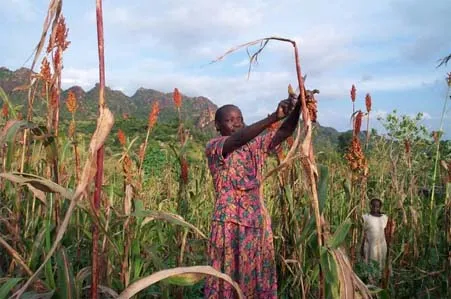
Image Resource “Land-grabbing” holds potential to increase yields sufficient to feed additional 100 million people globally This study calculates that crops grown on land obtained through large scale acquisitions in developing countries could potentially feed 100 million more people than current practices do today. Read
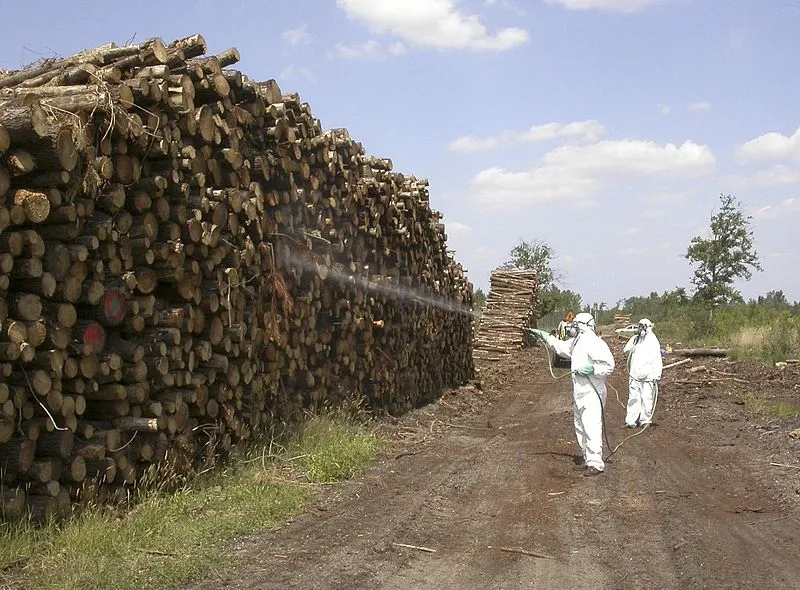
Image Resource Insecticides put world food supplies at risk The Worldwide Integrated Assessment (WIA) report on insecticides will shortly be published as a special issue of Environmental Science and Pollution Research. In the report, the global group of researchers in the Task Force on Systemic Pesticides argue that insecticide use may already have caused severe harm to global food production through its impacts on the environment. The researchers look at the impacts and risks associated with neonicotinoids use. They argue that rather than protecting food production, the use of the insecticide is threatening the productivity of our natural and farmed environment. Read
Image Resource Different paths to a sustainable society - new issue of "Green Growth the Nordic Way" This issue of "Green Growth the Nordic Way”, a web magazine from the Nordic Council of Ministers, discusses the topic of circular economy and the work of the Council within the areas of waste management and sustainable building. Read
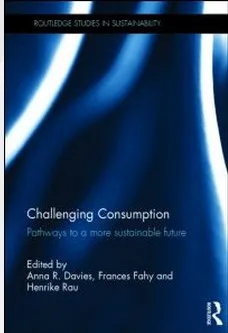
Image Resource CONSENSUS Book: Challenging Consumption The book ‘Challenging Consumption’, produced by the CONSENSUS research team, explores the topic of sustainable consumption. It includes discussions on future scenarios and innovations for sustainable food consumption practices. The book was launched in Dublin on 12th June 2014 by Dara Lynott, a Director of the Environmental Protection Agency who funds CONSENSUS research. Read
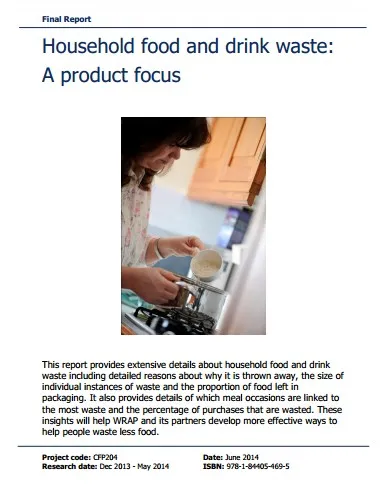
Image Resource WRAP's household food waste report In 2013 the UK’s Waste Resources Action Programme (WRAP) released the publication entitled Household Food and Drink Waste in the UK 2012 which quantified the amounts, types and reasons for food and drink being wasted from UK households. It found that the amount of avoidable household food waste in 2012 (4.2 million tonnes per year) is equivalent to six meals every week for the average UK household. Preventing this food waste could save the average family up to £700 a year and deliver significant environmental benefits through landfill avoidance and by mitigating climate change (on the basis that this ‘unnecessary’ food would not need to be produced and hence all the costs associated with its production and distribution would be avoided). Read