Image Resources Our extensive research library contains thousands of summaries of journal articles, reports and news stories that can be searched by keyword and category RESOURCES CATEGORYBooksBriefing paperEvent recordingFeatured articlesFeatured reportGameJournal articlesNews and resourcesReportsThink pieceVideoWorking paperWorkshop summary YEAR201220132014201520162017201820192020202120222023202420252026 Image Resource Voluntary non-monetary approaches for implementing conservation Voluntary programs represent a widely accepted policy tool for biodiversity conservation on private land and are often market-based (monetary) rather than appealing to values and morals. A growing body of evidence suggests that market-based approaches to conservation, albeit effective and relevant in many cases, are not always sustainable in the long term. Read Image Resource Current warming will reduce yields unless maize breeding and seed systems adapt immediately As the climate changes, and food demand increases, crop varieties suited to these conditions need to be developed. The authors of this paper warn that crops yields around the world could fall within a decade unless action is taken to speed up the introduction of new varieties. They propose three ways to improve matching of maize varieties in Africa to a warmed climate: reduce the BDA (the process of breeding, delivery and adoption), breed under elevated temperatures and act to mitigate climate change. Read Image Resource Indigenous African soil enrichment as a climate-smart sustainable agriculture alternative Innovative, climate-smart soil-management can be developed to improve soil fertility; these can increase agricultural production and food security while contributing to climate mitigation through carbon sequestration. The authors propose the solution of recreating conditions that lead to the formation of ADE (African Dark Earths). Read Image Resource A decline of Western Fast Food consumption in China? A new report by McKinsey & Company argues that China seems to be abandoning Western fast food for healthier options. Only 51% of consumers in China said they ate Western fast food in 2015, signalling a drop from the 67% who said they consumed fast food in 2012. Read Image Resource How Nanotechnology Can Help Us Grow More Food Using Less Energy and Water Nanotechnology – the designing of ultra-small particles – is part of the evolving science of precision agriculture, and could potentially solve some of the world’s most pressing problems at the food-energy-water nexus as it requires fewer natural resources and water, and enhances plant nutritional values. Read Image Resource Food Systems Governance - Challenges for justice, equality and human rights Sustainability and food production represent a major challenge to society, with both consumption and supply sides posing practical and ethical dilemmas. This book shows that food governance issues can occur in many ways and at many points along the food chain. The risks and impacts, particularly with the increasing globalisation of food systems, are often distributed in unequal ways. Read Image Resource Food Literacy: Key concepts for health and education Globally, the food system and the relationship of the individual to that system, continues to change and grow in complexity. Eating is an everyday event that is part of everyone’s lives. There are many commentaries on the nature of these changes to what, where and how we eat and their socio-cultural, environmental, educational, economic and health consequences. Read Image Resource Farming for the Future: Organic and Agroecological Solutions to Feed the World This report by Friends of the Earth discusses how ecological resources essential for producing food can be protected and how we can feed a growing population by focusing on creating a more sustainable, democratic and fair food system for all. Read Image Resource Changes in four societal drivers and their potential to reduce Swedish nutrient inputs in to the sea This report discusses how less protein in food and fewer phosphorus compounds added to food products could reduce the eutrophication of the sea. Below is a summary of the research by two of the report’s authors, Anders Grimvall and Eva-Lotta Sundblad from the Swedish Institute for the Marine Environment. Read VIEW MORE
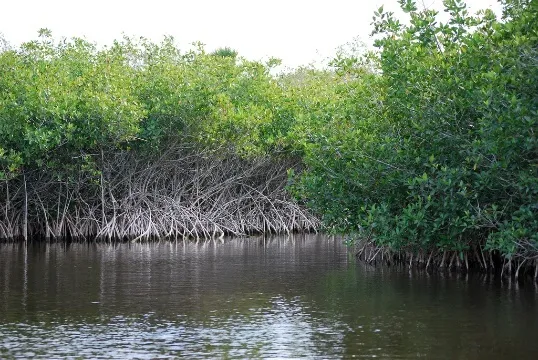
Image Resource Voluntary non-monetary approaches for implementing conservation Voluntary programs represent a widely accepted policy tool for biodiversity conservation on private land and are often market-based (monetary) rather than appealing to values and morals. A growing body of evidence suggests that market-based approaches to conservation, albeit effective and relevant in many cases, are not always sustainable in the long term. Read
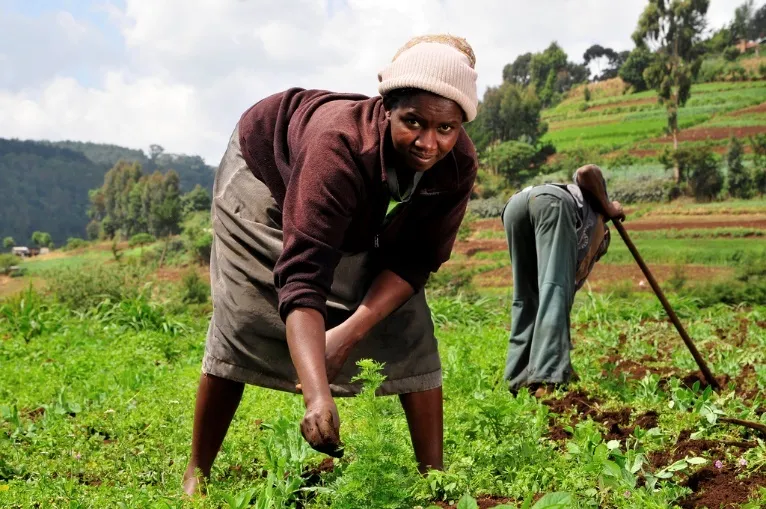
Image Resource Current warming will reduce yields unless maize breeding and seed systems adapt immediately As the climate changes, and food demand increases, crop varieties suited to these conditions need to be developed. The authors of this paper warn that crops yields around the world could fall within a decade unless action is taken to speed up the introduction of new varieties. They propose three ways to improve matching of maize varieties in Africa to a warmed climate: reduce the BDA (the process of breeding, delivery and adoption), breed under elevated temperatures and act to mitigate climate change. Read
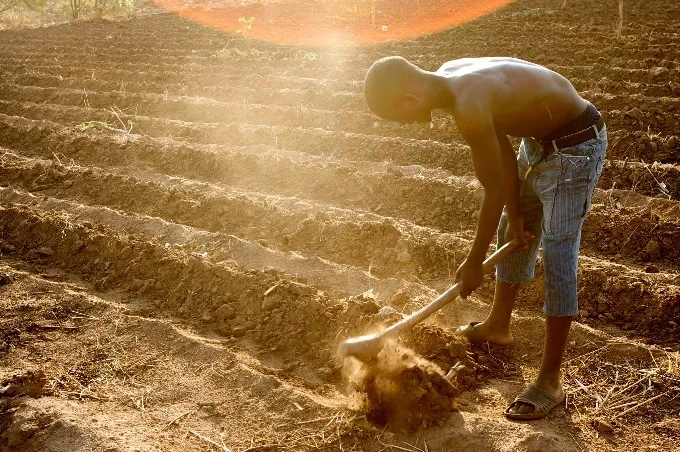
Image Resource Indigenous African soil enrichment as a climate-smart sustainable agriculture alternative Innovative, climate-smart soil-management can be developed to improve soil fertility; these can increase agricultural production and food security while contributing to climate mitigation through carbon sequestration. The authors propose the solution of recreating conditions that lead to the formation of ADE (African Dark Earths). Read
Image Resource A decline of Western Fast Food consumption in China? A new report by McKinsey & Company argues that China seems to be abandoning Western fast food for healthier options. Only 51% of consumers in China said they ate Western fast food in 2015, signalling a drop from the 67% who said they consumed fast food in 2012. Read
Image Resource How Nanotechnology Can Help Us Grow More Food Using Less Energy and Water Nanotechnology – the designing of ultra-small particles – is part of the evolving science of precision agriculture, and could potentially solve some of the world’s most pressing problems at the food-energy-water nexus as it requires fewer natural resources and water, and enhances plant nutritional values. Read
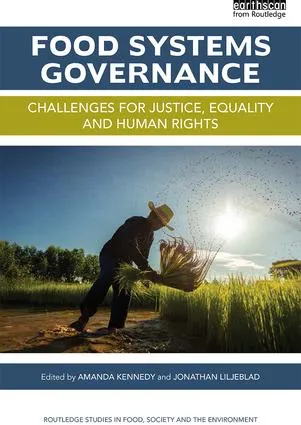
Image Resource Food Systems Governance - Challenges for justice, equality and human rights Sustainability and food production represent a major challenge to society, with both consumption and supply sides posing practical and ethical dilemmas. This book shows that food governance issues can occur in many ways and at many points along the food chain. The risks and impacts, particularly with the increasing globalisation of food systems, are often distributed in unequal ways. Read
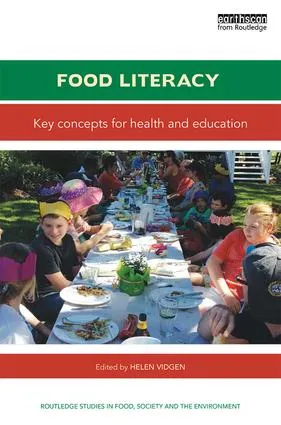
Image Resource Food Literacy: Key concepts for health and education Globally, the food system and the relationship of the individual to that system, continues to change and grow in complexity. Eating is an everyday event that is part of everyone’s lives. There are many commentaries on the nature of these changes to what, where and how we eat and their socio-cultural, environmental, educational, economic and health consequences. Read
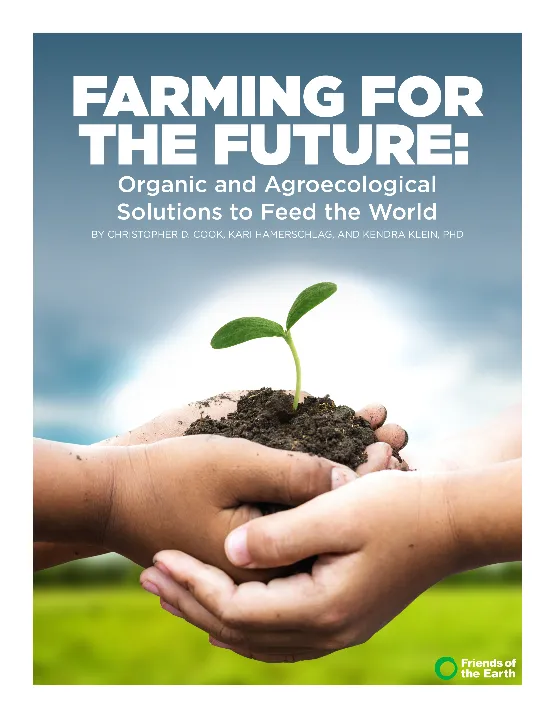
Image Resource Farming for the Future: Organic and Agroecological Solutions to Feed the World This report by Friends of the Earth discusses how ecological resources essential for producing food can be protected and how we can feed a growing population by focusing on creating a more sustainable, democratic and fair food system for all. Read
Image Resource Changes in four societal drivers and their potential to reduce Swedish nutrient inputs in to the sea This report discusses how less protein in food and fewer phosphorus compounds added to food products could reduce the eutrophication of the sea. Below is a summary of the research by two of the report’s authors, Anders Grimvall and Eva-Lotta Sundblad from the Swedish Institute for the Marine Environment. Read