Close
Login Register
Search
  • About
    • What We Do
    • Who We Are
    • FAQs
  • Our Writing
    • Explainers
    • Essays
    • Letterbox
    • Reports & More
  • Podcasts
  • Our Events
  • Projects
    • Power In The Food Systems
    • Local-Global Scale Project
    • MEAT: The Four Futures Podcast
    • Fuel To Fork
    • Nature
    • Reckoning with Regeneration
    • SHIFT
    • Games at TABLE
    • Rethinking the Global Soy Dilemma
  • Resources
  • Opportunities
    • Jobs
    • Funding
    • Courses
    • Collaborations
    • Events
  • Newsletter
  • TABLE (EN)
Search
Back

Trade

Image
Resource
Record profits for Cargill based on increasing meat demand
The world’s largest agricultural commodities supplier,  Cargill, obtained its highest profit in six years based on an increasing demand for meat. Animal nutrition and protein were the largest contributor to quarterly earnings for the company.
Read
Image
Resource
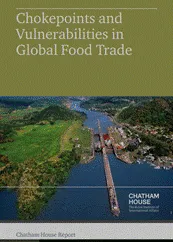
Chatham House report on chokepoints and vulnerabilities in global food trade
International trade in critical commodities is growing, which, this report poses, is increasing pressure on a small number of ‘chokepoints’ – critical junctures on transport routes through which exceptional volumes of trade pass. Were a serious interruption at one or more of these chokepoints to occur, this could potentially lead to supply shortfalls and price spikes, both within and outside of the food system.  Smaller disruptions might add to delays, spoilage and transport costs, constraining market responsiveness and contributing to higher prices and increased volatility.
Read
Image
Resource
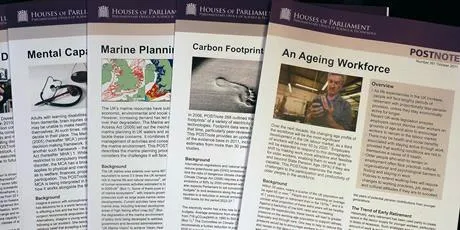
Two briefings by the Parliamentary Office of Science and Technology (POST), UK
These are two briefings by the Parliamentary Office of Science and Technology (POST).
Read
Image
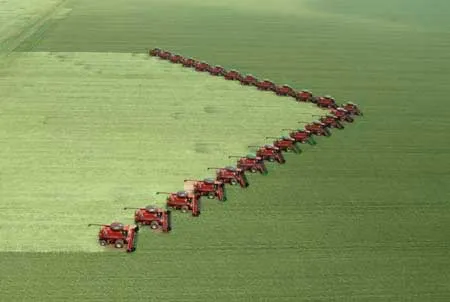
Photo: FoodandYou, 1-soybean-harvest-brazil-co, Flickr Creative commons licence 2.0
Resource
Property Rights and the Soybean Revolution: Shaping How China and Brazil Are Telecoupled
This article takes a closer look at the telecoupling between China and Brazil based on their soybean trading relationships. Telecoupling is the term used to describe the interconnectedness or coupling of natural and human systems and it indicates that there are complex socioeconomic and environmental interactions over distances.
Read
Image
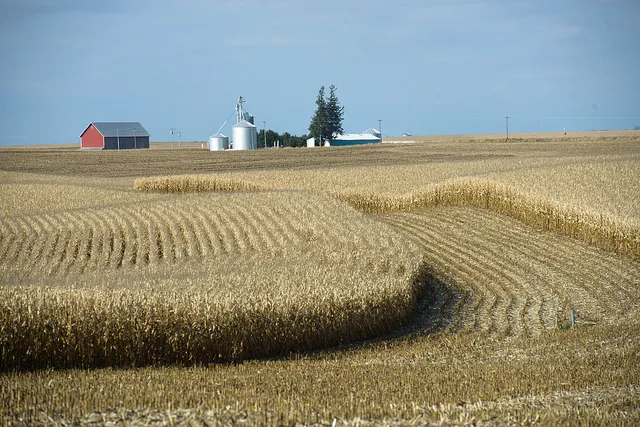
Photo: United Soybean Board, "Corn field", Flickr, Creative Commons License 2.0 generic.
Resource
Big food and little data: The slow harvest of corporate food supply chain sustainability initiatives
This article examines how big food companies contend with some of the issues involved in efforts to improve the sustainability of their raw material supply chains. It argues that these large companies often operate in long, complex, and traditionally non-transparent supply chains that make it difficult for them to exert real influence over producers. ‘Big food’ is the description given to the world’s largest and most influential companies in the food and beverages markets.
Read
Image
Resource
Growth in US market for organic food
This research from USDA’s Economic Research Service looks at trends in consumer demand for organic food since the 1990s and developments in organic production.
Read
Image
Photo: naturalbornstupid, meat, Flickr, Creative Commons License 2.0 generic.
Resource
Global meat news survey report on industry trends and impacts
A Global Meat News survey of top industry professionals analysing trading trends and impacts on the meat industry globally shows that most respondents (24%) stated that the pressure to limit meat consumption was the factor that hit the industry as a whole the hardest in 2016. 
Read
Image
Resource
Chatham House launches resourcetrade.earth and Tim Benton writes an introduction on global food trade
The website resourcetrade.earth developed by Chatham House enables users to explore the dynamics of international trade in natural resources (including food and agricultural commodities), the sustainability implications of such trade, and the related interdependencies that emerge between importing and exporting countries and regions.
Read
Image
Photo: Chris Happel, irrigation at dawn, Flickr, Creative Commons License 2.0 generic.
Resource
Groundwater depletion embedded in international food trade
This research identifies the major crops and countries contributing to groundwater depletion. The authors found that 11 percent of unsustainable groundwater used for irrigation is embedded in international crop trade. They highlight the main exporters and importers of these crops, and the associated risks for local and global food and water security.
Read
  • VIEW MORE

Sign up for Fodder, our monthly newsletter unpacking the future of food.

Tick below to opt-in to email communications.

You can change your mind at any time by clicking the unsubscribe link in the footer of any email you receive from us, or by contacting us at info@tabledebates.org.

We use Mailchimp as our marketing platform. By clicking below to subscribe, you acknowledge that your information will be transferred to Mailchimp for processing. Learn more about Mailchimp's privacy practices.

  • Glossary
  • About
  • Our Writing
  • Podcasts
  • Resources

Social

YouTube Facebook Instagram

© Copyright 2025

A collaboration between: