Close
Login Register
Search
  • About
    • What We Do
    • Who We Are
    • FAQs
  • Our Writing
    • Explainers
    • Essays
    • Letterbox
    • Reports & More
  • Podcasts
  • Our Events
  • Projects
    • Power In The Food Systems
    • Local-Global Scale Project
    • MEAT: The Four Futures Podcast
    • Fuel To Fork
    • Nature
    • Reckoning with Regeneration
    • SHIFT
    • Games at TABLE
    • Rethinking the Global Soy Dilemma
  • Resources
  • Opportunities
    • Jobs
    • Funding
    • Courses
    • Collaborations
    • Events
  • Newsletter
  • TABLE (EN)
Search
Back

Sustainable healthy diets

Image
Resource
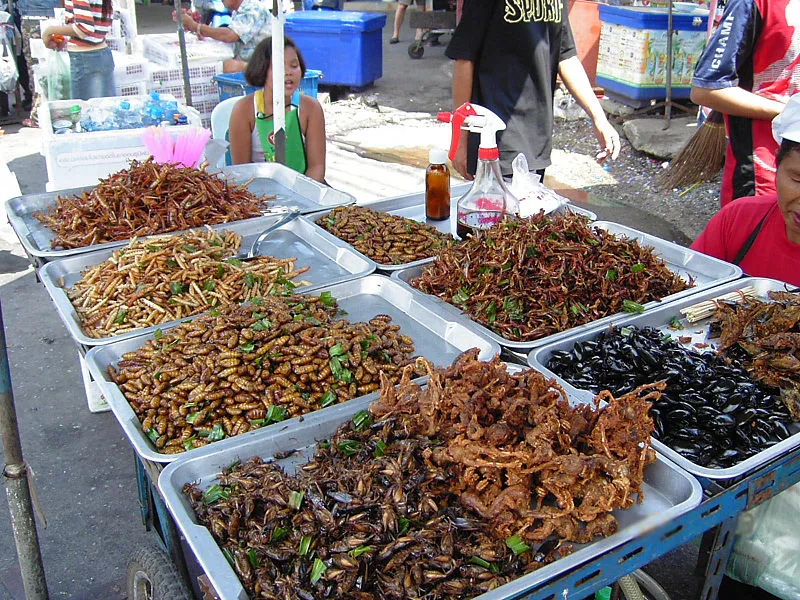
40% of Brits ready to try insects according to new report
New data from Canadean based on a survey of 2000 individuals finds that many people in Britain are interested in trying insects and around 6% say that they would like to eat them regularly.
Read
Image
Resource
Interview about dietary GHGs: Q&A - Should we all become vegans to save the planet?
In our mailing of 1st July 2014 we highlighted a new paper by Pete Scarborough et al. which compared the GHG intensity of diets adopted by vegetarians, fish eaters and meat eaters in the UK. The Oxford Martin School has now published a short interview with Pete, in which he outlines his motivation for undertaking this work, the method he adopted, and the insights gained from the study. Citation Scarborough, P., "Q&A: Should We All Become Vegans to save the Planet?" Interview by Sally Stewart. Web log post. ThinkLONG. Oxford Martin School, University of Oxford, 08 July 2014. Read the full interview blog-post here. We have also highlighted Peter Scarborough’s paper in an earlier newsletter, see it and our ‘further reading’ recommendations here. 
Read
Image
Resource
Dietary Guidelines for Americans 2015 suspected to include advice on sustainable diets
The next version of Dietary Guidelines for Americans, from the U.S. Department of Agriculture (USDA) and the Department of Health and Human Services (HHS) seem likely to include advice on sustainable diets. Preliminary conclusions from a subcommittee on food sustainability and safety indicate that the message of how the food is produced will be included in the final recommendations. For more on these subcommittee discussions read an article in Science here.          Read more a bout the dietary guidelines here. You can also find more information on our website about other dietary guidelines and food policy.
Read
Image
Resource
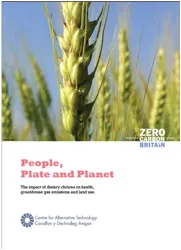
People, Plate and Planet – new report and online tool for sustainable diets
The Centre for Alternative Technology (CAT)  has launched a new report on sustainable diets - People, Plate and Planet, describing dietary choices that can reduce greenhouse gas emissions and pressures on land. The report considers nutrition, GHG emissions and land use and states that the most significant impact on these areas comes from what we eat, not where it is from or how much packaging there is around it.
Read
Image
Resource
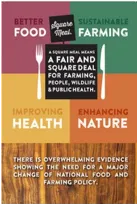
Square Meal: Why we need a new recipe for farming, wildlife, food and public health
Square Meal: why we need a new recipe for farming, wildlife, food and public health’ is a new report published by The Food Research Collaboration, the RSPB, Friends of the Earth, the National Trust, the Food Ethics Council, Sustain, the Wildlife Trusts, the Soil Association, Eating Better and Compassion in World Farming.
Read
Image
Resource
Paper compares organic food to conventionally-produced food
This study, undertaken by UK researchers from the University of Newcastle uses the extensive data set of 343 peer-reviewed publications in a meta-analysis to investigate ‘differences in composition between organic and non-organic crops/crop-based foods’. It suggests that there are ‘statistically significant’ differences between the production methods particularly with regard to a range of antioxidants.
Read
Image
Resource
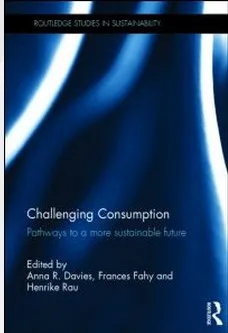
CONSENSUS Book: Challenging Consumption
The book ‘Challenging Consumption’, produced by the CONSENSUS research team, explores the topic of sustainable consumption. It includes discussions on future scenarios and innovations for sustainable food consumption practices. The book was launched in Dublin on 12th June 2014 by Dara Lynott, a Director of the Environmental Protection Agency who funds CONSENSUS research.
Read
Image
Resource
Dietary greenhouse gas emissions of meat-eaters, fish-eaters, vegetarians and vegans in the UK
This study is one of the very few that examines the GHG impacts of a selection of real life ‘self selected’ diets as opposed to those that are modelled or hypothetical.  It looks specifically at the dietary patterns (based on a standard 2,000 kcal diet) of UK vegetarians, semi-vegetarians and non-vegetarians.  Approximately 55,500 subjects were chosen for the study, all part of the EPIC-Oxford cohort study.
Read
Image
Resource
The water footprint of agricultural products in European river basins
This study published by the European Commission's Joint Research Centre in the journal Environmental Research Letters analyses the water footprint of agricultural production and consumption in Europe. It looks at the net virtual water import of 365 European river basins for the period between 1996-2005 based on two diet scenarios – a healthy diet based upon food-based dietary guidelines and a vegetarian diet.
Read
  • VIEW MORE

Sign up for Fodder, our monthly newsletter unpacking the future of food.

Tick below to opt-in to email communications.

You can change your mind at any time by clicking the unsubscribe link in the footer of any email you receive from us, or by contacting us at info@tabledebates.org.

We use Mailchimp as our marketing platform. By clicking below to subscribe, you acknowledge that your information will be transferred to Mailchimp for processing. Learn more about Mailchimp's privacy practices.
  • Glossary
  • About
  • Our Writing
  • Podcasts
  • Resources

Social

YouTube Facebook Instagram

© Copyright 2025

A collaboration between: