Close
Login Register
Search
  • About
    • What We Do
    • Who We Are
    • FAQs
  • Our Writing
    • Explainers
    • Essays
    • Letterbox
    • Reports & More
  • Podcasts
  • Our Events
  • Projects
    • Power In The Food Systems
    • Local-Global Scale Project
    • MEAT: The Four Futures Podcast
    • Fuel To Fork
    • Nature
    • Reckoning with Regeneration
    • SHIFT
    • Games at TABLE
    • Rethinking the Global Soy Dilemma
  • Resources
  • Opportunities
    • Jobs
    • Funding
    • Courses
    • Collaborations
    • Events
  • Newsletter
  • TABLE (EN)
Search
Back

Sustainable healthy diets

Image
Foodsource
Explainer
What is a healthy sustainable eating pattern?
The environmental and nutritional attributes of different food types can vary greatly. Consequently, diets composed of different sets of food types, will differ in their environmental footprints, and in their nutritional quality; so affecting human health. When such differences are multiplied by many millions of people, the overall effect is considerable. Human diets are, therefore, an important point of interconnection in food systems via which change is driven – for better or worse – by shifts how people consume. At least in theory, diets might provide a means by which to achieve both health and environmental goals simultaneously. But the reality is not so simple. Understanding these complexities, helps provide a window on both the opportunities and difficulties of taking a food systems approach, and on the important role that diets play.
Read
Image
Resource
Good Practice Report on Sustainable Public Procurement of School Catering Services
This report from INNOCAT, a project set up to help encourage eco-innovation in the catering sector, showcases best practices from a group of cities working on procurement of food and catering services.  The report takes a close look at school catering since this represents a significant share of the procurement budget of many local governments.
Read
Image
Photo: Jeff Kubina, French cooking class, Flickr, Creative Commons License 2.0
Resource
Methods to simplify diet and food life cycle inventories: Accuracy versus data-collection resources
Performing full life cycle assessment on foods and diets is a data- and resource-intensive undertaking and as a result many studies tend to adopt a simplified approach, for example by limiting the number of food studied (in the case of diets), using proxy data, or limiting the system boundaries (cradle to farm gate; cradle to retailer – ie. not the full cradle to the consumer’s mouth).
Read
Image
Photo: Sam Sherratt, Meat, Flickr, creative commons licence 2.0
Resource
China’s new dietary guidelines encouraging citizens to eat less meat
In their latest dietary guidelines, the Chinese government recommends a slightly lower meat intake than it did in its previous 2007 guidance.
Read
Image
Resource
WRI launches Better Buying Lab
The World Resources Institute (WRI) has formed a partnership with major companies including Google, Sainsbury’s, Hilton Worldwide and other leaders in the food industry aimed at finding ways to encourage consumers to buy more plant-based foods.
Read
Image
Resource
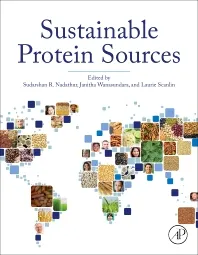
Sustainable Protein Sources
This books provides a first reference on dietary proteins that covers the land, water, and energy usage inputs, nutritive outputs, and food applications of plant and other non-meat proteins.
Read
Image
Photo: Livingasart, Buying Meat Two, Flickr, creative commons licence 2.0
Resource
Meat consumption contributing to global obesity
Energy intake has long been recognised as a factor in obesity, but more recently, interest has increased in whether some dietary patterns containing differing amounts of macronutrients and food groups, contribute more to body weight gain than do others.
Read
Image
Photo: USDA, People eating out at a fast food restaurant, Flickr, creative commons licence 2.0
Resource
Wicked Nutrition: The Controversial Greening of Official Dietary Guidance
This paper provides a detailed case study of the history and controversy surrounding the proposed inclusion of sustainability information in the 2015 Dietary Guidelines for Americans, as recommended by the Dietary Guidelines Advisory Committee (DGAC) – a body composed of nutritionists, physicians, and public health experts, tasked with reviewing the evidence base for the guidelines every 5 years.
Read
Image
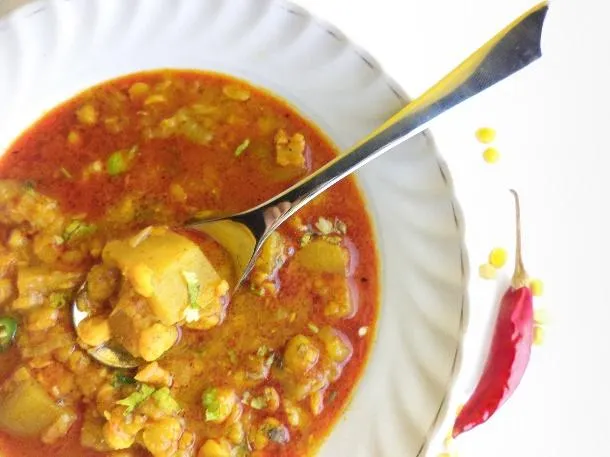
Photo: Devika, Chane ki daal, Flickr, creative commons licence, 2.0
Resource
Eating plant protein is associated with lower mortality, animal protein with higher risk of cardiovascular disease
This study, which analyses data from two long-term epidemiologic research studies in the US, found that specific food sources of protein in the diet affected health outcomes in differing ways. Taking into account a number of other dietary and lifestyle factors, the authors showed that animal protein intake was weakly associated with a higher risk for mortality.
Read
  • VIEW MORE

Sign up for Fodder, our monthly newsletter unpacking the future of food.

Tick below to opt-in to email communications.

You can change your mind at any time by clicking the unsubscribe link in the footer of any email you receive from us, or by contacting us at info@tabledebates.org.

We use Mailchimp as our marketing platform. By clicking below to subscribe, you acknowledge that your information will be transferred to Mailchimp for processing. Learn more about Mailchimp's privacy practices.

  • Glossary
  • About
  • Our Writing
  • Podcasts
  • Resources

Social

YouTube Facebook Instagram

© Copyright 2025

A collaboration between: