Close
Login Register
Search
  • About
    • What We Do
    • Who We Are
    • FAQs
  • Our Writing
    • Explainers
    • Essays
    • Letterbox
    • Reports & More
  • Podcasts
  • Our Events
  • Projects
    • Power In The Food Systems
    • Local-Global Scale Project
    • MEAT: The Four Futures Podcast
    • Fuel To Fork
    • Nature
    • Reckoning with Regeneration
    • SHIFT
    • Rethinking the Global Soy Dilemma
  • Resources
  • Opportunities
    • Jobs
    • Funding
    • Courses
    • Collaborations
    • Events
  • Newsletter
  • TABLE (EN)
Search
Back

Grazing and grassland

Image
Resource
Commentary: Ruminants, climate change and climate policy
Despite a focus on reducing fossil fuel consumption, cuts in these emissions by themselves will not sufficiently address climate change.
Read
Image
Resource
Grazing animals protecting biodiversity in over-fertilized grasslands
This comparative five year study on grasslands suggests that allowing grazing animals to crop the excess growth of of grasses that, due to fertization, grow too vigorously, can counteract the threats these grasses present to the other plants that contribute to the biodiversity of native prairies.
Read
Image
Resource
Policy paper: Beyond the Pail - The Emergence of Industrialized Dairy Systems in Asia
Read
Image
Resource
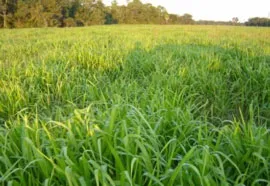
Tropical grass could tame global warming gases
New evidence suggests that a chemical mechanism operating in the roots of a tropical grass used for livestock feed holds enormous promise for reducing the emission of nitrous oxide. N2O is the most harmful of the warming gases, with a global warming potential 296 times that of carbon dioxide. According to the UN Food and Agriculture Organisation (FAO), the livestock sector accounts for 65 percent of the nitrous oxide emitted.
Read
Image
Resource
Fruit and vegetables as livestock feed
Read
Image
Resource
Allan Savory Holistic Management TED talk
Allan Savory of the Savory Institute has given a TED talk that outlines his ‘Holistic Management’ approach. In brief, holistic management is based on the idea that large herds of livestock, far from causing desertification, can reverse it, by stimulating plant growth and water retention while also enhancing soil carbon sequestration (so reducing GHG emissions). 
Read
Resource
Goat grazing, its interactions with other herbivores and biodiversity conservation issues
A study published in the journal Small Ruminant Research notes that many breeds of goat are at great risk of disappearing. A study from the Regional Service of Agro-Food Research and Development (SERIDA) analysed the global situation - the state of different breeds, the multiple implications of their conservation, their interaction with other animal species, and the consequences of goat grazing from an environmental viewpoint. The authors found that the biggest loss in the genetic resources of indigenous goats has been observed in Europe.  
Read
Resource
National Trust report on carbon footprints in various beef production systems – and expert comment
A report published by the National Trust entitled What’s your beef? Compares the cradle-to-farm-gate emissions of ten tenanted National Trust farms, selected as representing a cross section of different beef production systems, including 4 organic, 4 conventional but extensive, and 2 semi intensive farms.
Read
Resource
Multifunctional dairy-beef production as part of sustainability effort
This is an interesting article about a farmer’s attempt to improve the sustainability of the farm by basing production on a dual purpose dairy/beef breed, based on grass-feeding, high welfare and zero waste.
Read
  • VIEW MORE

Sign up for Fodder, our newsletter covering sustainable food news.

Sign up
  • Glossary
  • About
  • Our Writing
  • Podcasts
  • Resources

Social

YouTube Facebook Instagram

© Copyright 2025

A collaboration between: