Close
Login Register
Search
  • About
    • What We Do
    • Who We Are
    • FAQs
  • Our Writing
    • Explainers
    • Essays
    • Letterbox
    • Reports & More
  • Podcasts
  • Our Events
  • Projects
    • Power In The Food Systems
    • Local-Global Scale Project
    • MEAT: The Four Futures Podcast
    • Fuel To Fork
    • Nature
    • Reckoning with Regeneration
    • SHIFT
    • Rethinking the Global Soy Dilemma
  • Resources
  • Opportunities
    • Jobs
    • Funding
    • Courses
    • Collaborations
    • Events
  • Newsletter
  • TABLE (EN)
Search
Back

Grazing and grassland

Image
Resource
Paper: Impacts of Feeding Less Food-Competing Feedstuffs to Livestock on Global Food System Sustainability
In this paper, researchers from universities in Switzerland, Italy, Austria, the UK and Germany investigate the potential for feeding livestock on less food-competitive feedstuffs (FCF – that is, animal feed derived from fewer human edible food sources) to reduce the negative environmental impacts of livestock farming.
Read
Image
Resource
The potential for land sparing to offset greenhouse gas emissions from agriculture
In this paper, researchers from a number of UK and US research institutions explore the potential for land sparing as a greenhouse gas (GHG) offsetting strategy – that is, by increasing crop and livestock yields so as to enable agricultural land to be freed up and used for habitat restoration (for example) an enable carbon sequestration. 
Read
Image
Lean mean green obscene
Publication
Lean, green, mean, obscene…? What is efficiency? And is it sustainable?
This paper explores these questions by considering how stakeholders think about efficiency in relation to animal production and consumption, both terrestrial and aquatic.
Read
Image
Resource
Seminar summary: What role for grazing livestock in a world of climate change and diet-related disease?
The Sustainable Food Trust recently held an event to discuss the question: ‘What role for grazing livestock in a world of climate change and diet-related disease?’
Read
Image
Resource
Do biofuel policies seek to cut emissions by cutting food?
This study argues that government biofuel policies rely on reductions in food consumption to generate greenhouse gas savings. It looks at three models used by U.S. and European agencies, and finds that all three estimate that some of the crops diverted from food to biofuels are not replaced by planting crops elsewhere. About 20 to 50 percent of the net calories diverted to make ethanol are not replaced through the planting of additional crops.
Read
Image
Resource
Can cattle grazing management technique help capture and store carbon in soil?
An article from Science Daily reports on how scientists, advisors and communications specialists have come together to examine whether beef production can help restore ecosystems. They have started to examine the adaptive multi-paddock (AMP) grazing management technique: this involves using small-sized fields to provide short periods of grazing for livestock and long recovery periods for fields.
Read
Image
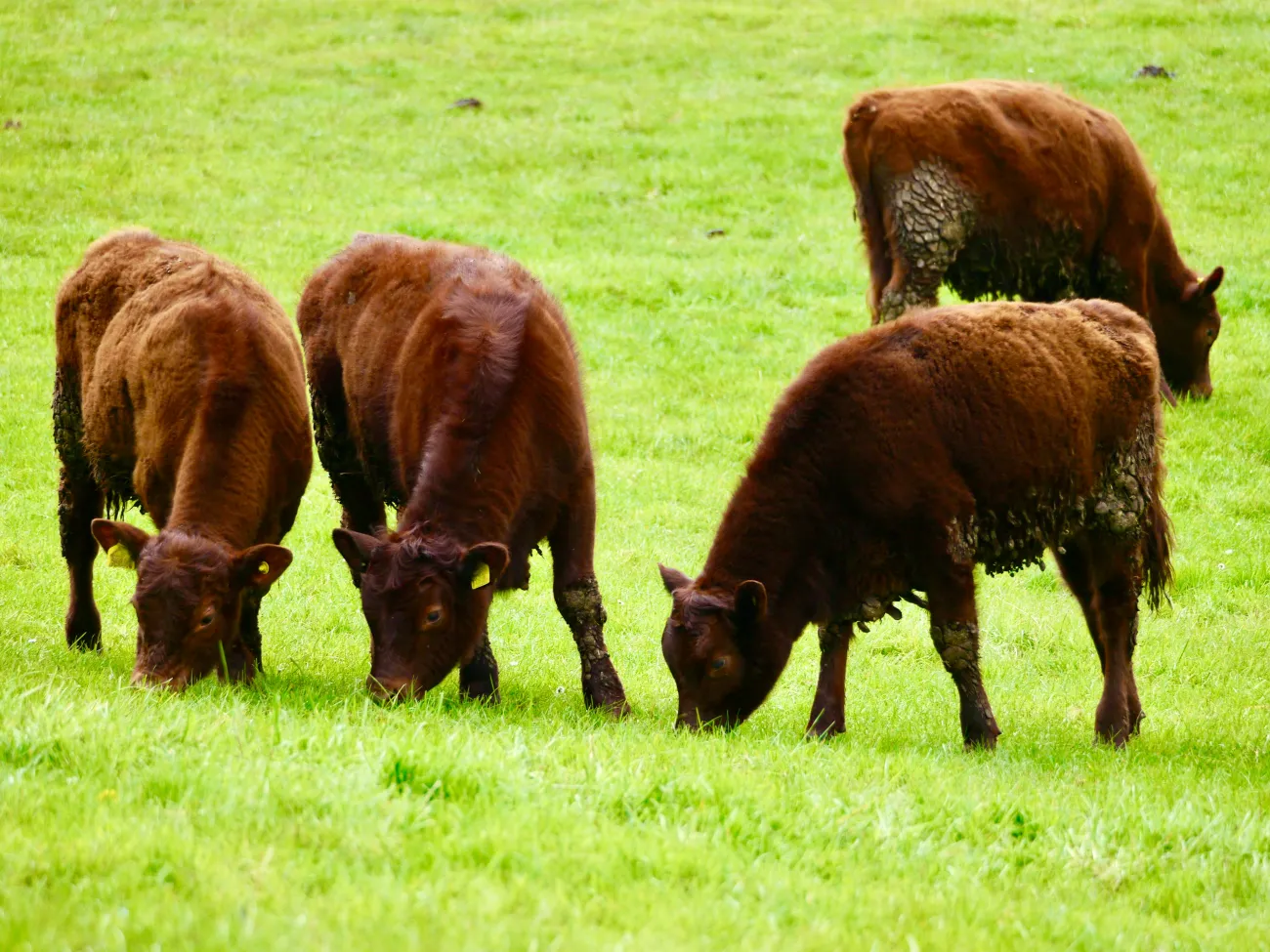
Beef cattle grazing on a pasture. Photo by Jim via Unsplash.
Essay
Grazing livestock in a world of climate change: do they have a role?
In this blog post, Elin Röös continues the dialogue launched by a Sustainable Trust Fund event on the role of grazing livestock in climate change.Elin is a postdoctoral researcher at the Swedish University of Agricultural Sciences working for the Future Agriculture initiative at the same university, which is a strategic multidisciplinary research platform that addresses the sustainable use of natural resources with emphasis on agricultural production and food systems. Currently she is visiting the Food Group at the Environmental Change Institute at the University of Oxford, working with future scenarios for protein production and consumption, and engaged in the FCRN network.
Read
Image
Resource
Guardian debate on sustainability impacts of livestock grazing
In a debate between George Monbiot and L hunter Lovins in The Guardian, the issue of impacts and evidence of livestock grazing is discussed. Monbiots article “Eat more meat and save the world: the latest implausible farming miracle” can be found here while L. Hunter Lovins’ article “Why George Monbiot is wrong: grazing livestock can save the world” can be read here.
Read
Image
Resource
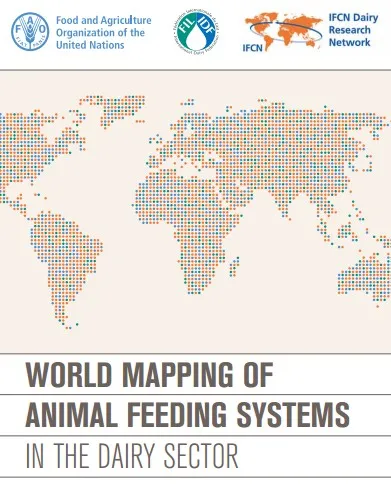
FAO releases findings of global dairy feed mapping project
The International Dairy Federation (IDF), the UN’s Food and Agriculture Organization (FAO), and the IFCN Dairy Research Network (IFCN) have collaborated on an extensive study on international dairy feeding systems to explore how differences within these systems for dairy cows, water buffaloes, sheep, and goats and between large and smallholders can affect a range of issues - from the nutritional content of the milk to the level of GHG emissions involved in the production process. Each of the three organizations had differing stakes in the research. 
Read
  • VIEW MORE

Sign up for Fodder, our newsletter covering sustainable food news.

Sign up
  • Glossary
  • About
  • Our Writing
  • Podcasts
  • Resources

Social

YouTube Facebook Instagram

© Copyright 2025

A collaboration between: