Close
Login Register
Search
  • About
    • What We Do
    • Who We Are
    • FAQs
  • Our Writing
    • Explainers
    • Essays
    • Letterbox
    • Reports & More
  • Podcasts
  • Our Events
  • Projects
    • Power In The Food Systems
    • Local-Global Scale Project
    • MEAT: The Four Futures Podcast
    • Fuel To Fork
    • Nature
    • Reckoning with Regeneration
    • SHIFT
    • Rethinking the Global Soy Dilemma
  • Resources
  • Opportunities
    • Jobs
    • Funding
    • Courses
    • Collaborations
    • Events
  • Newsletter
  • TABLE (EN)
Search
Back

Consumption and production trends

Image
Resource
Changes in dietary preferences: new challenges for sustainability and innovation
This paper explores links between lifestyles, diet and health in Italian generations X (born: 1966-1976) and Y (born 1980-2000), and compares their dietary preferences, using the years 2001 and 2011 as reference points. The researchers argue that policy needs to address specific segments of these generations more likely to eat an unhealthy diet and to focus on behaviour change through communication campaigns.
Read
Image
Resource
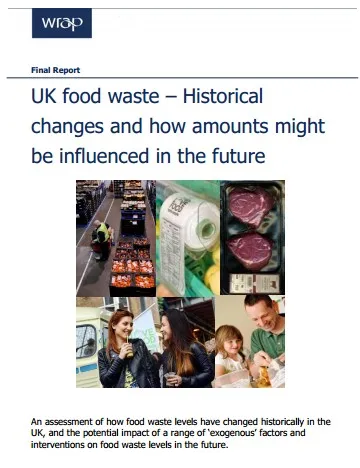
WRAP report: Food waste levels in the UK
WRAP has just published an assessment of how food waste levels have changed historically in the UK, and the potential impact of a range of ‘exogenous’ factors (such as population growth) and interventions (such as voluntary agreements with the food industry and campaigns such as Love Food Hate Waste) on food waste levels in the future (to 2025).
Read
Image
Resource
Eating Better report on awareness and attitudes on meat
The report Let's Talk About Meat: changing dietary behaviour for the 21st century is launched alongside a new YouGov survey, commissioned by the Eating Better alliance and Friends of the Earth, which looked into the awareness and attitudes on meat among the among the public in Britain. The survey found that around one in three people (35%) in Britain say they are willing to consider eating less meat, with one in five (20%) saying they have already cut back on the amount of meat they eat over the last year. Only 5% say they are eating more.
Read
Image
Resource
12-country survey by Chatham house on public awareness of the links between meat & dairy, and climate change
This new paper by Chatham House reports on a 12-country survey undertaken into public understanding of the links between  livestock and climate change. Livestock – Climate Change’s Forgotten Sector - Global Public Opinion on Meat and Dairy Consumption finds a major lack of awareness of the meat and dairy sector’s contribution to climate change.
Read
Image
Resource
The impact of healthier dietary scenarios on the global blue water scarcity footprint of food consumption in the UK
This study aims to assess the effect of five dietary scenarios – designed to promote healthier and more sustainable eating – on the blue water scarcity footprint of UK food consumption. The objectives are to estimate the total blue water consumed in producing food commodities consumed in the UK; the contribution, and geographical concentration, to global blue water scarcity; and the potential impact of alternative healthy eating scenarios on global blue water scarcity.
Read
Image
Resource
Direct evidence of milk consumption from ancient human dental calculus
The consumption of milk is regarded as a classic example of gene-culture evolution. Archaeologists and geneticists have been puzzling about where and why people have been drinking milk since it was revealed that the mutations which enable adults to drink milk are under the strongest selection of any in the human genome. Co-author Dr Christina Warinner, from the Department of Anthropology, University of Oklahoma, said: "The study has far-reaching implications for understanding the relationship between human diet and evolution.
Read
Image
Resource
New Food Systems Academy – an open education resource
This website, curated by Geoff Tansey, provides a series of open access online talks, for use by those teaching some aspect of food and farming – but open to anyone to watch. The aim is to provide an overview of the complex and multidisciplinary nature of food systems. Read more about the initiative on their website. 
Read
Image
Resource
Book: Food Waste - Home Consumption, Material Culture and Everyday Life
In recent years, food waste has risen to the top of the political and public agenda, yet until now there has been no scholarly analysis applied to the topic as a complement and counter-balance to campaigning and activist approaches.
Read
Image
Resource
Environmental Indicator Report, 2014 from European Environment Agency (EEA)
To examine what the concept of the green economy means in practice for European countries, and to evaluate their progress in achieving such a transition, in 2012 the European Environment Agency (EEA) initiated a new series of environmental indicator reports. The first two reports in the series focused on green economy and the European environment, addressing resource efficiency and resilience and the links between European resource demand, environmental degradation and changes in human wellbeing.
Read
  • VIEW MORE

Sign up for Fodder, our newsletter covering sustainable food news.

Sign up
  • Glossary
  • About
  • Our Writing
  • Podcasts
  • Resources

Social

YouTube Facebook Instagram

© Copyright 2025

A collaboration between: