Close
Login Register
Search
  • About
    • What We Do
    • Who We Are
    • FAQs
  • Our Writing
    • Explainers
    • Essays
    • Letterbox
    • Reports & More
  • Podcasts
  • Our Events
  • Projects
    • Power In The Food Systems
    • Local-Global Scale Project
    • MEAT: The Four Futures Podcast
    • Fuel To Fork
    • Nature
    • Reckoning with Regeneration
    • SHIFT
    • Rethinking the Global Soy Dilemma
  • Resources
  • Opportunities
    • Jobs
    • Funding
    • Courses
    • Collaborations
    • Events
  • Newsletter
  • TABLE (EN)
Search
Back

Consumption and production trends

Image
Resource
Corporate Responsibility Programmes May Create a 'Health Halo'
This study reveals that consumers tend to underestimate calorie counts for companies with positive corporate responsibility programs, and then consume more of the foods produced by them. The study suggests that consumers may infer (often incorrectly), that if the company is engaged in doing ‘good deeds’, their products are healthy. For the research, they split participant groups between two fictional product launches, one company with a positive CSR profile, and the other with neutral CSR, and determined that participants consuming products from the positive CSR profile, ate more. Furthermore, these participants also underestimated the consumed calories for the company with the positive CSR.
Read
Image
Resource
Live Longer? Save the Planet? Better diet could nail both
A study led by University of Minnesota's David Tilman finds that shifting modern diets towards healthier, Mediterranean diets could improve quality of life and reduce greenhouse gas emissions. The team synthesized data on the environmental costs of food production, diet trends and population growth, and showed the health and environment costs of continuing our current health trends as compared to shifting to a healthier diet.
Read
Image
Resource
National Geographic’s Future of Food series: Carnivore's Dilemma
In the 'Carnivore's Dilemma', part of National Geographic’s special series on The Future of Food, Robert Kunzick (National Geographic’s senior environmental editor) contributes to the current meat debate by discussing his visit to 'Cactus Feeders', the company that operates 9 feed yards in Kansas, USA. He explores the role of pharmaceuticals and hormones for the health and productivity of the animals and also discusses environmental issues including water supply, beef’s carbon footprint and feedlots.  For the complete article with infographics and photographs, see here.
Read
Image
Resource
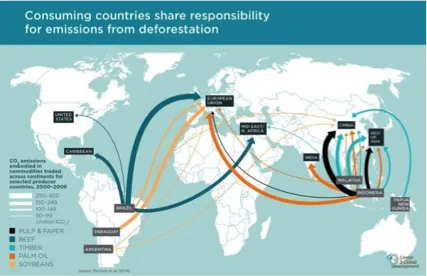
Global consumption an increasingly significant driver of tropical deforestation
In this report commissioned by Center for Global Development, researchers at Chalmers University, Linköping University and Vienna University describe how international trade with agricultural and wood products is an increasingly important driver of tropical deforestation. More than a third of recent deforestation can be tied to production of beef, soy, palm oil and timber.
Read
Image
Resource
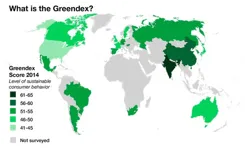
Global Greendex survey says we're eating better, but our diet is still unsustainable
According to the latest Greendex survey by the National Geographic Society, more people are eating local and organic foods and plan to consume less meat and bottled water. However, most also believe they lack enough information and influence to become more environmentally sustainable consumers. The survey, undertaken in collaboration with research consulting firm GlobeScan, measured consumption habits and attitudes in 18 countries. Each was scored on the relative size of its environmental footprint.
Read
Image
Resource
Healthy and sustainable food choices among native and migrant citizens of the Netherlands
In recent years there has been increasing attention for facilitating healthier and more sustainable food choices. Research and policy making in the field, however, have largely ignored important cultural changes that are taking place in the Netherlands (and elsewhere in Europe) due to the inflow of new ethnic groups.
Read
Image
Resource
Price gap between more and less healthy foods grew between 2002 and 2012
Novel use of UK national data finds a growing gap between the prices of more and less healthy foods between 2002 and 2012. Healthy foods in 2012 were three times more expensive per calorie than less healthy foods. Food prices in the UK have risen faster than the price of other goods in recent years, and this new study, which tracked the price of 94 key food and beverage items from 2002 to 2012, shows that the increase has been greater for more healthy foods, making them progressively more expensive over time.
Read
Image
Resource
It is time to revisit current dietary recommendations for saturated fat
Although there is no absolute consensus on the recommendation for total fat and dietary fat and saturated fat (SFA) intake between governing bodies and health organizations, there is a general sense of convergence. All guidelines currently suggest that total fat should not exceed 35% of daily calories. Although most guidelines propose a target for dietary SFA, there is no consensus on the value to aim for.
Read
Image
Resource
Report from Compassion in world farming on sustainable food
The European Commission was due to publish a Communication on Sustainable Food in 2013 to “assess how best to limit waste throughout the food supply chain, and consider ways to lower the environmental impact of food production and consumption patterns”.  This long-awaited Communication has still not been published.
Read
  • VIEW MORE

Sign up for Fodder, our newsletter covering sustainable food news.

Sign up
  • Glossary
  • About
  • Our Writing
  • Podcasts
  • Resources

Social

YouTube Facebook Instagram

© Copyright 2025

A collaboration between: