Close
Login Register
Search
  • About
    • What We Do
    • Who We Are
    • FAQs
  • Our Writing
    • Explainers
    • Essays
    • Letterbox
    • Reports & More
  • Podcasts
  • Our Events
  • Projects
    • Power In The Food Systems
    • Local-Global Scale Project
    • MEAT: The Four Futures Podcast
    • Fuel To Fork
    • Nature
    • Reckoning with Regeneration
    • SHIFT
    • Rethinking the Global Soy Dilemma
  • Resources
  • Opportunities
    • Jobs
    • Funding
    • Courses
    • Collaborations
    • Events
  • Newsletter
  • TABLE (EN)
Search
Back

Agricultural biodiversity

Image
Resource
Soil food web properties explain ecosystem services across European land use systems
Read
Image
Resource
Measuring the impacts of consumption in the UK of non-UK imported goods and services on global biodiversity
Read
Image
Resource
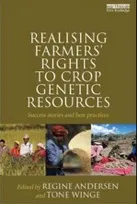
Realising Farmers' Rights to Crop Genetic Resources
The book summary says the following: Farmers' Rights are essential for maintaining crop genetic diversity, which is the basis of all food and agricultural production in the world. The International Treaty on Plant Genetic Resources for Food and Agriculture recognizes Farmers' Rights and provides for relevant measures. However, implementation is slow, and in many countries there is resistance. This book shows the necessity of realizing Farmers' Rights for poverty alleviation and food security, the practical possibilities of doing so, and the potential gains for development and society at large.
Read
Image
Resource
Ecosystem function enhanced by combining four functional types of plant species in intensively managed grassland mixtures: a 3-year continental-scale field experiment.
A paper published in the Journal of Applied Ecology finds that grassland plots planted with a mixture of several agricultural plant species produced a greater yield than plots planted with a single species. The EU-funded study explored whether different combinations and proportions of agricultural plants can lead to higher yields with lower input of fertilisers and more efficient use of land. Intensively managed agricultural grasslands, cultivated to provide food for livestock, have the potential to support, or damage, a range of ecosystem services, depending on how they are managed.
Read
Resource
Book: Diversifying Food and Diets
Currently 925 million people are undernourished and 195 million children under five years of age are stunted. At the same time, over 1 billion people are overweight and obese in both the developed and developing world. Diseases previously associated with affluence, such as cancer, diabetes and cardio-vascular disease, are on the rise.
Read
Image
Resource
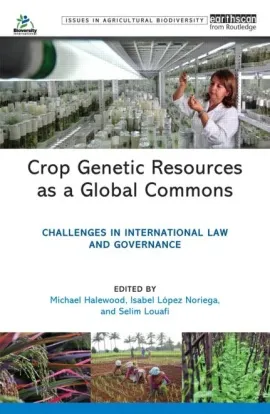
Crop Genetic Resources as a Global Commons: Challenges in International Law and Governance
This new book addresses how the collective pooling and management of shared plant genetic resources for food and agriculture can be supported through laws regulating access to genetic resources and the sharing of benefits arising from their use. 
Read
Image
Resource
Green farming agenda facing EU budget cuts
Euractiv.com has posted an article detailing how some EU national governments and lawmakers are pushing to weaken green farming proposals in the next Common Agricultural Policy (CAP). With the economic crisis still lingering, there is more focus on boosting farm production to create jobs, and to address concerns about tighter food supplies and higher prices driven by worldwide droughts.
Read
Resource
Study: How can climate policy benefit from comprehensive land-use approaches?
Scientists at Technische Universität München (TUM) have come up with a new land development concept tailored to medium-sized farms in South America that sees farmers transitioning from large-scale monoculture to more diverse crop mixtures spread over smaller plots interspersed with wooded areas. Their study, published in Frontiers in Ecology and the Environment, evaluated the economic viability of this model, based on a typical medium-sized agricultural holding, and found that although costs are higher in the beginning as a result of reforestation, the combination of woodland management and smaller plots of land pays off in the long term.
Read
Image
Resource
Meat: The Good, the Bad, & the Complicated
Read
  • VIEW MORE

Sign up for Fodder, our newsletter covering sustainable food news.

Sign up
  • Glossary
  • About
  • Our Writing
  • Podcasts
  • Resources

Social

YouTube Facebook Instagram

© Copyright 2025

A collaboration between: