Close
Login Register
Search
  • About
    • What We Do
    • Who We Are
    • FAQs
  • Our Writing
    • Explainers
    • Essays
    • Letterbox
    • Reports & More
  • Podcasts
  • Our Events
  • Projects
    • Power In The Food Systems
    • Local-Global Scale Project
    • MEAT: The Four Futures Podcast
    • Fuel To Fork
    • Nature
    • Reckoning with Regeneration
    • SHIFT
    • Games at TABLE
    • Rethinking the Global Soy Dilemma
  • Resources
  • Opportunities
    • Jobs
    • Funding
    • Courses
    • Collaborations
    • Events
  • Newsletter
  • TABLE (EN)
Search
Back

TABLE

Image
Tesco report cover
Reports
Tesco: A balanced diet for a better future
UK supermarket Tesco and the British Nutrition Foundation have produced this report, which outlines recommendations for a healthy, sustainable diet. It uses the UK government’s Eatwell Guide as the basis for discussion and lists ways in which Tesco will encourage its customers to eat differently, including a “Healthy Choice” logo, reformulating products, committing to a 300% increase in meat alternative sales by 2025, and tackling food waste.
Read
Image
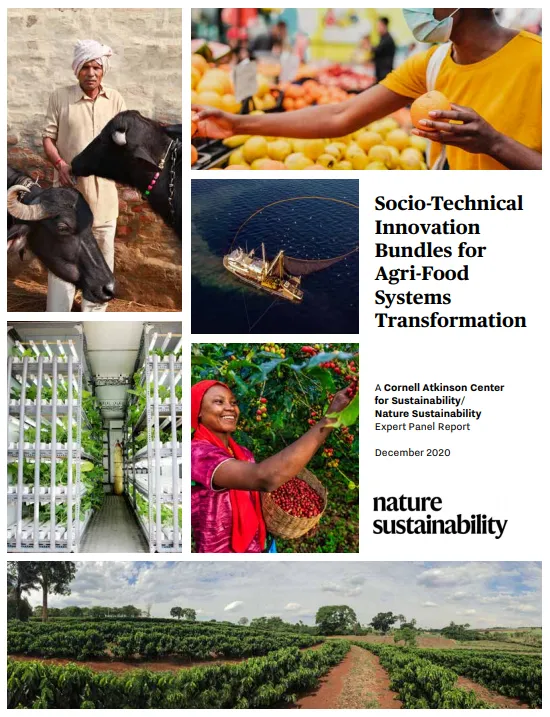
Socio-technical innovation bundles for food transformation report cover
Reports
Socio-technical innovation bundles for food transformation
This report by the Cornell Atkinson Centre for Sustainability and Nature Sustainability examines the technological scope for moving to food systems that are healthy, equitable, resilient and sustainable. It finds that successfully scaling up promising technologies depends on specific “biophysical, political, socio-economic, and cultural contexts”, and therefore proposes creating “socio-technical innovation bundles” that are customised to the relevant context.
Read
Image
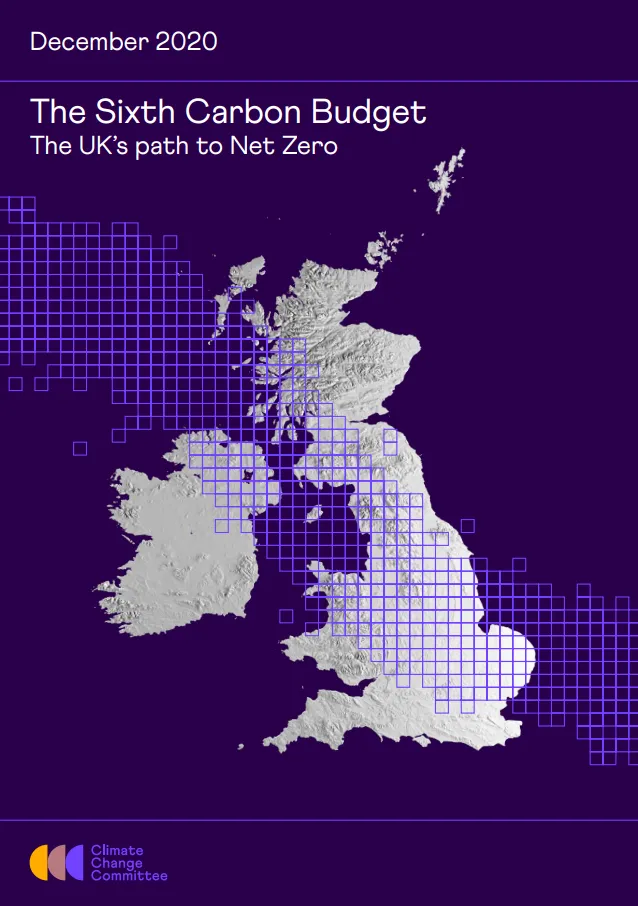
The UK’s Sixth Carbon Budget
Reports
The UK’s Sixth Carbon Budget
The Sixth Carbon Budget from the UK’s Climate Change Committee sets out the UK’s permissible emissions between 2033 and 2037. Food-relevant recommendations include reducing consumption of meat and dairy by 20% by 2030, adopting low-carbon farming practices while raising productivity, and shifting some land use towards reforestation and bioenergy production.
Read
Image
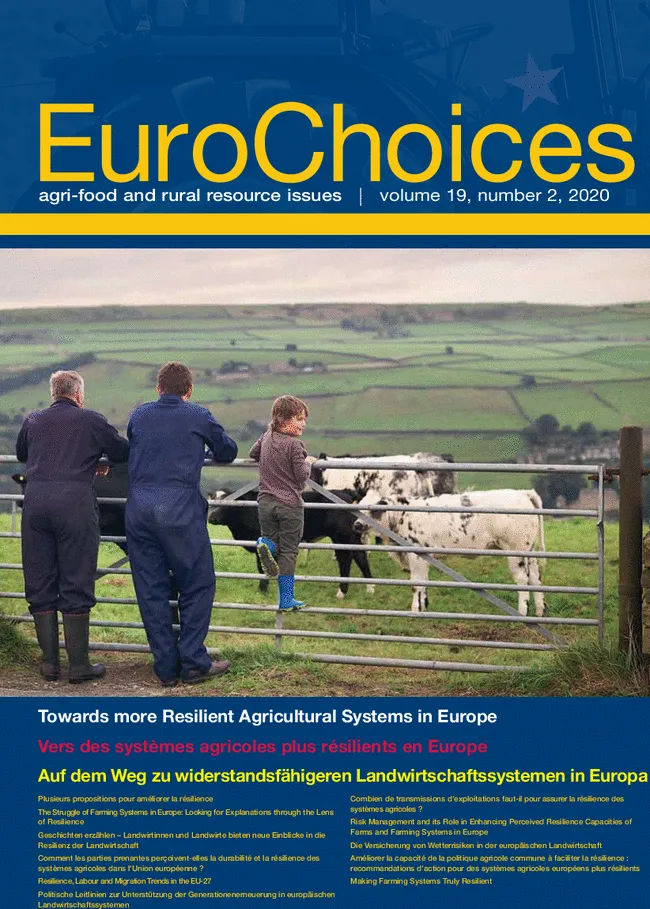
EuroChoices journal cover
Journal articles
Special issue: Resilience of EU farming systems
The journal EuroChoices has released a special issue, “Towards more Resilient Agricultural Systems in Europe”, which showcases findings from the Horizon 2020 SURE‐Farm research project which was coordinated by Wageningen University & Research.
Read
Image
Image: holstein, Movement feet run, Pixabay, Pixabay Licence
Journal articles
Fish-eaters, vegetarians and vegans have higher fracture risk
This paper, by the Wellcome Trust-funded Oxford Livestock, Environment & People (LEAP) programme, finds that non-meat eaters, particularly vegans, have a higher total risk of bone fractures and some specific fracture types, such as hip fractures. After controlling for various confounding factors, the study finds that, relative to meat-eaters, vegans have a 2.31x higher risk of fractures; vegetarians have a 1.25x higher risk; and fish eaters have a 1.26x higher risk.
Read
Image
Image: Hundankbar, Meadow Fog Grass, Pixabay, Pixabay Licence
Journal articles
Climate effects of managed and sparsely grazed grasslands
This paper presents a global analysis of the greenhouse gas balance of the world’s grasslands - both managed and natural - between 1750 and 2012, aiming to separate the direct effects of management by humans and the indirect effects of climate change. It finds that in most world regions, managed grasslands (those grazed by livestock or mown for grass forage) have a net warming effect on the climate, while sparsely grazed grasslands (natural grasslands not affected by livestock, but which may be grazed by wild animals) have a net cooling effect. 
Read
Image
Image: diego_torres, Water Raindrops Raining, Pixabay, Pixabay Licence
Journal articles
Climate impacts linked to reduced diet diversity in children
This paper uses data from 19 countries to test the link between climate and dietary diversity in children. It finds that higher temperatures are generally associated with lower diet diversity, while higher precipitation is generally associated with greater diet diversity.
Read
Image
Image: Shane Stagner, Crescent bay beach, Unsplash, Unsplash licence
Journal articles
Why scientists should speak out on environmental risks
This paper argues that the threats to humanity and the biosphere from environmental damage is much greater than is usually acknowledged, and that current political and economic solutions do not match the scale of the danger. The authors call for scientists to speak “candidly and accurately” to policymakers, businesses and the public about the risks to our future.
Read
Image
Resilience of the UK food system in a global context logo
News and resources
Online hub: Resilience of the UK food system
The research programme ‘Resilience of the UK Food System in a Global Context’ has launched an online hub. The programme aims to identify the major vulnerabilities of the UK food system and assess how its resilience can be improved. The hub gives details of its 13 research projects, lists programme outputs, and has sections for news and blogs and events.
Read
  • VIEW MORE

Sign up for Fodder, our monthly newsletter unpacking the future of food.

Tick below to opt-in to email communications.

You can change your mind at any time by clicking the unsubscribe link in the footer of any email you receive from us, or by contacting us at info@tabledebates.org.

We use Mailchimp as our marketing platform. By clicking below to subscribe, you acknowledge that your information will be transferred to Mailchimp for processing. Learn more about Mailchimp's privacy practices.

  • Glossary
  • About
  • Our Writing
  • Podcasts
  • Resources

Social

YouTube Facebook Instagram

© Copyright 2025

A collaboration between: