Close
Login Register
Search
  • About
    • What We Do
    • Who We Are
    • FAQs
  • Our Writing
    • Explainers
    • Essays
    • Letterbox
    • Reports & More
  • Podcasts
  • Our Events
  • Projects
    • Power In The Food Systems
    • Local-Global Scale Project
    • MEAT: The Four Futures Podcast
    • Fuel To Fork
    • Nature
    • Reckoning with Regeneration
    • SHIFT
    • Games at TABLE
    • Rethinking the Global Soy Dilemma
  • Resources
  • Opportunities
    • Jobs
    • Funding
    • Courses
    • Collaborations
    • Events
  • Newsletter
  • TABLE (EN)
Search
Back

TABLE

Image
Resource
The Sustainable Intensification of European Agriculture: A Review Sponsored by the RISE Foundation
This report builds on the dialogue built during a workshop held by RISE in 2014 regarding the measurement of farming environmental performance so as to further refine the definitions of sustainable intensification and the subsequent implications that such definitions pose on policy making to progress it. In doing so, the report explores three different case studies: The first case study focuses on soil performance and resilience. It shows how achieving sustainable intensification is highly dependent on having sound measurement of the underlying conditions.
Read
Image
Resource
New indicators from World Resources Institute on sustainable agriculture
This working paper, discussing indicators for sustainable agriculture, is published as Part 6 of a major report by WRI – Creating a Sustainable Food Future.
Read
Image
Resource
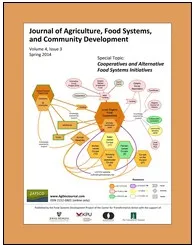
Special Issue on Cooperatives and Alternative Food Systems Initiatives
A special issue of the Journal of Agriculture, Food Systems, and Community Development (JAFSCD) on Cooperatives and Alternative Food Systems Initiatives is now out.
Read
Image
Resource
New Paper: Putting Back Meaning into “Sustainable Intensification”
This paper critiques the concept of sustainable intensification as follows: “Though often lauded by scientists and policy makers alike as a panacea to the mass environmental degradation that accompanies typical food production processes, the authors find that ‘sustainable intensification’ is actually highly unsustainable as it fails to consider the long run social, economic and ecological consequences of intensified production. Thus the authors aim to redefine the scope of the discourse, moving beyond simple calls for increased production capacities to instead enmesh food security within a more holistic approach to development which requires better governance, more empowerment, and greater access and fairer distribution of food within more resilient food systems. Ultimately, sustainable intensification is rendered worthless if those facing dire food insecurity remain unable to access the yields of increasing production.“ 
Read
Image
Resource
Organic agriculture and biodiversity impacts
This study, entitled "Gains to species diversity in organically farmed fields are not propagated at the farm level, investigates whether organic farming contributes to biodiversity at the farm level."
Read
Image
Resource
Reducing carbon dioxide most important of all climate pollutants to address climate change
This paper, Short-Lived Climate Pollution, published in Annual Review of Earth and Planetary Sciences, argues that since carbon dioxide has the longest living effects of all climate pollutants,  remaining in the atmosphere for thousands of years, it should be the primary focus of global climate change mitigation efforts.
Read
Image
Resource
“Land-grabbing” holds potential to increase yields sufficient to feed additional 100 million people globally
This study calculates that crops grown on land obtained through large scale acquisitions in developing countries could potentially feed 100 million more people than current practices do today.
Read
Image
Resource
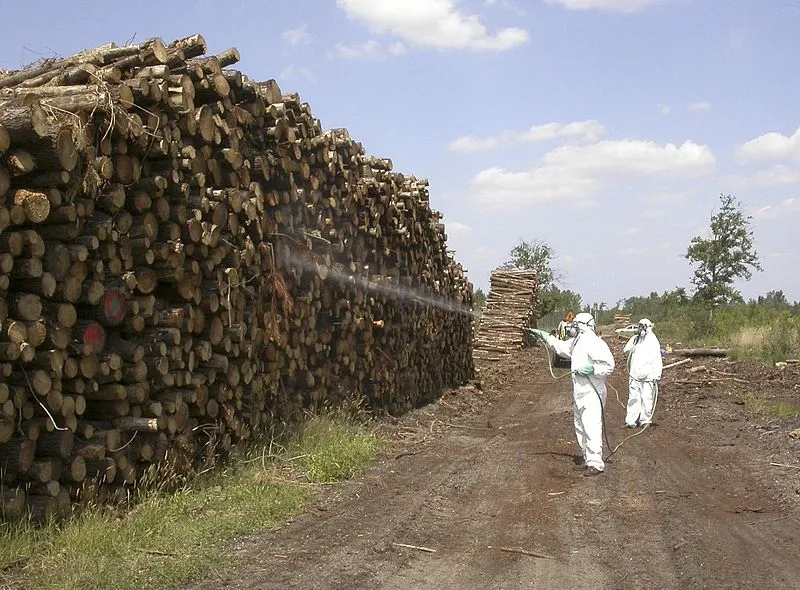
Insecticides put world food supplies at risk
The Worldwide Integrated Assessment (WIA) report on insecticides will shortly be published as a special issue of Environmental Science and Pollution Research.  In the report, the global group of researchers in the Task Force on Systemic Pesticides argue that insecticide use may already have caused severe harm to global food production through its  impacts on the environment.  The researchers look at the impacts and risks associated with neonicotinoids use. They argue that rather than protecting food production, the use of the insecticide is threatening the productivity of our natural and farmed environment.
Read
Image
Resource
Different paths to a sustainable society - new issue of "Green Growth the Nordic Way"
This issue of "Green Growth the Nordic Way”, a web magazine from the Nordic Council of Ministers, discusses the topic of circular economy and the work of the Council within the areas of waste management and sustainable building. 
Read
  • VIEW MORE

Sign up for Fodder, our monthly newsletter unpacking the future of food.

Tick below to opt-in to email communications.

You can change your mind at any time by clicking the unsubscribe link in the footer of any email you receive from us, or by contacting us at info@tabledebates.org.

We use Mailchimp as our marketing platform. By clicking below to subscribe, you acknowledge that your information will be transferred to Mailchimp for processing. Learn more about Mailchimp's privacy practices.
  • Glossary
  • About
  • Our Writing
  • Podcasts
  • Resources

Social

YouTube Facebook Instagram

© Copyright 2025

A collaboration between: