Close
Login Register
Search
  • About
    • What We Do
    • Who We Are
    • FAQs
  • Our Writing
    • Explainers
    • Essays
    • Letterbox
    • Reports & More
  • Podcasts
  • Our Events
  • Projects
    • Power In The Food Systems
    • Local-Global Scale Project
    • MEAT: The Four Futures Podcast
    • Fuel To Fork
    • Nature
    • Reckoning with Regeneration
    • SHIFT
    • Games at TABLE
    • Rethinking the Global Soy Dilemma
  • Resources
  • Opportunities
    • Jobs
    • Funding
    • Courses
    • Collaborations
    • Events
  • Newsletter
  • TABLE (EN)
Search
Back

TABLE

Image
Resource
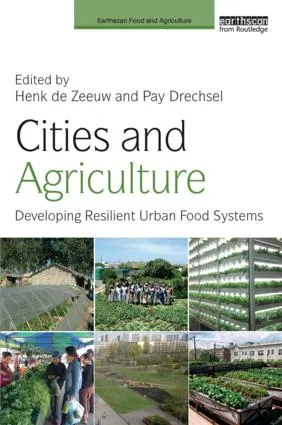
Cities and Agriculture -Developing Resilient Urban Food Systems
As people increasingly migrate to urban settings and more than half of the world's population now lives in cities, it is vital to plan and provide for sustainable and resilient food systems which reflect this challenge. This volume presents experience and evidence-based "state of the art" chapters on the key dimensions of urban food challenges and types of intra- and peri-urban agriculture.
Read
Image
Resource
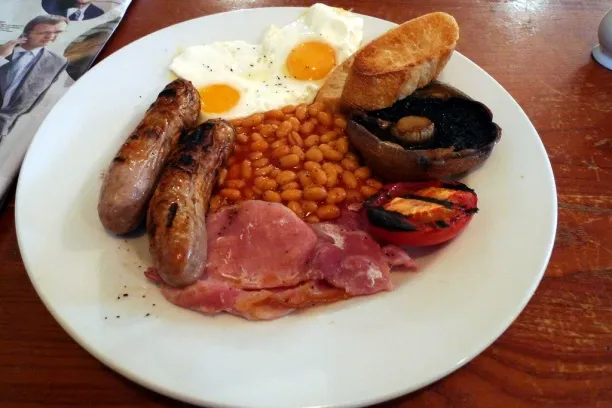
WHO warns processed meats cause cancer and class red meat as “probable” cause
The WHO’s International Agency for Research on Cancer (IARC) has classified processed meat in Group 1 of carcinogenic substances– the highest evidence level (“based on sufficient evidence”). Red meat is placed in Group 2A as probably carcinogenic (based on limited evidence). The new classification is announced in a research summary report published in The Lancet Oncology 26 October 2015 where WHO summarises its review of all scientific evidence on which substances can be linked to any type of cancer in humans. 
Read
Image
Resource
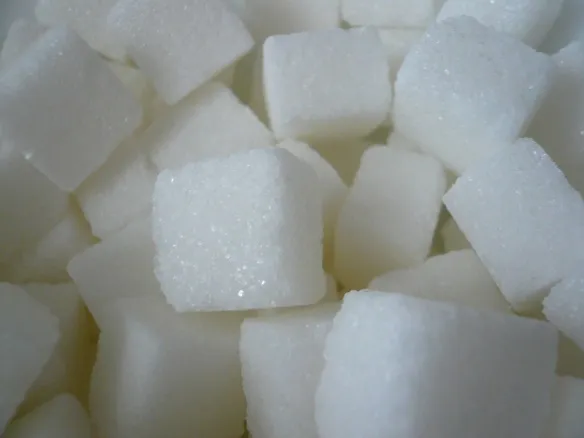
Excessive consumption of sugar, salt and saturated fat generates medical costs of 16.8 billion EUR in Germany
In a joint project researchers from the University Halle-Wittenberg (Germany) looked at the direct medical treatment costs of nutrition-associated diseases related to the overconsumption of sugars, salt and saturated fatty acids. In all, the team identified 22 clinical endpoints with 48 risk-outcome pairs.
Read
Image
Resource
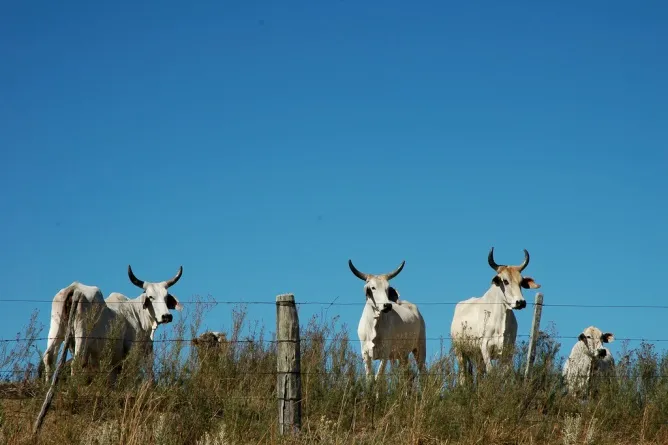
Win-win measures could reduce beef emissions by 24% in the Brazilian Cerrado
Brazilian greenhouse gas emissions (GHG) are projected to reach 3.2 gigatonnes (CO2 eq.) by 2020. The government has made a voluntary commitment to reduce these by 40 per cent, and a reduction in deforestation and implementation of beef-related mitigation measures are key components of this commitment. Focusing on the Cerrado core (central Brazilian Savannah), this paper analyses the abatement potential and cost-effectiveness of GHG mitigation measures applicable to livestock production.
Read
Image
Resource
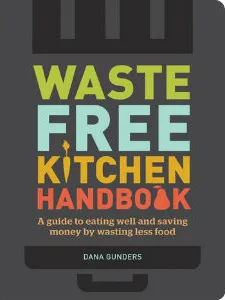
‘Waste Free Kitchen Handbook’ Offers Advice for Home Cooks
The average U.S. family spends $2,225 every year on food they don't eat.  American consumers are collectively responsible for more wasted food than farmers, grocery stores, or any other part of the food-supply chain. This  new book, entitled Waste-Free Kitchen Handbook provides accessible information about the state of the problem as well as a set of tips and techniques to eanble people to reduce the amount of waste they produce.
Read
Image
Resource
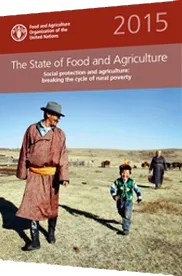
FAO "State of Food and Agriculture” SOFA 2015 report - Social protection and agriculture: breaking the cycle of rural poverty
The FAO argues in its latest version of the State of Food and Agriculture report SOFA that expanding social protection offers a faster track to ending hunger, when combined with broader agricultural and rural development measures. It argues that the vast majority of rural poor remain uncovered by social protection (only about a third of the world's poorest people are covered by any form of social protection).  Thus, expanding social protection programmes – including cash transfers, school feeding and public works - in rural areas and linking them to inclusive agricultural growth policies would rapidly reduce the number of poor people.
Read
Image
Resource
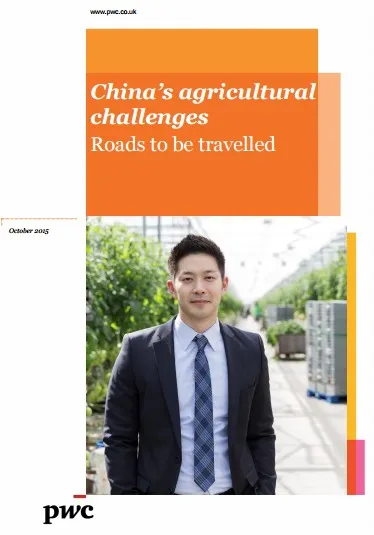
PwC report: China’s agricultural challenges – roads to be travelled
Growing affluence and increasing demands for meat in China, a country where meat consumption has already quadrupled since 1971, will place a very high pressure on agricultural production and trade both in China and globally says a new PwC report entitled China’s agricultural challenges – roads to be travelled.
Read
Image
Resource
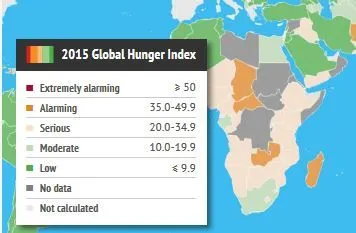
IFPRI 2015 Global Hunger Index (GHI) 2015
2015 marks the tenth year of the Global Hunger Index (GHI), which measures the state of hunger at the global, regional, and national level.  This report states that even though tremendous progress has been made towards eliminating global hunger, there is still a long way to go.
Read
Image
Resource
Cultivating Equality: Delivering Just and Sustainable Food Systems in a Changing Climate – report by CARE, Food Tank, and CCAFS
In advance of the World Food Day CARE, Food Tank, and CCAFS have released the report Cultivating Equality: Delivering Just and Sustainable Food Systems in a Changing Climate. The report focuses on the need to tackle inequity and gender inequality to end hunger and malnutrition in the face of climate change.
Read
  • VIEW MORE

Sign up for Fodder, our monthly newsletter unpacking the future of food.

Tick below to opt-in to email communications.

You can change your mind at any time by clicking the unsubscribe link in the footer of any email you receive from us, or by contacting us at info@tabledebates.org.

We use Mailchimp as our marketing platform. By clicking below to subscribe, you acknowledge that your information will be transferred to Mailchimp for processing. Learn more about Mailchimp's privacy practices.
  • Glossary
  • About
  • Our Writing
  • Podcasts
  • Resources

Social

YouTube Facebook Instagram

© Copyright 2025

A collaboration between: